Quick Answer
The best times to visit Evora are April to May and September to October, when temperatures are comfortable for outdoor exploration and the Alentejo countryside is at its most photogenic. The city is manageable year-round as a cultural destination - its Roman temple, medieval walls, and bone chapel do not depend on weather - but the region’s megalithic sites outside town are best explored when not exposed to 40°C heat. See our Evora guide for the UNESCO-listed old town highlights, and compare hotels in Evora.
Season Overview
| Month | Avg High | Rain Days | Crowds | Cost |
|---|---|---|---|---|
| January | 13°C | 10 | Low | Low |
| February | 15°C | 9 | Low | Low |
| March | 18°C | 8 | Low-Med | Low-Med |
| April | 21°C | 6 | Medium | Medium |
| May | 25°C | 5 | Medium-High | Medium |
| June | 31°C | 2 | Medium | Medium |
| July | 36°C | 0 | Medium-High | Medium-High |
| August | 38°C | 0 | Medium-High | Medium-High |
| September | 33°C | 3 | Medium | Medium |
| October | 24°C | 6 | Medium | Medium |
| November | 17°C | 9 | Low | Low-Med |
| December | 14°C | 10 | Low | Low |
Peak Season: July to August
Evora’s peak season does not follow the same logic as coastal resorts. The Alentejo interior sees Portugal’s highest summer temperatures - 36-40°C in July and August - which limits comfortable outdoor activity. Visitor numbers are moderate rather than extreme (Evora lacks beaches), but the combination of heat and medieval stone streets (which absorb and radiate heat) makes midday sightseeing genuinely difficult.
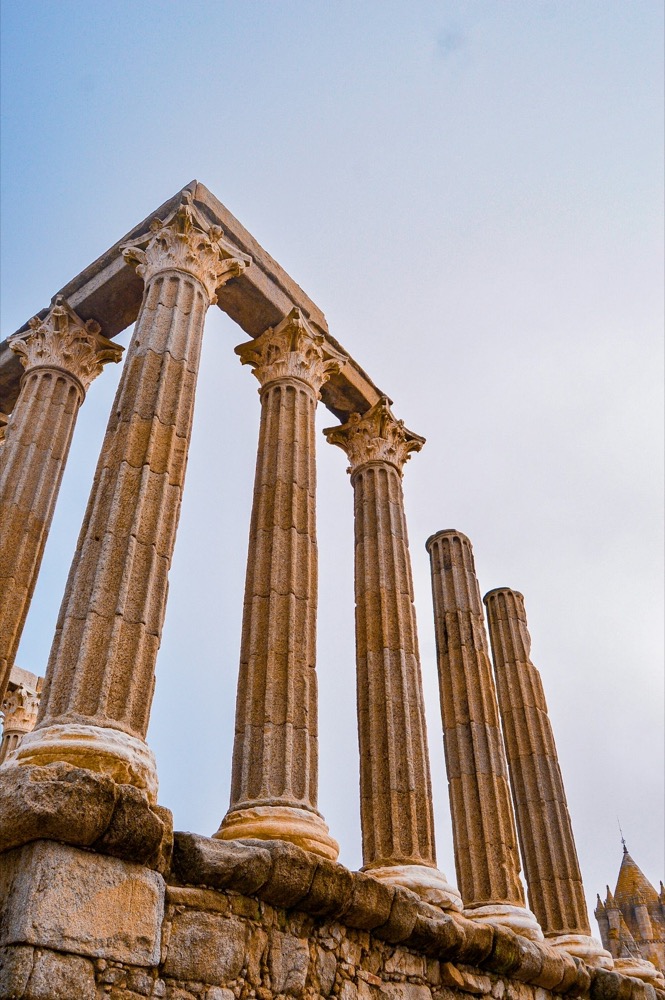
The Roman Temple of Evora (Templo Romano, sometimes called the Temple of Diana) is an open-air monument with no shade - visiting before 9am or after 7pm in summer is strongly recommended. The Almendres Cromlech, a prehistoric stone circle 15km west of town, sits in open cork-oak scrubland with minimal shade; a morning visit is essential in July and August.
Despite the heat, Evora operates fully in summer. The Capela dos Ossos (Chapel of Bones), a 16th-century ossuary lined with the bones of approximately 5,000 monks, is an interior attraction that stays cool. The Museu de Evora and the cathedral nave offer shade. Evening temperatures drop enough by 8-9pm for outdoor dining in the squares to be comfortable.
Shoulder Season: April to May and September to October
April and May are the most rewarding months for a full Evora itinerary. Temperatures of 18-25°C allow the megalithic circuit - Almendres Cromlech, the Anta Grande do Zambujeiro dolmen (the largest dolmen in the Iberian Peninsula), and the menhir of Bulhoa - to be explored comfortably at any time of day. The spring wildflowers across the Alentejo plains are extraordinary: poppies, rock roses, and asphodels cover the fields in April.
October brings cooler temperatures (around 22-24°C) after the summer heat, and the cork oak and olive groves show autumn colour. Wine estates in the Alentejo - the region around Evora produces distinctive wines under the Alentejo DOC, including reds from Aragonez and Trincadeira grapes - open for tastings in October. Several wineries close to Evora offer visits and tastings by appointment.
September is warm (30-33°C) - still quite hot, but a step down from August. The first cool front typically arrives in mid-October.
Off Season: November to March
Evora in winter has a particular austere beauty. The walls and towers of the medieval city, the Roman arches of the Prata dos Leões aqueduct along the road into town, and the Cathedral’s Gothic facade are all striking in winter light. The town is quiet and genuinely local in feel, with the cafes and restaurants in Praça do Giraldo serving residents rather than day-trip tourists.
Rain from November through January can make the dirt tracks to some megalithic sites muddy and slippery in a regular car. A 4WD or careful route planning is useful for reaching the Anta Grande do Zambujeiro. The Almendres Cromlech site has a surfaced parking area and is always accessible.
Hotel rates in January and February fall to their lowest - around €60-80 per night for a good central property versus €120-150 in October or €150-180 in summer.
Month-by-Month Guide
| Month | Weather | Crowds | Cost | Notes |
|---|---|---|---|---|
| January | 13°C, some rain | Low | Low | Very quiet; chapel and museum uncrowded; great for photos |
| February | 15°C, improving | Low | Low | Alentejo plains green after winter rains; cheapest rates |
| March | 18°C, variable | Low-Med | Low-Med | Wildflowers beginning; spring light on the Roman temple |
| April | 21°C, pleasant | Medium | Medium | Best month; poppies in the fields; megalithic sites comfortable |
| May | 25°C, warm | Medium-High | Medium | Heat building; still manageable; cork oak in new leaf |
| June | 31°C, hot | Medium | Medium | Getting hot; sightsee early morning and evening |
| July | 36°C, very dry | Medium-High | Medium-High | Extreme heat; indoor attractions preferable 11am-6pm |
| August | 38°C, very dry | Medium-High | Medium-High | Hottest; outdoor sites only at dawn and dusk |
| September | 33°C, warm | Medium | Medium | Still hot first half; cooling after mid-month |
| October | 24°C, pleasant | Medium | Medium | Autumn colour; wine estates open; ideal conditions |
| November | 17°C, wetter | Low | Low-Med | Quietening; Alentejo wine harvest finishing; good value |
| December | 14°C, some rain | Low | Low | Christmas quiet; historic centre atmospheric |
Key Events and Festivals
- Feira de São João (June): Evora’s main annual fair and festival, held in late June with market stalls, folk music, and agricultural displays in and around the city.
- Megalithic sites (year-round, best April-May and October): Almendres Cromlech (87 standing stones, 15km from town) and Anta Grande do Zambujeiro dolmen are accessible year-round; avoid midday in summer.
- Alentejo wine harvest (September-October): The region’s cork-oak estates and vineyards around Evora harvest in September-October; several offer visits by arrangement.
- Evora International Music Festival (autumn): A chamber music and early music festival held annually, typically in October or November, across the city’s historic churches.
- Roman Temple (Templo Romano): Open daily year-round at no charge; the surrounding Jardim Público is pleasant for an evening walk in cooler months.
- Alentejo wildflower season (March-May): The plains around Evora produce one of Portugal’s most spectacular wildflower displays, with poppies, rock roses, and asphodels visible from roadside stops.
Plan Your Trip
✈️ Book your flights to Portugal 🎫 Find tours in Evora 🛡️ Get travel insurance 📱 Stay connected with an eSIM 🚗 Hire a car in Portugal