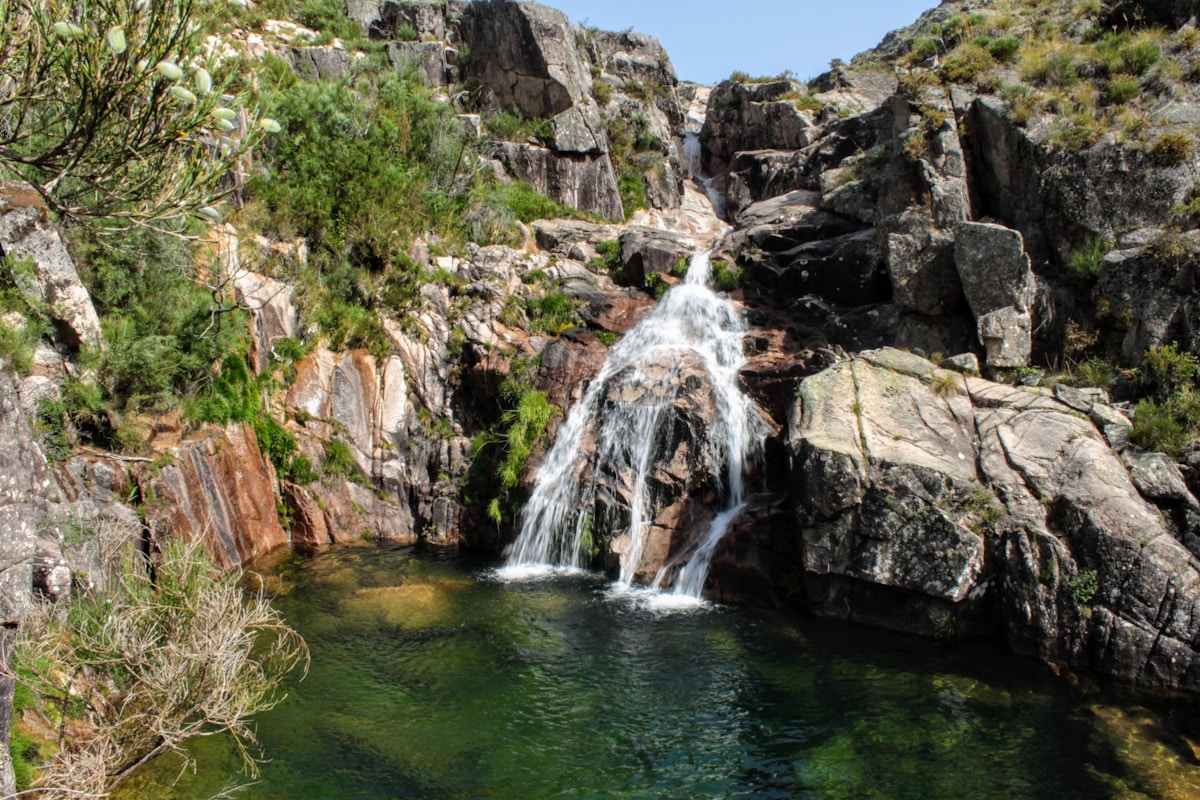
Peneda-Gerês is 90km from Porto. The A3 motorway takes you to Braga in 45 minutes, and another 45 minutes of increasingly scenic road through Terras de Bouro brings you to the park boundary. It is the most accessible national park day trip in northern Portugal, and one of the few places where you can hike through ancient oak forest, swim under a waterfall, and be back in Porto for a late dinner — all in the same day.
This guide covers the driving route, the best things to do with a full day in the park, and how to time the return journey.
Driving from Porto to Peneda-Gerês
Route: Porto → A3 north (direction Braga/Vigo) → Exit at Braga Sul → A11 towards Guimarães, then signs for Terras de Bouro / Parque Nacional → N205 through Terras de Bouro into Gerês.
Distance: Approximately 90km to Gerês village (Caldas do Gerês). Time: 1h15 to 1h30, depending on Porto traffic.
A few practical notes before you leave:
- Fuel in Terras de Bouro. There are no petrol stations inside the park. Fill up in Terras de Bouro — it’s the last town before the road climbs into the national park boundary.
- Cash. Many rural cafes and car parks in the park don’t take cards. Bring at least €20–30 in cash.
- Parking. The Cascata do Arado car park (the main trail head for Gerês) is free and well-signposted from the EN308. In July and August it fills by 10am on weekends — arrive early or expect a walk from a roadside pullout.
If you’re hiring a car in Portugal, book it the night before. Porto Airport has the best selection of rental desks; collect it early morning to avoid peak-hour traffic on the A3.
Recommended Day Schedule
7:30am — Leave Porto
Departing at 7:30am gets you to the park before the main summer crowds arrive. The A3 from Porto is clear at this hour; the traffic builds from 8:30am. Set navigation to Gerês or Caldas do Gerês — not Parque Nacional, which often routes incorrectly.
9:00am — Arrive at the Cascata do Arado Car Park
The Cascata do Arado car park is the best starting point for a day visit. It’s approximately 8km north of Gerês village on the EN308 (GPS: 41.762°N, 8.204°W), signposted from the main road. Pull in here for the day’s main hike.
9:15am–1:00pm — Trilho das Pedras Borrachas (Arado Waterfall Trail)
Distance: 8km return | Elevation gain: 340m | Difficulty: Moderate | Time: 3h30–4h00
This is the most rewarding trail in the park for a first visit. The Rubber Rocks Trail follows the Arado river upstream through oak and laurel forest, then climbs above the treeline to a rocky plateau and the waterfall above.
The highlight is Cascata do Arado: a two-tier waterfall falling into wide, clear granite pools. The lower pools are accessible with a five-minute scramble from the trail. On warm days (May to September) the water is cold but swimmable — bring a swimsuit and a towel, and give yourself 30 minutes here before heading back.
Trail markers are clear throughout. The path is rocky in sections and can be slippery if it has rained — wear trail shoes or light hiking boots. Take at least 1.5 litres of water per person.
Return to the car park by around 1pm.
1:00pm–2:00pm — Lunch in Gerês Village
Drive back south along the EN308 to Gerês village (Caldas do Gerês) for lunch. The main strip has several restaurants serving standard Portuguese food — grilled chicken, bacalhau, and local trout are common. Restaurante O Telheiro (on the main road through town) is reliable for trout from the local rivers, at approximately €12–15 per main course.
The village also has a small grocery shop for those who packed their own lunch. There are benches along the riverside if you want to eat outdoors.
2:00pm–4:00pm — Cascata do Tahiti or Praia Fluvial de Cerdeirinhas
With the morning hike done, the afternoon is best spent at one of the park’s natural water features.
Cascata do Tahiti — A series of natural granite water slides and pools, 15–20m long, ending in deep swimming holes. Located off the EN308 between Gerês village and Cerdeirinhas, about 3km north of town. The car park is signposted; from there it’s a 20-minute walk on an uneven path. This is the most distinctive bathing spot in the park — smooth water-worn granite that acts as a natural slide. Busy in summer but manageable mid-week.
Praia Fluvial de Cerdeirinhas — If you want a more organised beach with facilities, this managed river beach north of Gerês has a lifeguard in summer, toilets, and a small bar. Free access. The water is cooler than the coast but clear and clean.
Both are worth visiting, but if you can only do one, Cascata do Tahiti is the more memorable.
4:00pm — Start the Drive Back to Porto
Leave the park by 4pm to avoid peak summer evening traffic on the A3. The drive back to Porto takes 1h15–1h30. You’ll be back in the city by 5:30–6pm — plenty of time to drop the car and find a restaurant for dinner.
If you’re heading to Porto’s centre, return navigation to Porto Centro or your specific neighbourhood. The A3 southbound from Braga is the main artery and can slow near Matosinhos in the evening.
What to Pack
- Trail shoes or light hiking boots (the granite trail path is rocky)
- Waterproofs — the Gerês mountains catch Atlantic weather fast; it can rain with no warning even in summer
- Swimming kit and a quick-dry towel
- 2 litres of water per person for the morning hike
- Snacks for the trail — the only cafe is in Gerês village, not at the trail head
- Cash: €20–30 minimum for parking, lunch, and incidentals
If You Want to See More of the Park
A single day gives you one trail plus the waterfalls. The park covers 702km² across four mountain ranges — to see the northern sector (Soajo’s espigueiros, Lindoso castle, the Garrano wild horse routes) requires an early start or a second day. If you’re flexible on timing, consider staying overnight in Gerês or Vieira do Minho and doing two half-days instead of one rushed full day.
The full Peneda-Gerês guide covers all four trail heads, accommodation options from camping to pousada, and the northern sector villages in detail.
Search hotels in Porto on Booking.com to compare rates and availability.
Getting There Without a Car
There is no direct bus from Porto into the park. The closest you can get by public transport is Braga (frequent intercity buses and trains from Porto, approximately 50 minutes). From Braga, there are summer bus services (Transdev) to Gerês village, but they run infrequently and do not serve the trail heads. Without a car, you’re limited to the village and immediate surrounds.
For a day trip, a hire car is the only practical option. Split across two or three people, it costs approximately €15–20 per person including fuel — comparable to or cheaper than an organised tour. If you’d rather leave the driving to someone else, guided day trips to Peneda-Gerês from Porto include transport to the trail heads and a local guide for the main hike.
Book Your Trip
- Travel insurance: Portugal insurance guide (adventure sports and hiking cover) · get covered with EKTA — useful for hiking in a remote national park where medical assistance can take time to arrive.
- eSIM: Stay connected for navigation — mobile data helps when using GPS in the park, where road signage to trail heads is inconsistent.