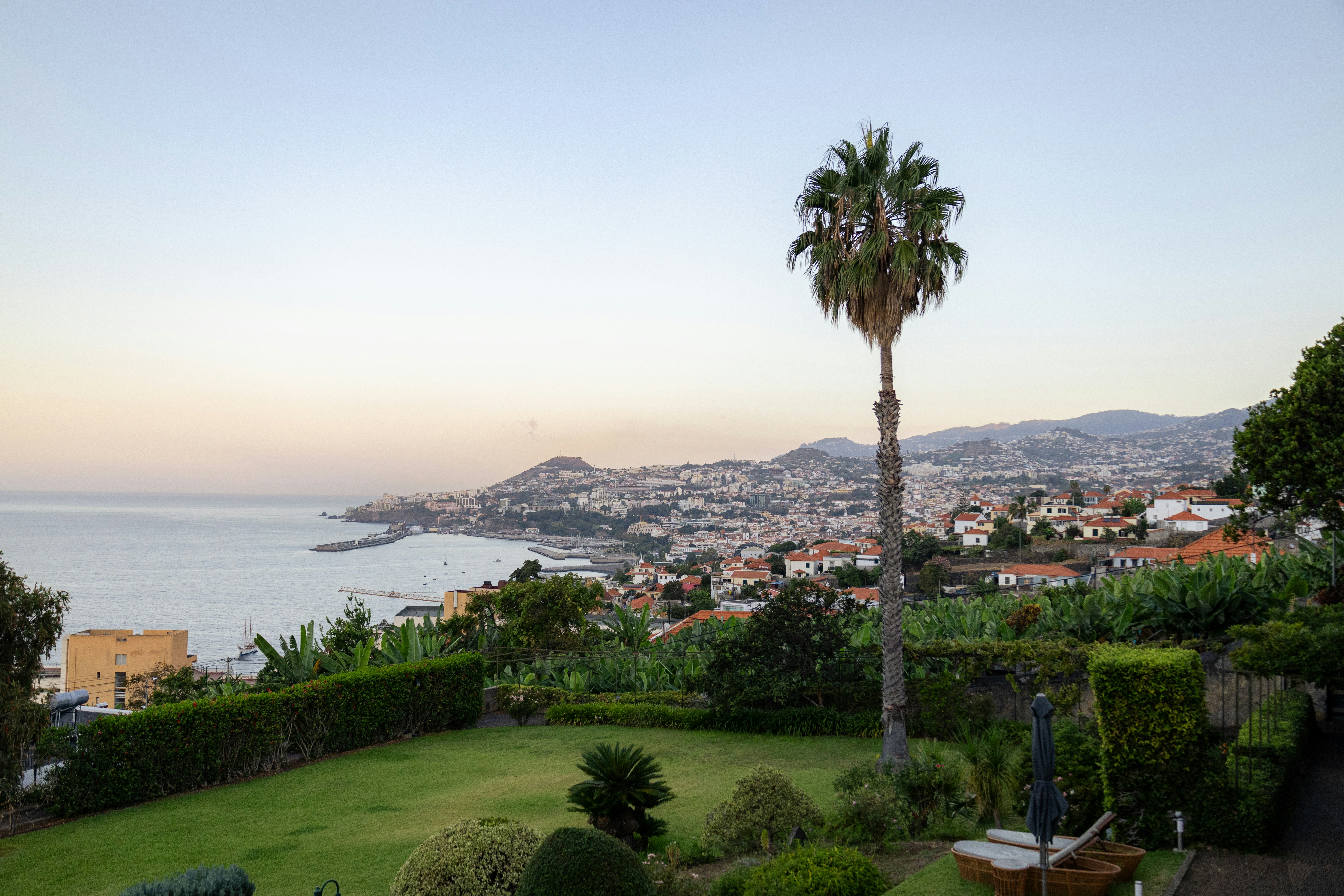
Madeira has been on the shortlist for extended stays since before digital nomadism became a widely used term. The island’s appeal is genuine: a subtropical climate that delivers 18–25°C most months, direct flights to London, Amsterdam, Lisbon, and other European hubs from Funchal Airport, reliable fibre internet infrastructure, and English spoken widely enough that practical tasks — banking, pharmacy, grocery shopping — are rarely complicated by language barriers.
Since 2021, when Ponta do Sol launched its Digital Nomad Village programme — one of the first organised remote-work programmes in Europe — the island has attracted a sustained community of long-stay remote workers. This has driven investment in co-working infrastructure and increased the supply of furnished monthly rentals across Funchal, though it has also pushed apartment prices up compared to five years ago.
For broader context on the island, our Madeira travel guide covers the main attractions and orientation. For the visa and tax picture, see our Portugal digital nomad visa guide.
How Much Does Extended-Stay Accommodation Cost in Madeira?
Prices below are for furnished accommodation as of 2026. Madeira’s seasonality is less extreme than the mainland Algarve — prices rise in summer but the difference is more modest (10–25% above winter rates) because the island draws a year-round visitor base.
| Type | Budget | Mid-Range | Upper |
|---|---|---|---|
| Furnished apartment (monthly) | €550 | €850–1,400 | €2,000+ |
| Serviced apartment (monthly) | €750 | €1,100–1,900 | €2,800+ |
| Extended-stay hotel (monthly) | €1,000 | €1,600–2,500 | €4,000+ |
Rates in Lido and central Funchal (Sé, Zona Velha) sit at the upper end; Monte, São Martinho, and Câmara de Lobos are meaningfully cheaper for comparable space.
Best Areas for an Extended Stay in Funchal
Sé and Zona Velha (Old Town)
The historic centre around the Cathedral (Sé) and the Old Town to its east form the most in-demand long-stay area in Funchal. The density of independent restaurants, wine bars, and cafés per square kilometre is high by the island’s standards. Walking infrastructure is excellent — the cobbled streets connect the old town to the marina, the market (Mercado dos Lavradores), and the cable car station to Monte in under 20 minutes.
Monthly furnished apartments here run approximately €800–1,600 as of 2026 for a one-bedroom. The old town area’s apartments tend to be in converted historic buildings — character is high, but floor plans can be compact and natural light limited in some ground-floor units. Verify ceiling height and window access before committing, particularly for units described as “studio in historic building.”
Lido and the Promenade
The western seafront strip is Funchal’s most cosmopolitan neighbourhood for long-stay purposes. The Lido stretches from the Foz do Lido to the Pestana district — a pedestrianised promenade with restaurants, bars, and the Lido sea pool complex. Co-working spaces are concentrated here. Modern apartment blocks in Lido typically have faster internet connections than the older historic buildings, and floor plans tend to be larger.
Monthly rentals in Lido run approximately €850–1,800 as of 2026. The neighbourhood is a 20-minute walk from the Old Town centre or a short taxi ride. Supermarkets, pharmacies, and the main Funchal hospital are all accessible. The Lido is the best choice for those who want modern infrastructure and the beach-adjacent lifestyle without the quiet of Monte or the congestion of the historic centre.
Monte and the Hillside Neighbourhoods
Funchal climbs steeply from the seafront. Monte, sitting roughly 560 metres above sea level, is accessible from the centre by cable car (approximately €12 one way, 15 minutes) or by a winding road. The town itself has a church, a tropical garden, and the Monte Palace Madeira gardens — but the main appeal for long-stay visitors is the price. Monthly furnished apartments in Monte and the hillside neighbourhoods run approximately €550–1,100 as of 2026, noticeably below central Funchal equivalents.
The trade-off is convenience. Without a car, accessing central Funchal requires either the cable car (one-direction only — the return is by foot or taxi) or the local bus network. For remote workers who do not need daily co-working access, the hillside quietness and sea views are a reasonable exchange for the slight inconvenience. The area is particularly suited to those who value a slower pace and outdoor morning runs on the levada trails that pass through Monte.
Câmara de Lobos
The fishing village 9 km west of Funchal centre has been photographed by Winston Churchill and has a genuine character that tourist brochures rarely capture accurately — it is a working fishing port with a steep-sided harbour, colourful boats, and a bar scene oriented toward local fishermen rather than visitors. For long-stay purposes it is distinctly cheap: monthly furnished apartments from approximately €500–1,000 as of 2026.
The catch is infrastructure. Câmara de Lobos has limited co-working space, one supermarket of note, and bus connections to Funchal that take 20–40 minutes depending on service. It suits long-stay visitors who are primarily there for writing, painting, surfing (Jardim do Mar and Paul do Mar are reachable within 20 minutes), or general withdrawal from city pace. It is not the right base for anyone dependent on daily Funchal business or social access.
Ponta do Sol: The Digital Nomad Village
Ponta do Sol village on Madeira’s south coast, approximately 25 km west of Funchal, launched its Digital Nomad Village (DNV) programme in 2021. The programme — run by the Municipality of Ponta do Sol — provides accommodation vetted for fast internet, co-working space at affordable rates, and a community calendar of social events and excursions for registered nomads. Since its launch it has hosted thousands of remote workers from across Europe and further afield.
The DNV is worth considering for first-time Madeira long-stays. Accommodation is arranged through the programme website, monthly costs are transparent, and the community eliminates the “starting from scratch” problem of arriving somewhere new for a long stay. The village itself is small (around 8,000 people in the municipality), which some find limiting after a week but others find precisely the point. For a month-long working retreat with built-in social infrastructure, it is one of the better-organised programmes in southern Europe.
Serviced Apartments and Aparthotels
For stays of one to four weeks where the flexibility of hotel service matters and direct rental admin feels excessive, Funchal has a growing aparthotel offer.
Pestana CR7 Funchal (Funchal seafront) — The Cristiano Ronaldo-branded Pestana hotel sits on Funchal’s waterfront promenade with direct sea views. Rooms are modern and well-equipped; the location is central to both the marina and the Old Town. Extended-stay rates for a standard room run from approximately €1,600/month in shoulder season as of 2026. Best suited for those who want hotel reliability and the Funchal centre immediately outside the door.
Quinta da Casa Branca (Funchal, near Jardim Botânico) — A historic quinta (estate) hotel set in tropical gardens, 2 km from the centre. Suites and studio apartments have kitchen facilities and private terrace access. The grounds make it significantly more agreeable for a long stay than a standard hotel corridor — the breakfast terrace and gardens are genuinely restorative. Monthly rates for a studio run approximately €2,200–3,000 as of 2026 depending on season. Best for extended stays where comfort and outdoor space matter more than budget.
For a wider range of serviced apartments across Funchal and Ponta do Sol, Booking.com’s Madeira entire-place listings include aparthotels and furnished apartment blocks accepting 7, 14, and 30-day stays, with prices adjusted automatically for length of stay.
Direct Rentals in Madeira
For monthly furnished rentals outside the hotel system:
- Idealista (idealista.pt) — filter by furnished and set minimum stay to 30 days; Funchal has consistent inventory, especially in the Lido and Sé districts
- Flatio — medium-term furnished lets from one to twelve months; Madeira coverage has expanded significantly since 2022 due to digital nomad demand, with verified Wi-Fi speeds listed per property
- Ponta do Sol Digital Nomad Village (pontadosolnomad.com) — the official DNV programme; handles accommodation, co-working access, and community coordination in one place
- Facebook groups — “Madeira Digital Nomads” and “Expats in Madeira” both have active rental listings and landlord contacts outside the main platforms
Madeira rental prices have risen since the post-pandemic nomad influx. Landlords in Funchal are aware that short-term furnished lets command a premium, so monthly rates are higher relative to long-term unfurnished contracts than they were before 2021. Arriving in October or November — the quietest period for tourism — gives the best chance of negotiating with landlords who have vacant units.
Digital Nomad Infrastructure
Co-working infrastructure in Funchal is genuine and growing. The main options as of 2026:
- Cowork Funchal (Lido area) — the largest co-working space in Funchal, with hot-desk and dedicated desk plans from approximately €100–180/month; fibre internet with consistently fast speeds
- The Spot (Funchal centre) — a smaller community-focused space near the Old Town; monthly membership from approximately €120/month
- Ponta do Sol DNV co-working space — available to registered DNV participants; modern fibre-connected facility in the village square
Café working in Funchal is practical but depends on timing. Peak-season tourist cafés along the Zona Velha can fill quickly with tour groups; early morning sessions (before 10:00) and evening slots (after 17:00) are reliably quieter. A reliable mobile backup via NOS or MEO SIM (approximately €15–20/month for 20–30 GB) is worth having for days when café Wi-Fi is busy.
Practical Details
Transport: Funchal has no metro. The local bus network (Horários do Funchal) covers the main urban areas adequately, with routes connecting the centre to Lido, Monte, and Câmara de Lobos. A 30-day unlimited bus pass runs approximately €50 as of 2026. Taxis are metered and reasonably priced for short trips (centre to Lido approximately €6–8). Car rental from Funchal Airport starts from approximately €350/month for a small car, which significantly opens up access to the island’s levada trails, north-coast viewpoints, and smaller villages.
Healthcare: The Dr. Nélio Mendonça Hospital in Funchal is the main public hospital. Private clinics in Funchal include Clínica de Santa Luzia and Clínica Internacional de Medicina, which offer English-language consultations. EU citizens are covered for public health treatment with the EHIC; non-EU long-stay visitors should carry valid travel or expat health insurance.
Groceries: Pingo Doce and Continente are the main supermarket chains in Funchal; both have branches in the centre and along the Lido strip. The Mercado dos Lavradores in the Old Town is the main fruit and vegetable market — open Monday to Saturday. Madeira’s local produce (espada fish, poncha, banana, passion fruit) is widely available and generally fresher and cheaper in the market than in supermarkets.
Visa: EU nationals face no restrictions. Non-EU visitors on tourist entry have 90 days in any 180-day Schengen window — a one-month Madeira stay fits comfortably within this. For longer stays, Portugal’s D8 Digital Nomad Visa requires documented remote work income of at least €3,040/month as of 2026. See our Portugal digital nomad visa guide for current requirements and the NHR tax status option for qualifying new residents.