Madeira Island Guide - Hiking, Levadas & What to See
Plan your Madeira trip - levada walks, Pico Ruivo hikes, Funchal highlights, Madeira wine, and the famous New Year fireworks.
Guides for Madeira
Madeira is a Portuguese autonomous region sitting in the Atlantic Ocean, 978km southwest of Lisbon and 631km from the African coast. It covers 741km² and rises sharply from the sea - the north coast cliffs drop straight into the ocean, and the interior peaks above 1,800m. The result is a landscape of near-constant cloud forest, dramatic valleys, and a coastline with virtually no flat ground.
Population is around 250,000, with 111,000 living in the capital, Funchal, on the sheltered south coast. The island’s economy runs on tourism and Madeira wine.
Getting There and Around
Madeira Airport (FNC) sits on the east coast, its runway extended over the sea on concrete pillars. Direct flights serve Lisbon (1h30), London Heathrow and Gatwick, Manchester, Frankfurt, Amsterdam, and a handful of other European airports. From the airport to Funchal is approximately 25km - taxis cost around €25–30; pre-booking a transfer is worth doing if you arrive late or are heading somewhere other than Funchal centre.
Once on the island, rent a car. Public buses run between the main towns but routes are slow, coverage is patchy, and the mountain roads between the key hiking trailheads aren’t well served. A small car costs €35–60/day; book ahead in peak season (December–January, May). See our Madeira car rental guide for Funchal Airport pickup, seasonal pricing, and driving tips for the mountain roads.
Funchal
Funchal is a working city of 111,000 people built into a hillside amphitheatre. For visitors—whether you’re here for a few days or considering a longer stay—three areas matter most:
Mercado dos Lavradores - the covered market in the centre of town. Tropical fruits grown in Madeira (passion fruit, papaya, custard apple, pitanga), dried herbs, fresh fish, and flowers. Arrive before 10am to see it at its liveliest. Open Monday–Saturday.
Zona Velha (Old Town) - the eastern quarter of Funchal. The painted door project has turned the neighbourhood’s doors into an open-air art gallery - 200+ doors, each a different piece. Restaurants, bars, and the cable car base station are here.
Teleférico do Funchal - cable car running from Zona Velha up to Monte, the hilltop suburb above the city. The ride takes 15 minutes and covers a 560m elevation gain. Return ticket costs €18. From Monte, you can either return by cable car or take the toboggan - wicker sledge driven by two men in white suits - 2km back down towards Funchal for €30.
Monte Palace Tropical Garden - at the top of the cable car. Extensive gardens with azulejos (tile panels), ponds, and exotic plants from five continents. Entry €12.50.
Levada Walks
Madeira built 2,500km of irrigation channels (levadas) to carry water from the wet north to the drier south. Most have a maintenance path alongside, and the best have been formalized as hiking trails. Walking alongside a levada means zero gradient - the channel itself is flat by definition. If you’re planning to explore multiple levada walks, basing yourself in Funchal for a week or more gives you the flexibility to tackle different routes without rushing.
PR1 Levada do Caldeirão Verde - 16km return through laurissilva (laurel forest, a UNESCO-listed habitat). The trail passes through four tunnels - carry a torch. Trailhead at Queimadas (a park with traditional thatched houses). This is the most atmospheric levada walk on the island.
PR6 Levada das 25 Fontes - 8km return, leads to a basin fed by 25 springs cascading into a turquoise pool. Easier than PR1, very popular - start before 9am to avoid the midday crowd. Trailhead at Rabaçal.
PR4 Levada dos Balcões - 3km return, very easy, good for families. Viewpoint over the central valley and Pico Ruivo. Trailhead at Ribeiro Frio.
Mountain Hiking
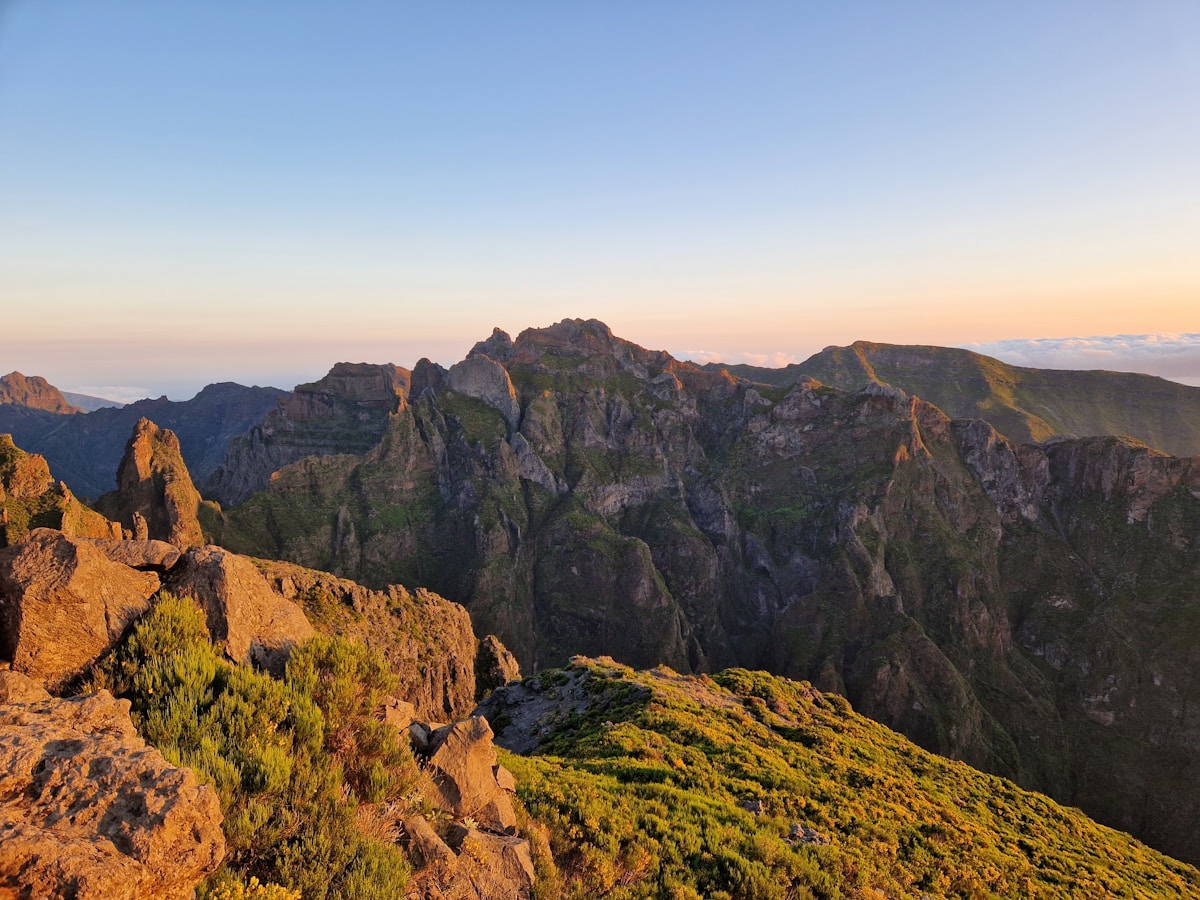
Pico Ruivo (1,862m) - the highest point in Madeira. The easiest route is from Achada do Teixeira: 3km, 1h30, mostly on stone steps, straightforward. The trail from Pico do Arieiro to Pico Ruivo (9km, 5h) is the classic traverse - exposed ridge walking with metal chains on the steepest sections. It’s a serious mountain hike; start early and check weather, as the peaks cloud over by early afternoon.
Pico do Arieiro (1,818m) - you can drive to the summit car park, making it the easiest viewpoint above the clouds. At sunrise, the peaks emerge from a sea of cloud. There is a café at the top.
Beaches
Madeira’s coastline is mostly cliffs. Beaches are small and volcanic.
Prainha - the only natural sand beach on the main island, black volcanic sand, small cove on the eastern tip. Good swimming when calm.
Porto Moniz - natural rock pools on the northwest coast, 2 hours from Funchal. The Atlantic fills the pools; admission costs €2. Worth the drive for the scenery alone.
Madeira Wine
Madeira wine is a fortified wine produced only on this island, protected by a designation of origin since 1756. What makes it distinctive is the estufagem process - deliberate heating of the wine during ageing, which mimics the oxidation that once happened naturally when wine sat in ships’ holds crossing the tropics. The result is a wine almost impossible to spoil, with a characteristic caramel-and-acid profile.
Four main styles, from sweetest to driest: Malmsey (very sweet, dessert wine), Bual (medium-sweet), Verdelho (medium-dry), Sercial (dry, serve chilled as aperitif). Vintage Madeiras from the 19th century are still drinkable and occasionally traded.
Blandy’s Wine Lodge in Funchal is the best-known cellar. Tours run throughout the day (free cellar access; guided tasting from €10). The Madeira Wine Company group also owns Cossart Gordon and Leacock’s.
New Year’s Eve
Madeira’s New Year fireworks hold a Guinness World Record as the largest annual fireworks display. The show is launched simultaneously from all the hillsides surrounding Funchal bay, with the city’s lights below and ships anchored offshore. It is free to watch from anywhere in Funchal - the seafront promenade and the hotel terraces are the best positions. Hotels and restaurants book out 3–6 months ahead; furnished monthly rentals offer more flexible rates during this peak period. The Madeira Flower Festival follows in May. See our guides to things to do in Madeira and best hotels in Madeira for practical planning.
Search hotels in Madeira on Booking.com to compare rates and availability.
Adventure Activities
Madeira’s volcanic gorges are ideal for canyoning - abseils through lava rock waterfalls, natural water slides, and plunge pools. Our canyoning in Madeira guide covers operators, routes from beginner to advanced, and what to bring. Browse all Madeira tours and activities - from levada walks to whale watching to wine tasting in Funchal. For a structured week combining levada walks, canyoning, and Funchal, see the Madeira one-week itinerary.
Madeira vs the Alternatives
Choosing between Portugal’s island groups or the mainland coast? See our Madeira vs Azores comparison for an honest breakdown of landscape type, travel logistics, and which suits different trip goals. If you’re deciding between an island holiday and an Algarve beach trip, see Algarve vs Madeira. For Madeira wine in the context of Portugal’s full wine culture - Port, Vinho Verde, Alentejo reds - see our Portuguese wine guide. New Year’s Eve visitors should also check Portugal in December for the wider festive calendar around the Funchal fireworks. The Portugal packing list has specific Madeira additions for layered mountain hiking and levada waterproofs.
Frequently Asked Questions
- Do I need a car in Madeira?
- Yes. Public buses are slow and infrequent. Renting a car is the practical way to explore the island's dramatic mountain roads and coastal villages.
- When is the best time to visit Madeira?
- April–June and October–November offer the best weather - warm, mostly dry, and less crowded than the New Year and Flower Festival peaks.
- How do I get to Madeira from Lisbon?
- Direct flights from Lisbon take 1 hour 30 minutes. Madeira Airport (FNC) also receives direct flights from the UK, Germany, and the Netherlands.
Book an experience
Top experiences in Madeira
Explore the best tours and activities in Madeira, with instant confirmation and free cancellation on most bookings.
Where to stay in Madeira: Find hotels in Madeira →