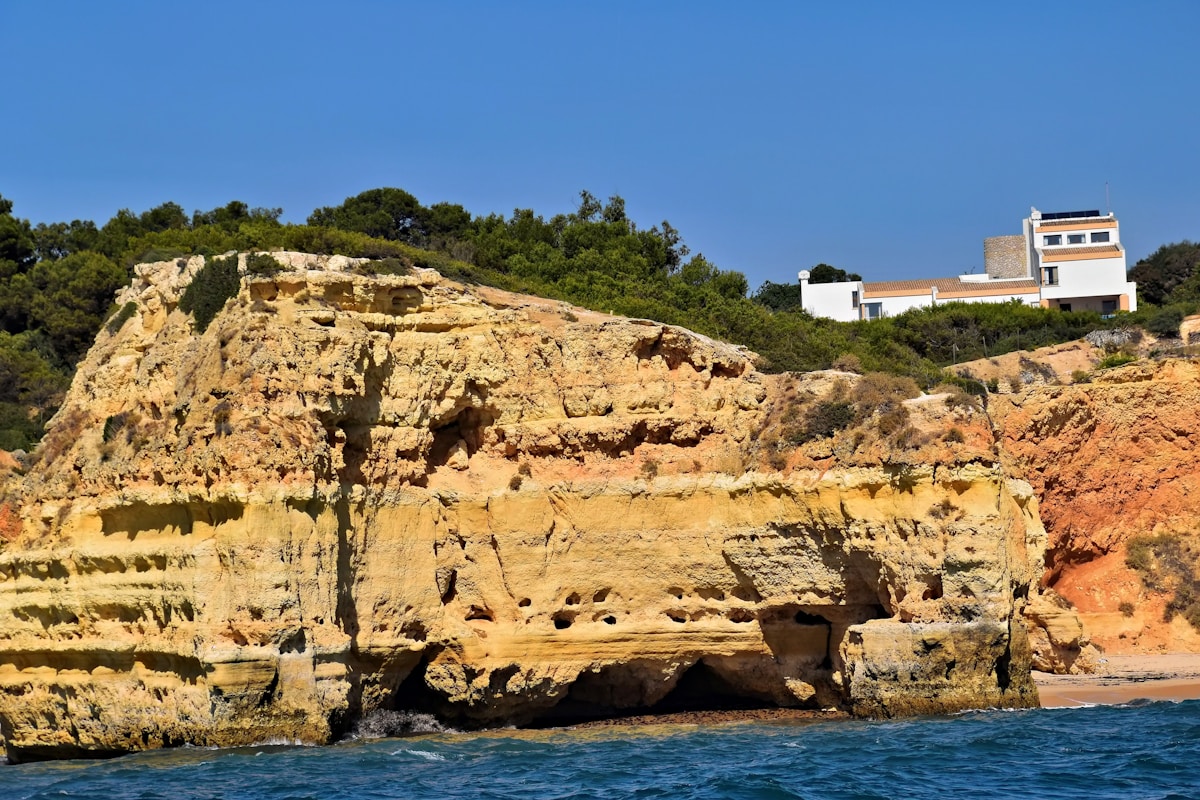
Lagos is the western Algarve’s strongest all-round base. It has an authentic old town that hasn’t been flattened into a resort, beaches at every difficulty level — calm family coves at Meia Praia, dramatic cliff-framed spots at Dona Ana, the famous sea arches at Ponta da Piedade — and transport links that make day trips easy in both directions. Our Lagos city guide covers the full picture; this guide focuses purely on where to sleep.
Old Town — the Best Base for Most Visitors
The historic centre of Lagos clusters around Praça da República and the covered market, within walking distance of the train station and marina. It’s the most convenient base for people without a car: restaurants, cafés, and supermarkets are all within ten minutes on foot.
Budget — approximately €35–70 per night (as of 2026):
Trilho Hostel and Lagos Surf Hostel both offer clean private rooms in this bracket, designed for the surf and backpacker crowd but perfectly comfortable for couples and solo travellers. Expect shared bathrooms at the very low end; private en-suite rooms run closer to €60–70.
Mid-range — approximately €100–180 per night (as of 2026):
Casa Mãe Lagos is the standout in this bracket — a guesthouse in a converted townhouse with individually decorated rooms, a rooftop terrace, and a pool. It books up fast in summer; reserve at least two months ahead for July. Quinta dos Poços and Pergola House are solid alternatives at similar prices: both are small, character-led guesthouses within the old town grid.
Upscale — approximately €200–350+ per night (as of 2026):
The Cascade Wellness Resort sits outside town on the cliffs, a five-minute drive from the old centre. It has a serious spa, multiple pools, and its own clifftop access — worth the taxi if you want full resort facilities without Vilamoura’s golf-package crowd. In town, the newer boutique options on and around Rua Infante Dom Henrique have been expanding steadily; ask for a room with a sea or garden view.
Marina and Riverside Area
The marina district sits just below the old town and is better suited to visitors arriving by car or boat. Parking is easier than the old centre, and the walk along the riverside into town takes around fifteen minutes. The hotel density here is higher — more standardised four-star options with pools and reliable air conditioning.
Mid-range marina hotels run approximately €90–150 per night as of 2026 in shoulder season, climbing to €180–250 in July and August. The better ones face the river rather than the car park, which makes a genuine difference in room quality.
Beach Access from Lagos
Dona Ana and Porto de Mós are the closest beaches to the old town — a 15-minute walk or a short taxi. Both have dramatic cliff settings and reasonable facilities in summer. Dona Ana gets crowded by late morning in peak season; Porto de Mós is slightly larger and marginally less packed.
Meia Praia is the long, open beach east of the marina — about 2km of sand that rarely feels full even in August. Buses run from the town centre, or water taxis cross from the marina for approximately €3–5 return as of 2026.
Ponta da Piedade has no beach but is the main sight — a 40-minute walk from the old town along the clifftop path, with sea caves and arches visible from above. Boat tours from the marina take you underneath; book direct at the quay or see our Algarve boat trips guide.
Getting to Lagos
By train: Direct Intercidades services from Lisboa Oriente take approximately 3 hours 20 minutes. Regional trains from Faro take around 1 hour 40 minutes via Tunes. The train station is a ten-minute walk from the old town centre.
By car: The A22 (Via do Infante) connects Faro airport to Lagos in approximately 75 minutes. Tolls apply on most of the route — budget approximately €5–8 for the full journey as of 2026. Street parking in the old town is limited; most hotels have arrangements with nearby car parks at approximately €8–12 per day.
By bus: EVA Transportes and Rede Expressos run coaches from Lisbon (approximately 4 hours) and Faro airport (approximately 2 hours). Less convenient than the train for most journeys but cheaper.
Best Time to Book
July and August are peak months — prices rise 40–70% above the spring baseline, and availability disappears fast. September and October offer warm weather (typically 22–27°C), far fewer crowds, and markedly lower prices. Spring (March–May) suits hikers and cyclists; the clifftop walking paths are at their best before summer heat arrives.
For any good mid-range or boutique option in peak season, booking two to three months ahead is standard. Last-minute availability exists mostly in larger standardised hotels rather than the characterful guesthouses.
Summary
Lagos works well for most Algarve visitor types. Families get calm beaches and good facilities. Surfers have easy access to Sagres and the south-west coast. Couples wanting a mix of culture and coastline will find the old town delivers both without the resort atmosphere of Albufeira or Vilamoura. The train connection to Lisbon means it also works as a final stop on a longer Portugal trip rather than a fly-in, fly-out destination.