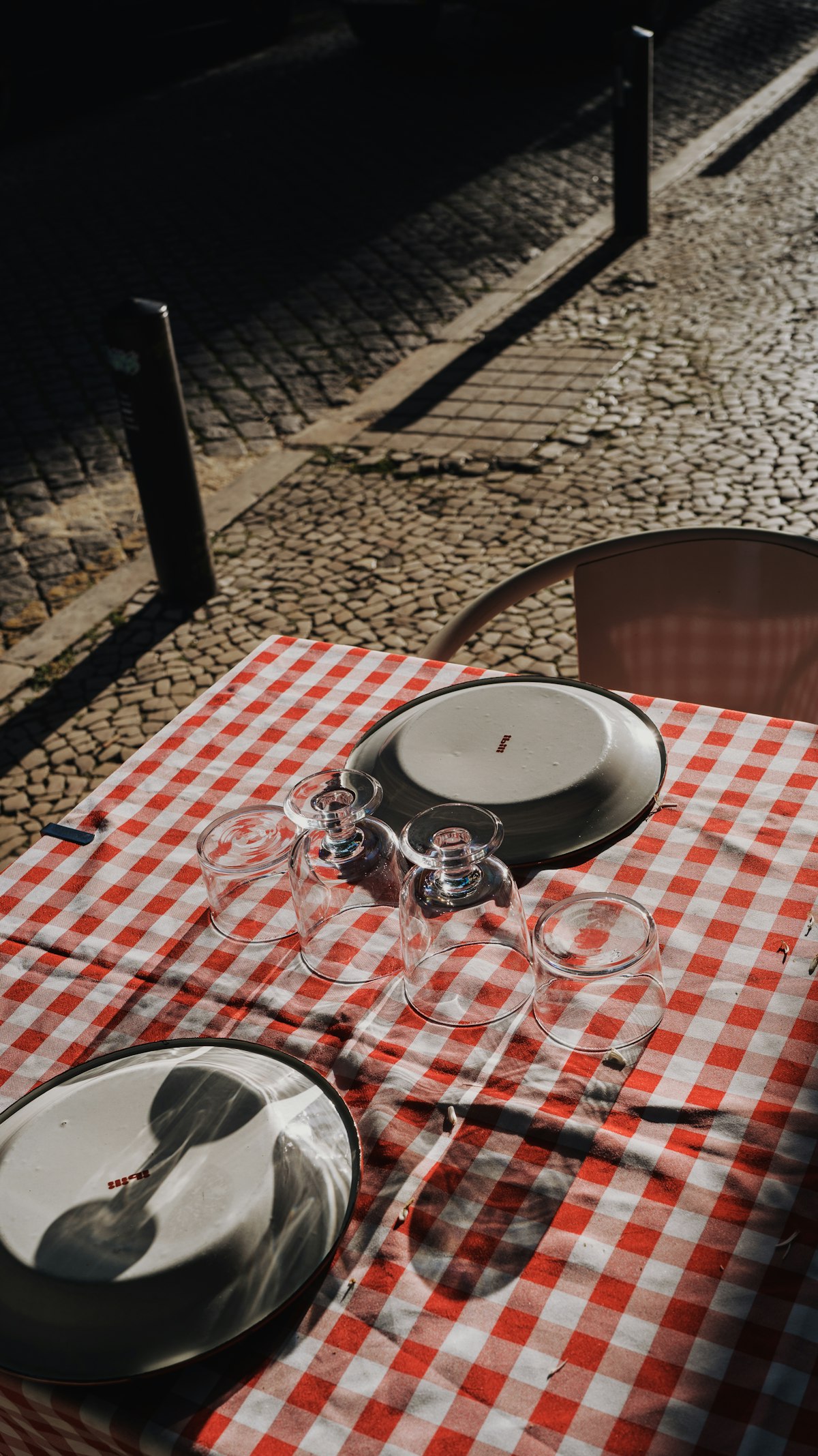
Petiscos are how Portugal actually eats when it’s not a special occasion. The concept is simple: a group orders several small dishes and shares them slowly over wine, with no fixed order of courses and no rush from the kitchen. It is the dominant eating culture in tascas and taverns across the country — quieter than the tapas bar scene, more deliberate, and generally better value.
For a broader overview of Portuguese cuisine, see our Portuguese food guide.
What Petiscos to Order
Chouriço Assado
The most common petisco. A curved sausage of smoked pork arrives on a terracotta dish filled with alcohol — the waiter ignites it at the table, and the fat renders as it burns. The result is a caramelised, smoky sausage eaten with bread. Approximately €5–7 per dish. Alheira (a pork-free smoked sausage with bread and chicken, originally created by Jewish communities to evade the Inquisition) is a less common but equally good alternative.
Amêijoas à Bulhão Pato
Clams cooked in white wine, olive oil, garlic, and coriander — named after the 19th-century poet Raimundo António de Bulhão Pato, who was known for his appetite. The sauce is mopped up with bread. The dish is done well when the clams are just open and the liquid is clear; avoid versions where the clams are rubbery or the sauce has been thickened. Approximately €8–12 depending on the quantity.
Pastéis de Bacalhau and Pataniscas
Two preparations of salt cod worth distinguishing. Pastéis de bacalhau are fried croquettes of bacalhau, potato, and egg — firm on the outside, creamy within, eaten warm with a squeeze of lemon. Pataniscas are salt cod fritters: shredded bacalhau in a thin egg batter, pan-fried until crisp. Both are around €5–7 for a plate of four to six pieces.
Rissóis de Camarão
Crescent-shaped pastries filled with a béchamel-and-prawn mixture, breaded and deep-fried. These appear in every pastelaria and petiscos bar in the country. Good ones are made in-house and eaten hot; the industrial versions sold in supermarkets bear no resemblance. Approximately €2–4 for two pieces.
Pica-Pau
Pieces of pork loin marinated in garlic, mustard, white wine, and pickled vegetables — typically Giardiniera-style mixed vegetables, cornichons, or piri-piri peppers. The name means “woodpecker” and refers to picking the meat pieces off toothpicks or a fork. Common in cervejarias (beer halls) rather than wine-focused tascas. Approximately €7–9.
Queijo da Serra and Azeitão
Portuguese cheese is underused as a petisco. Queijo da Serra da Estrela — soft, runny sheep’s cheese from the mountains of Beira Alta — is eaten by cutting around the rind and scooping out the paste with bread. Queijo de Azeitão is a smaller, more intense version from the Setúbal peninsula. Both are seasonal (best October to March, when the ewes’ milk has more fat). A quarter cheese is approximately €5–8.
Caracóis
Land snails cooked in a broth of garlic, coriander, and beer. A summer petisco — from approximately May to September, tascas put up signs saying “Há caracóis” (we have snails). Eaten with a toothpick from small bowls on the pavement. The snails are small and mild; the broth is the main event. Approximately €4–6 for a bowl.
Moelas
Chicken or pork gizzards braised in a tomato and wine sauce until tender. A divisive dish — some people love the texture, others don’t. Done well they are gelatinous and deeply savoury; done badly they are tough. Approximately €5–7.
How to Order Petiscos
There is no menu progression. Order two or three dishes to start, see how hungry you are, and add more. Bread and butter (or herbed butter — manteiguinha) and olives appear automatically — these are charged if you eat them. Tell the waiter to take them away if you don’t want them.
Wine is the default drink in tascas: ask for a copo de vinho (glass of wine) or a carafe — a quarteirão (25cl) or meia garrafa (half bottle). Vinho verde and Alentejo reds are the most common house pours. Beer is ordered in cervejarias; ordering wine in a cervejaria or beer in a tasca is fine, but the emphasis differs.
Eating a petiscos meal early — before 7:30pm — gives you the best chance of a table without a reservation. After 8pm in Lisbon and Porto, the popular tascas fill quickly and may not have seats for walk-ins.
Best Petiscos Bars in Lisbon
Taberna da Rua das Flores (Rua das Flores 103, Chiado) — the most-cited benchmark. Small room, no reservations, seasonal menu written on a chalkboard. Arrive before 7pm or expect to wait.
Taberna Ideal (Rua da Esperança 100, Madragoa) — reliable quality, slightly easier to get into. The arroz de linguiça (rice with smoked sausage) is the dish to order here.
A Cevicheria (Rua Dom Pedro V 129, Príncipe Real) — higher-end, fish-focused petiscos with a strong ceviche influence. Reservations accepted and necessary.
Cervejaria Ramiro (Avenida Almirante Reis 1, Anjos) — the city’s definitive shellfish and seafood petiscos institution. Expensive by petiscos standards (€50–80 per person), but the amêijoas, percebes, and sapateira (crab) are exceptional.
Best Petiscos Bars in Porto
Taberna dos Mercadores (Rua dos Mercadores 36, Ribeira) — cramped, excellent, great value. The caldo verde and chouriço here are benchmarks.
Adega e Presuntaria Transmontana (Rua do Bonjardim 194) — Transmontana charcuterie: presunto (cured ham), alheira, and regional cheeses from the Trás-os-Montes in the northeast. Good wine list focused on Douro.
O Paparico (Rua de Costa Cabral 2343) — Michelin-starred but petiscos-format menu. Worth the splurge for a special meal; book well in advance.
For restaurant recommendations beyond petiscos bars, see our Porto restaurants guide and Lisbon restaurants guide.
Plan Your Stay
Find hotels in Portugal — search accommodation across all budgets in Portugal.