Lisbon’s restaurant scene is better than its reputation suggested for most of the 20th century. The standard tourist complaint - overpriced food, indifferent service, tiles and sardines - is increasingly out of date. The city now has a density of good cooking across all price ranges, driven by a generation of Portuguese chefs who stayed home rather than going to France or Spain. See our Lisbon city guide for neighbourhood context, or our things to do in Lisbon if you’re planning your wider visit.
The city divides clearly by neighbourhood. Traditional tascas are concentrated in Alfama and Mouraria; natural wine bars and modern Portuguese in Chiado and Príncipe Real; immigrant food (Cape Verdean, Mozambican, Angolan) in Intendente and Mouraria; weekend family lunches in Belém.
Alfama
Alfama is the oldest surviving quarter of Lisbon, built on the hillside east of the castle. Tourist pressure is real - the main fado streets are lined with overpriced restaurants that do adequate food for people who don’t know better. The good restaurants are one or two streets away from the main tourist flow.
A Cevicheria Mora - small, booking essential, €30–45pp. Not traditional - this is a modern Lisbon restaurant serving Peruvian-influenced ceviche alongside Portuguese seafood. The chef (Kiko Martins) trained in Lima and cooks ceviche with local Atlantic fish (corvina, lingueirão). Worth the detour from the traditional options. Rua do Costa do Castelo.
Mesa de Frades - a fado restaurant in a converted chapel (Rua dos Remédios). The fado performances start around 9pm and the food - charcoal-grilled meat and fish, açorda, caldo verde - is better than most houses. €35–50pp with wine. Reserve at least a week ahead in summer.
Zé da Mouraria - just at the edge of the Mouraria boundary, this is the kind of tasca that locals use and tourists rarely find. Long communal tables, no menu just whatever’s cooking, bacalhau and pork dishes, cheap house wine. Lunch only, weekdays. €10–12 for two courses. Rua João do Outeiro.
Chiado
The elegant commercial quarter on the hillside west of Baixa. Best restaurant density per kilometre in Lisbon, ranging from old-school cervejarias to natural wine bars.
Cervejaria Ramiro - technically in the Intendente area but the most famous seafood restaurant in Lisbon. Carabineiros (deep-sea scarlet prawns) at €80–120/kg, amêijoas à Bulhão Pato, percebes, spider crab. A meal here is expensive and worth every euro. The tradition is to finish with a bifanas (pork steak sandwiches) at the bar. Queue outside or book ahead. Avenida Almirante Reis 1.
Taberna da Rua das Flores - the best traditional tasca in Chiado, on Rua das Flores. Small room, hand-written daily menu, natural wines, petiscos (Portuguese small plates). Try the pig’s ear salad with chickpeas, the chouriço assado (flamed at the table), and whatever fish they’re serving that day. €20–30pp. No reservations after 7pm - arrive early.
Café de São Bento - steakhouse on Rua de São Bento, Príncipe Real side of Chiado. The bife de lombo (tenderloin steak with mustard cream sauce) is the thing to order. Slightly formal, good wine list, attentive service. €40–55pp.
Tasca do Chico - fado house in Chiado where the fado is genuinely good and the food - bacalhau à Brás, carne de porco à Alentejana - is properly cooked. Small room, reservations essential. €30–40pp with fado. Rua do Diário de Notícias.
Mouraria
The Moorish quarter around the base of the castle, historically Lisbon’s most multicultural neighbourhood. Recent gentrification has brought a mix of natural wine bars and immigrant restaurants alongside older grocers and halal butchers.
O Corvo - a small wine bar on Rua da Mouraria with one of the best natural wine selections in Lisbon. Food is petiscos - tinned fish (conservas), chouriço, cheese - rather than cooked dishes. The wine selection changes constantly. €15–25pp. No reservations.
Tasca do Mercado - inside the Mouraria market building. Simple lunch operation, open weekdays only. Market workers, local families, office staff. Two-course set lunch €10–12. The bacalhau preparation changes daily; the caldo verde is consistent.
Belém
The western suburb along the Tagus, 6km from the city centre. The main attraction is the original Pastéis de Belém bakery (Rua de Belém 84) - queue for the custard tarts, they are worth the wait (€1.30 each, eat at the tiled counter with powdered sugar and cinnamon). For lunch, the area is better than expected.
Solar dos Presuntos - not in Belém but nearby in Marquês de Pombal district, and worth noting here. One of the great traditional restaurants in Lisbon for regional Portuguese cooking. The roasted kid (cabrito assado), caldo verde, and bacalhau com natas are definitive versions. €35–50pp. Rua das Portas de Santo Antão.
Cervejaria Portugália (Belém branch) - the classic cervejaria experience: marble counters, seafood and steaks, good draft beer, efficient service. The francesinha (they do a Lisbon version, milder than Porto’s original) is a reliable option. €25–40pp. Largo de Belém.
Intendente
The square of Intendente, north of the Mouraria, has transformed since 2010 from one of Lisbon’s most troubled spaces to one of its most interesting eating areas.
Cantina Zé Avillez - chef José Avillez’s more casual restaurant on Praça do Intendente. The food is refined tasca cooking - petiscos, grilled meats, bacalhau preparations - at mid-range prices. €25–40pp. Good introduction to modern Portuguese cooking without paying for Belcanto (his Michelin two-star across town).
Tasca do Carvalhão - a small neighbourhood tasca with tables on the square, serving Cape Verdean and Portuguese food side by side. Cachupa (Cape Verdean bean and corn stew) and bacalhau on the same menu. €15–20pp. Lunch and early dinner only.
Baixa and Rossio
The grid streets of Baixa between Praça do Comércio and Rossio square are the most tourist-heavy part of Lisbon, which makes the restaurant quality uneven. The main pedestrian streets (Rua Augusta, Rua da Prata) are best avoided for food - overpriced and generic. The good options are on the side streets and the surrounding squares.
Can the Can (Praça do Comércio) - a conservas-focused restaurant built around Portuguese tinned fish. The concept works: sardines, mackerel, tuna, and octopus from named canneries, served on toast or in petisco platters with good wine. €20–30pp. A useful lunch stop near the waterfront.
Cervejaria Trindade (Rua Nova da Trindade) - one of the oldest cervejarias in Lisbon, operating since 1836 in a former convent. The tiled dining room is worth seeing. Seafood platters and steaks dominate the menu. €30–45pp. The atmosphere carries it more than the food, but the grilled fish is reliable.
LX Factory and Santos
LX Factory is a converted industrial complex under the 25 de Abril bridge in Alcântara. The space houses restaurants, shops, and a weekend market. The food options lean modern and international - a change from traditional tascas elsewhere in the city.
Landeau Chocolate - the most famous chocolate cake in Lisbon. Dense, rich, and served as a single item. €5.50 per slice as of 2026. The queue at weekends is 15–30 minutes; weekday afternoons are quieter.
1300 Taberna (next to LX Factory on Rua Rodrigues de Faria) - modern Portuguese cooking by chef Ljubomir Stanisic. Well-executed petiscos, good steak, and a terrace with river views. €35–50pp. Reservations recommended, especially for the terrace.
Ponto Final - technically across the river in Cacilhas (5-minute ferry from Cais do Sodré), but regularly cited as one of the best affordable seafood lunches near Lisbon. Grilled fish on the waterfront, long communal tables, house wine by the jug. €15–20pp. Cash only. Arrive before 12:30 or expect to wait. If you’re making the crossing anyway, our Almada travel guide covers Cristo Rei, the Cacilhas waterfront, and what else to see on the south bank.
Wine Bars
Lisbon has a strong natural wine bar scene concentrated in Chiado and Príncipe Real.
By The Wine (Rua das Flores 41) stocks around 250 Portuguese wines available by the glass. The focus is entirely on Portuguese producers - a useful crash course in regions you may not know (Alentejo, Dão, Bairrada, Colares). Wines by the glass from €3.50 as of 2026.
Wine Bar do Castelo (above Alfama) has a narrow terrace with good views over the city. The selection is smaller than By The Wine but the location - near the castle walls - makes it a good stop for an early evening drink before or after exploring Alfama.
Markets
Mercado da Ribeira / Time Out Market (Cais do Sodré) is covered in detail below. For a less tourist-heavy market experience, Mercado de Alvalade is a local neighbourhood market in northern Lisbon with minimal tourist footfall. Better for fresh produce and local products than for prepared food, but gives a more accurate picture of where Lisboners actually shop.
Time Out Market (Mercado da Ribeira)
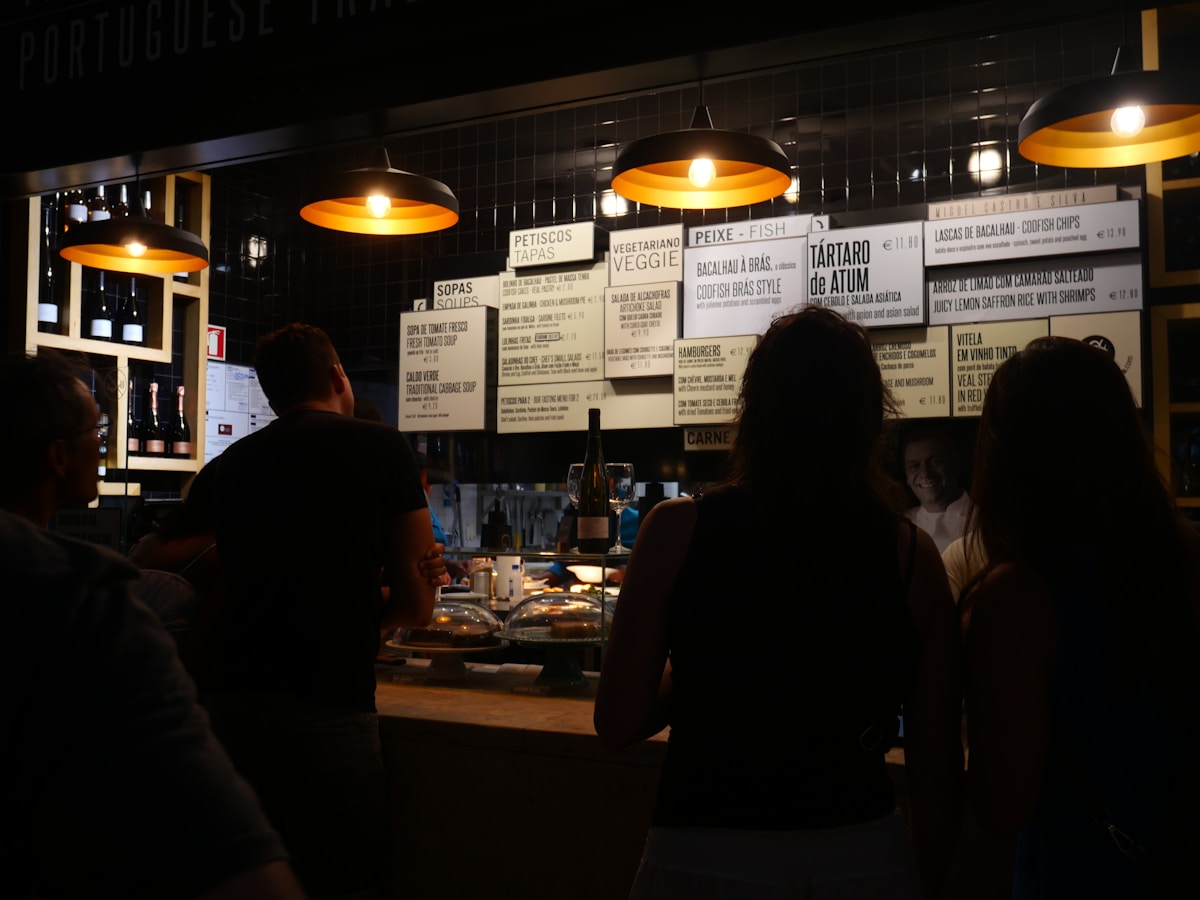
Time Out Market occupies the western half of the Mercado da Ribeira at Cais do Sodré. The concept: curated food stalls from named Lisbon chefs and restaurants, shared seating in a large hall. It is loud, crowded, and expensive by market standards - but the food quality at the best stalls is genuinely high.
How it works: order at individual stall counters, pay by card or cash, take your food to any open seat at the communal tables. Most dishes cost €10–16. Wine and beer from the central bar.
Best stalls as of 2026: Henrique Sá Pessoa (seafood, modern Portuguese - stall version of his Michelin-starred Alma), Marlene Vieira (contemporary petiscos), O Prego da Peixaria (steak sandwiches, approximately €12), and Manteigaria (pastel de nata baked on-site - €1.50 each, worth the queue). The sushi and Asian stalls are adequate but not competitive with standalone restaurants.
When to go: weekday lunchtimes (12–2pm) are the least crowded. Friday and Saturday evenings are the worst - the noise level makes conversation difficult. Open daily 10am–midnight (food stalls from noon).
Dishes to Try
If you are eating in Lisbon for the first time, these are the dishes that define the city’s food:
- Bacalhau à Brás - shredded salt cod with scrambled eggs, thinly cut fried potatoes, and olives. Served at almost every tasca. The best versions use hand-shredded (not machine-cut) cod, and the eggs are barely set, creamy rather than rubbery.
- Pastéis de nata - custard tarts. Pastéis de Belém (the original, €1.30 each) is the benchmark, but Manteigaria (Rua do Loreto, Chiado, and Time Out Market) bakes them fresh every 20 minutes and has shorter queues.
- Bifana - thin pork steak in a bread roll, seasoned with garlic, white wine, and piri-piri. The classic street food. Best eaten at the bar at Cervejaria Ramiro as a post-seafood tradition, or at any local tasca with a cold beer.
- Amêijoas à Bulhão Pato - clams cooked in olive oil, garlic, white wine, and coriander. Named after the 19th-century poet. Standard at any cervejaria; the quality depends entirely on the freshness of the clams.
- Fresh grilled fish - Lisbon restaurants display the catch on ice; you choose your fish and it is grilled whole over charcoal (na brasa). Dourada (sea bream), robalo (sea bass), and sardines (seasonal, best June–September) are the common options. Expect to pay approximately €14–22 for a grilled fish plate at a mid-range restaurant.
Vegetarian and Vegan Options
Portuguese food is traditionally meat and fish-heavy, and most tascas do not have a dedicated vegetarian menu. That said, Lisbon has developed a reasonable plant-based scene in recent years.
Ao 26 Vegan Food Project (Rua Vítor Cordon 26, Chiado) - the most established vegan restaurant in central Lisbon. A changing daily menu of two or three main courses, always including a soup and a dessert. €12–16 for a full meal. Portions are generous. Open for lunch and early dinner.
The Green Affair (Rua da Madalena, Baixa) - a larger space with a wider menu including burgers, bowls, and Portuguese-inspired vegan dishes. €14–20pp. Good for groups where not everyone is vegan.
At traditional restaurants, reliable vegetarian options include sopa de legumes (vegetable soup, served everywhere), salada de polvo without the polvo (ask for a mixed salad), pimentos padron, and queijo fresco (fresh cheese) with bread and olive oil. Açorda de espargos (bread and asparagus stew) appears on spring menus at better tascas.
Practical Notes
Lunch vs dinner: lunch in Lisbon is the main meal and usually better value. A two-course set lunch (prato do dia) with house wine at a tasca costs approximately €10–14 as of 2026. The same restaurant at dinner charges double for the equivalent food.
Typical price ranges: a casual meal at a tasca or cervejaria costs approximately €10–15pp for lunch. Mid-range restaurants with tablecloths and a wine list run €20–35pp. Fine dining and modern Portuguese restaurants charge from €50pp upward, with tasting menus at Belcanto or Alma reaching €120–180pp.
Cover charges: most Lisbon restaurants bring bread, olives, and sometimes butter or cheese to the table without asking. These are not free - they cost approximately €1.50–3pp as of 2026. You can decline; the waiter will remove them. This is normal and not considered rude.
Reservations: book ahead for any restaurant mentioned above, particularly in June–September. Lisbon’s good restaurants fill up - this is not a city where you can reliably walk in at 8pm. If you want a structured introduction to the food scene, a guided food tour in Lisbon covers the best tascas, pastel de nata bakeries, and ginjinha bars - useful for navigating Alfama and Mouraria on a first visit.
Tipping: 10% is standard at sit-down restaurants if the service is good. Not mandatory, and there is no expectation of tipping at casual tascas, market stalls, or cafés. At higher-end restaurants, rounding up or leaving 10% is appreciated. Credit card tip lines exist at some modern restaurants; at traditional places, leave cash on the table.
Take a Guided Food Tour of Lisbon
A guided food tour is one of the most efficient ways to navigate Lisbon’s neighbourhood-by-neighbourhood food culture — particularly useful in Alfama and Mouraria, where the best tascas are one or two streets off the tourist flow and easy to miss. Good operators visit the Time Out Market stalls worth queuing at, take you to a pastelaria for pastéis de nata from the oven, and usually include a stop for ginjinha at Largo de São Domingos. If it’s your first visit, it saves several meals of trial and error.
Browse food tours in Lisbon on GetYourGuide.
See Also
- Lisbon city guide - neighbourhoods, transport, and where to stay
- Lisbon hotel guide - accommodation picks across Baixa, Chiado, Alfama, and beyond
- Lisbon food tours - guided tasting options across Alfama and the Baixa
- Pastel de nata baking workshop - for hands-on pastry experience
- Portuguese food guide - the national cuisine context beyond Lisbon
- Portuguese seafood guide - for understanding the fish dishes you’ll encounter
- Portuguese pastry guide - for the full pastry tradition
- 3 days in Lisbon itinerary - restaurant picks built into a structured city break schedule