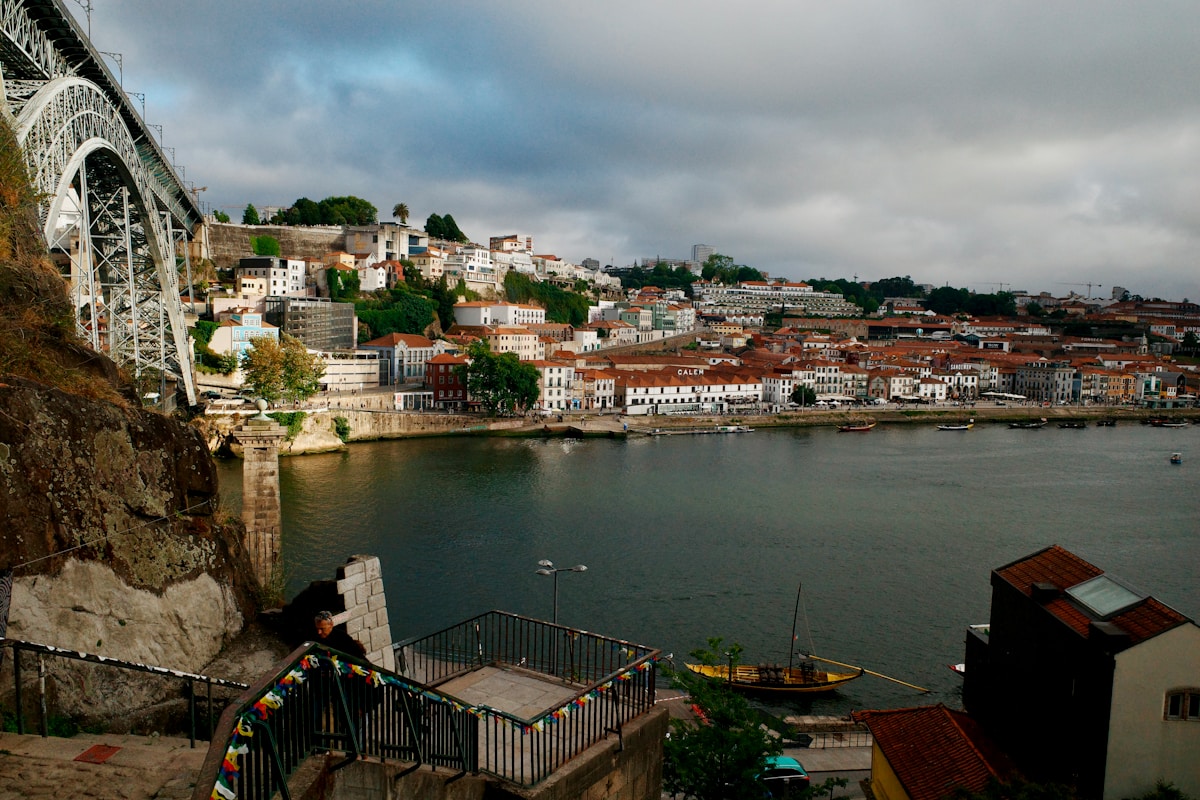
Porto is compact enough to walk across in 45 minutes but different enough between neighbourhoods to matter significantly for where you sleep. The Ribeira waterfront feels like living inside a UNESCO postcard but gets genuinely noisy at weekends. Foz do Douro is quieter and beachy but requires effort to reach the sights. Understanding these trade-offs before booking saves frustration.
Search Porto hotels on Booking.com to compare rates and availability.
Porto has an excellent hostel scene. Oporto Brewery is a lively hostel in a converted brewery near the Ribeira, with a bar downstairs and good social energy - dorms from approximately €18 per night as of 2026. Gallery Hostel (Cedofeita) and Tattva Design Hostel are listed in the Cedofeita section above.
Porto’s accommodation is mostly concentrated in the historic centre - Ribeira, Baixa, and the streets climbing toward Cordoaria and Cedofeita. Vila Nova de Gaia, across the river, has one outstanding wine hotel. Foz do Douro, at the river mouth, is quieter and more residential, better suited to visitors who prefer being near the Atlantic coast. See our Porto city guide for a neighbourhood overview, and things to do in Porto for the main sights.
Ribeira
The Ribeira is the most atmospheric part of Porto - the riverfront buildings are genuine, the views are good, and the noise in summer is real. Porto’s historic riverside district is the city’s most photographed area - narrow medieval houses rising above the Douro, the Dom Luís I iron bridge looming overhead, and rabelo boats (traditional port wine vessels) moored on the waterfront. The Ribeira is a UNESCO World Heritage Site and the first choice for most first-time visitors. Ground-floor and first-floor rooms on the main strip can be loud on weekend nights until 2–3am. Higher floors in the same buildings are quieter.
Infante Sagres / Hotel Infante de Sagres (Praça D. Filipa de Lencastre 62) is Porto’s most established five-star hotel - a 1951 building with Art Deco details and a central location just off Ribeira. Rates €140–320 depending on season.
Torel Avantgarde is a boutique design hotel with views of the Douro from its hillside position. Bold interiors, small pool, terrace overlooking the river. Rates €180–380.
Hotel Pestana Porto is a reliable four-star on the Ribeira waterfront in a converted medieval building. From approximately €120–200 per night.
Carris Porto Ribeira - reliable four-star in the heart of the Ribeira waterfront district; rooms on the upper floors have direct Douro river views. From approximately €90–150 per night as of 2026.
Guest House Douro - well-reviewed small guesthouse directly on the Ribeira waterfront strip, clean rooms and friendly management. From approximately €70–110 per night.
Oporto Style House - boutique hotel in a converted townhouse near Praça da Ribeira, with attractive common areas and 12 rooms. From approximately €80–130 per night.
Pros: UNESCO waterfront setting, restaurants and bars at the door, walking distance to most sights (Sé Cathedral, Palácio da Bolsa, port wine cellars in Gaia across the bridge), great for photos at dawn and dusk.
Cons: Streets are extremely steep and cobbled - difficult with heavy luggage. Very loud on Friday and Saturday nights until 2–3am. Restaurants on the main waterfront strip are tourist-priced; the best food is a 10-minute walk uphill.
Best for: First-time visitors, photographers, short breaks of 2–3 nights.
Baixa (City Centre)
Baixa (the lower city centre, around Avenida dos Aliados) is Porto’s commercial heart - less picturesque than Ribeira but better positioned for public transport, day trips, and moving around the city efficiently. The grand 19th-century boulevard and the Bolhão market area anchor this neighbourhood.
Intercontinental Porto is the city’s most prestigious central address, occupying a historic palace on Avenida dos Aliados. From approximately €150–250 per night.
Hotel Teatro is a boutique hotel in a converted early 20th-century theatre building. From approximately €120–200 per night.
Casa do Conto (Rua da Boavista 703) is a converted townhouse with a design-led interior. Small - around 10 rooms - and well managed. Rates €150–250.
1872 River House is a smaller hotel near the Ribeira edge of Baixa, good value for the location. From approximately €100–160 per night.
Pros: Metro and train access, flat main streets (easier than Ribeira), close to shopping and the revitalised Bolhão market, good base for day trips to Braga, Guimarães, or the Douro Valley by train.
Cons: Less atmospheric than Ribeira or Cedofeita. Some streets near the Praça da Batalha can feel run-down.
Best for: Travellers with early trains, those making day trips, business visitors.
Bonfim
Bonfim is Porto’s most genuinely local neighbourhood - east of the historic centre, with independent restaurants, wine bars, vintage shops, and a mix of renovated 19th-century housing. It is where Porto residents actually live, and where the best chef-driven restaurants have opened in the last decade.
Casa Hintze Ribeiro - boutique hotel in a lovingly restored 19th-century villa with 10 rooms, a garden, and an honest local feel. From approximately €90–140 per night as of 2026.
Porto A.S. 1829 Hotel - sophisticated hotel that pays homage to Porto’s commercial heritage, with individual room styling and a good breakfast. From approximately €100–160 per night.
Cedofeita & Boavista
Cedofeita is Porto’s creative residential district, slightly west of the centre. It has the city’s densest concentration of independent restaurants, concept stores, and the Rua Galeria de Paris bar scene. Boavista is the business district further west, quieter in evenings but with good transport.
Rosa Et Al Townhouse is a small design-led guesthouse in a restored early 20th-century house. One of Porto’s most characterful stays. From approximately €100–180 per night.
Hotel da Música is sleek and modern, adjacent to Casa da Música (Porto’s concert hall, designed by Rem Koolhaas). Rates €90–180.
Monumental Palace Hotel - grand early 20th-century building in the Boavista/city-centre transition zone, with a grand entrance hall and well-maintained rooms. From approximately €90–150 per night as of 2026.
AC Hotel Porto - modern Marriott-branded hotel near the Casa da Música with a pool, gym, and reliable business-class comfort. From approximately €100–160 per night.
Gallery Hostel (Rua de Miguel Bombarda 222, Cedofeita) has a strong reputation built over several years. It functions more like a small boutique hotel than a standard hostel - common areas, a garden, regular events. Private rooms from €70; dorms from €25.
Tattva Design Hostel (Rua do Cativo 26) has a design-led interior and reliable standards. Rates comparable to Gallery Hostel.
Pros: Local feel, less tourist-heavy than Ribeira, some of Porto’s best independent restaurants within walking distance, excellent for exploring the Serralves Museum and gardens.
Cons: Further from the Ribeira waterfront and the port wine cellars (15–20 minute walk or Metro). Less scenically concentrated than the historic core.
Best for: Repeat visitors, those prioritising food and nightlife over Instagram locations, travellers who prefer a local neighbourhood to a tourist core.
Foz do Douro
Foz is where the Douro meets the Atlantic - Porto’s beach neighbourhood, 6km west of the centre. It has a long promenade, a relaxed café culture, several good restaurants, and a distinctly local feel. Portuguese families come here in summer; tourists rarely make it this far. More residential, quieter in the evenings, with a promenade and good fish restaurants.
Hotel Eurostars Porto Douro is a solid four-star with river-mouth views and easier parking than the city centre. From approximately €100–170 per night.
Selença in the nearby Bonfim neighbourhood is a newer boutique hotel with an industrial aesthetic and rates from €130–220. Good for visitors who want something away from the main tourist circuit.
Accommodation in Foz is mostly apartments and guesthouses, well suited to longer stays or visitors who’ve already done the centre.
Pros: Quieter than the centre, beach access, Atlantic air, excellent local restaurants along Avenida do Brasil promenade, less tourist-heavy.
Cons: 30–40 minutes to Ribeira by bus or Uber (approximately €10–14 as of 2026). No direct Metro connection. In winter it can feel isolated.
Best for: Travellers extending a trip, families wanting beach access, those who’ve done Porto before and want a different angle.
Vila Nova de Gaia
Technically a separate municipality across the Douro, Gaia is connected to Porto by the Dom Luís I bridge (10 minutes on foot). It’s home to the port wine lodges - Sandeman, Graham’s, Ramos Pinto, Taylor’s, and others - that made Porto’s fortune. The Gaia waterfront has developed into a restaurant and bar strip comparable to the Ribeira.
The Yeatman (Rua do Choupelo) is the clearest reason to stay in Gaia - and Portugal’s best wine hotel. Every room has a wine theme, the cellar is serious, the pool overlooks Porto’s skyline, and the restaurant holds a Michelin star. Rates €250–500. If you’re combining Porto with a Douro Valley wine trip, it makes sense. Advance booking essential, especially May–September.
Portobay Flores - well-regarded four-star on the Gaia waterfront promenade with river views from many rooms and easy walking access to the port lodge visits. From approximately €90–150 per night as of 2026.
River Story Hotel - more affordable option on the Gaia waterfront with reasonable river views and a good location for the cable car and lodge visits. From approximately €70–120 per night.
Espaço Porto Cruz is a more accessible option in a converted wine lodge on the Gaia waterfront with views across to Ribeira. From approximately €120–200 per night.
Pros: Port wine cave tours on the doorstep, calmer than Ribeira, exceptional views back to Porto, The Yeatman is one of the best hotels in Portugal.
Cons: Limited restaurant variety compared to Porto proper (outside The Yeatman). Slightly removed from Porto’s galleries, museums, and independent restaurants. The Yeatman is expensive.
Best for: Wine lovers, honeymoons and special occasions, those who want a quieter base with the city accessible by bridge walk.
Getting Between Areas
Porto’s Metro (lines A through F) connects the airport, Ribeira edge (São Bento station), Boavista, and the outer residential areas. Key connections:
- Metro line D (yellow): runs Aliados and São Bento into the suburbs, passing through the Ribeira-adjacent area. Single ticket approximately €1.50 as of 2026; 24-hour pass approximately €5.50.
- Bus 500: connects Foz do Douro to the city centre. Journey approximately 35 minutes.
- Uber: Ribeira to Foz approximately €10–14; Ribeira to Boavista approximately €5–7.
- On foot: Ribeira to the Sé Cathedral is a 10-minute uphill walk. Dom Luís bridge to Gaia is 10 minutes across on the lower deck.
Once you’ve shortlisted your neighbourhood, consider airport transfers from the airport to your hotel - fixed pricing and no taxi queue stress. Travel insurance is worth comparing before you book - policies that cover trip cancellation give more flexibility if plans change. An eSIM for Portugal keeps you connected for navigation and last-minute bookings on arrival.
For port wine cellar tours in Vila Nova de Gaia and guided Douro Valley day trips, Porto tours cover the main departures from the city centre.
Neighbourhood Summary
| Area | Best For | Price Range |
|---|---|---|
| Ribeira | Atmosphere, river views | €120–380 |
| Baixa | Central access, transport | €100–320 |
| Cedofeita | Best restaurants and nightlife | €25–250 |
| Foz do Douro | Beach, quiet evenings | €100–220 |
| Gaia (Yeatman) | Wine, luxury, Porto views | €120–500 |
Avoid the cheapest end of the Ribeira restaurant strip for eating - the street-facing restaurants with photo menus are almost universally poor value. This doesn’t apply to the accommodation category, where the Ribeira hotels are fine.
Porto is small enough that no neighbourhood leaves you stranded - the difference is walking uphill or taking an Uber. For a first trip of 2–3 nights, Ribeira gives the most immediate sense of the city. For longer stays or repeat visits, Cedofeita offers a truer picture of how Porto actually lives.
For the full Porto sightseeing context, see the Porto city guide. For a weekend plan including port wine lodges and a Douro day trip, see our Porto weekend itinerary. Port wine cellar tours in Vila Nova de Gaia are covered in detail in our Porto wine tasting guide. For the Douro Valley itself - where the grapes are grown - see the Douro Valley region guide.