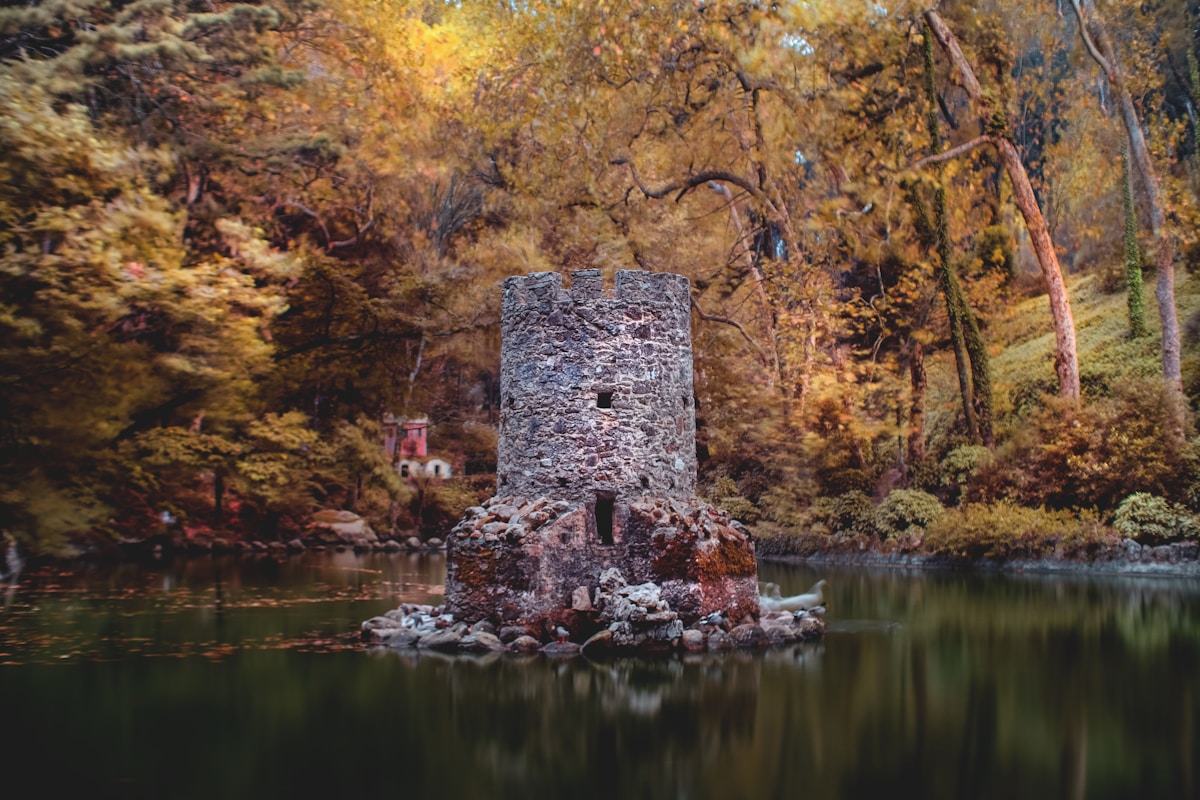
Sintra sits in a UNESCO World Heritage landscape 28km west of Lisbon — a forested ridge of granite hills dotted with royal palaces, Romanticist estates, a Moorish castle, and a network of walking paths that connect them. The challenge for independent visitors is logistics: the main sites are spread across the hills, the roads are narrow, and in peak season the shuttle buses run at capacity. A guided tour resolves the access problem and adds historical context to a landscape that is genuinely layered. This guide covers the best tours in Sintra for 2026, from palace visits to the Atlantic coast at Cabo da Roca.
Quick Comparison: Top Sintra Tours at a Glance
| Tour | Duration | Price (from) | Best For |
|---|---|---|---|
| Pena Palace Guided Tour with Tickets | 3 hrs | €35 | Romanticist palace highlight |
| Quinta da Regaleira Guided Tour | 2.5 hrs | €25 | Masonic symbolism and the initiation well |
| Sintra UNESCO Heritage Walking Tour | 3 hrs | €20 | History and village context |
| Moorish Castle and Palace Combination | 4 hrs | €40 | Full hilltop coverage |
| Sintra, Cabo da Roca and Cascais | Full day | £55 | Atlantic coast and palace combined |
| Sintra Food and Pastry Tour | 2 hrs | €30 | Local sweets and village food culture |
Best Sintra Tours by Experience Type
For the Main Palace: Pena Palace Guided Tour with Tickets
Pena Palace is the building that defines Sintra visually — a 19th-century Romanticist palace built for King Ferdinand II over the ruins of a Hieronymite monastery, painted in yellow, red, and terracotta, with Moorish, Manueline, and Gothic elements combined without restraint. It is one of the most distinctive buildings in Portugal and genuinely looks better in person than in photographs: the scale and the colour palette are more intense than any reproduction captures.
A Pena Palace guided tour with entry tickets gets you into the palace with pre-booked time slots (essential in July and August, when walk-up queues can stretch to 2–3 hours) and a guide who covers the Romanticist movement, King Ferdinand II’s collecting obsessions (he amassed Islamic ceramics, Gothic furniture, and Manueline stonework and built the palace partly as a showcase), and the royal family’s use of Sintra as a summer retreat from Lisbon.
Duration: approximately 3 hours including travel to the hilltop. Price: from approximately €35 per person as of 2026, including entry. Timed entry via Parques de Sintra is required regardless — the tour’s value is the guide context and pre-arranged slots.
Why it suits Pena Palace visitors: The interior of the palace is more interesting than the exterior suggests — the Arab Room, the royal dining room with its Wedgwood-style ceiling, and the kitchen with its original copper equipment are genuinely worth time. Without a guide, most visitors focus on the exterior terraces (which are photogenic) and miss the interior rooms that tell the most about 19th-century Portuguese royal life.
For Masonic Symbolism: Quinta da Regaleira Guided Tour
Quinta da Regaleira is a private estate built between 1904 and 1910 by the eccentric millionaire António Augusto Carvalho Monteiro, who filled the grounds with Templar and Rosicrucian symbolism, underground tunnels, grottoes, and a 27-metre initiation well that descends through the rock via a spiral staircase. The well was never used for water — it was used for initiation ceremonies whose exact nature remains unclear.
A Quinta da Regaleira guided tour covers the main house (with its Neo-Manueline carved stonework), the chapel, the initiation well descent, the underground tunnels connecting the grottoes, and the terraced gardens. The symbolism is genuinely dense — without a guide, the Templar and Masonic references are decorative details; with one, the whole estate becomes an intentional symbolic programme.
Duration: approximately 2.5 hours. Price: from approximately €25 per person as of 2026, including entry. Combined Pena Palace and Quinta da Regaleira tours are available and save time on transport between sites.
Why it suits Quinta da Regaleira visitors: The initiation well is the most photographed single feature in Sintra after Pena Palace — a circular well with a spiral staircase descending nine levels (corresponding to Dante’s nine circles of Hell and nine circles of Heaven). In peak season, the well entrance has a queue. The guided tour typically has a reserved slot that bypasses the worst of it.
For History and Context: Sintra UNESCO Heritage Walking Tour
A Sintra heritage walking tour stays in the historic village centre and on the lower footpaths rather than climbing to the hilltop palaces. The route covers the National Palace of Sintra (the medieval royal palace in the village centre, visible from the main square with its twin conical chimneys — kitchen chimneys for a palace that fed the entire court), the Moorish quarter of the old town, and the viewpoints over the Serra de Sintra towards the Atlantic.
Duration: approximately 3 hours. Price: from approximately €20 per person as of 2026. National Palace entry is optional and typically extra.
Why it suits history visitors: The National Palace of Sintra is older than Pena Palace by several centuries — it was already a royal residence in the 14th century and contains medieval tilework that predates the azulejo tradition. Most Sintra visitors focus on Pena and Quinta da Regaleira and skip the village palace entirely, which is a mistake. The walking tour is the most efficient way to cover the village’s own history before or after the hilltop visit.
For Full Hilltop Coverage: Moorish Castle and Palace Combination
The Moorish Castle was built in the 8th and 9th centuries and occupied the Sintra hilltop before the Christian Reconquista. It was largely abandoned by the 19th century when King Ferdinand II had it landscaped as a Romanticist ruin — the battlements and towers remain, with the walls running across the forested ridgeline between Pena Palace and the palace grounds below.
A Moorish Castle and palace combination tour covers both sites with a guide in approximately 4 hours, typically using the hilltop tuk-tuk service or shuttle bus between them. The castle walls are accessible on foot from the Pena Palace area — approximately 20 minutes on a stone path — and are much less crowded than the palace itself.
Duration: approximately 4 hours. Price: from approximately €40 per person as of 2026, including both entry fees. Transport by tuk-tuk between sites sometimes included.
Why it suits comprehensive hilltop visitors: The Moorish Castle battlements give a different perspective on the Serra de Sintra and on the layout of Pena Palace. The two sites read as a conversation across time — the Islamic fortification that the Christian kingdom eventually captured in 1147, and the Romanticist fantasy that 19th-century royalty built over the monastery established to celebrate that conquest. With a guide, the historical continuity becomes clear.
For the Atlantic Coast: Sintra, Cabo da Roca and Cascais Full Day
Cabo da Roca is the westernmost point of continental Europe — a granite headland at 140 metres above the Atlantic with a lighthouse that has been operational since 1772. It sits on the same coastal ridge as Sintra, 16km to the southwest. A Sintra, Cabo da Roca and Cascais full-day tour adds the cape and the coastal resort town of Cascais to a Sintra palace visit, covering the full sweep of the Estoril coast in one outing.
Duration: approximately 8–10 hours. Price: from approximately £55 per person as of 2026. Transport and guide included. Palace entry typically extra; some tour variants include it.
Why it suits coast and palace visitors: Cabo da Roca is worth visiting for its own sake — the sensation of standing at the edge of continental Europe with nothing between the clifftop and North America is one of those experiences that is harder to intellectualise than to simply stand there and feel. The combination with Sintra and Cascais (an elegant coastal town with good seafood, a historic centre, and a 30-minute train back to Lisbon) makes for a complete Atlantic day.
For Local Food: Sintra Food and Pastry Tour
Sintra has two distinctive local sweets that are worth knowing before you arrive: the travesseiro (a puff pastry pillow filled with almond and egg yolk cream, invented by the Piriquita pastry house in 1943) and the queijada (a small tart of fresh sheep’s cheese, sugar, and cinnamon, made in Sintra since at least the 15th century). Both are better fresh from the source than from Lisbon shops selling versions made elsewhere.
A Sintra food and pastry tour takes you to the Piriquita original (and its competitors) for travesseiros, to a traditional pastry house for queijadas, and typically adds a local wine or ginjinha stop in the village. Some versions include a light lunch of petiscos at a taverna off the main tourist square.
Duration: approximately 2 hours. Price: from approximately €30 per person as of 2026. All tastings included.
Why it suits food visitors: Sintra’s main square has several pastry houses all claiming to be the original Piriquita — the guide clarifies which is authentic and which has moved since the historic location. The travesseiro is genuinely one of the better pastries in Portugal and is not available anywhere else in this form.
Practical Notes for Sintra Tour Bookings
Getting to Sintra independently: The train from Lisbon’s Rossio station to Sintra takes 40 minutes and runs every 20–30 minutes throughout the day. Return ticket costs approximately €2.35 each way (approximately £2). The train is the most reliable way to arrive — the narrow roads into Sintra create traffic that makes private transfers unreliable in peak season.
Getting around the hill sites: The Parques de Sintra shuttle buses (€3–€5 per trip) connect the train station to Pena Palace, Quinta da Regaleira, and the Moorish Castle. In July and August they run at capacity and queues can be 30–45 minutes. Tuk-tuks (approximately €40–€60 for a private hilltop circuit) are faster but expensive. Walking between all main sites takes 3–4 hours and involves steep terrain.
Palace ticket booking: Pena Palace and Quinta da Regaleira both require timed entry tickets booked via the Parques de Sintra website. In July and August, popular time slots sell out 7–10 days in advance. Book before you book a guided tour, or choose a guided tour that includes pre-arranged entry.
Best time to visit: April, May, September, and October have shorter queues, more reliable weather, and lower prices. July and August are the most crowded months in the country. Early morning arrivals (first train from Rossio, approximately 6:30am) reach the hilltop before the crowds arrive and before the mist burns off — the castle often appears above the cloud line, which is worth the early start.
Browse all Sintra tours: Tours in Sintra | Pena Palace tickets and tours | Quinta da Regaleira tickets
Planning your trip: Sintra city guide | Sintra day trips from Lisbon