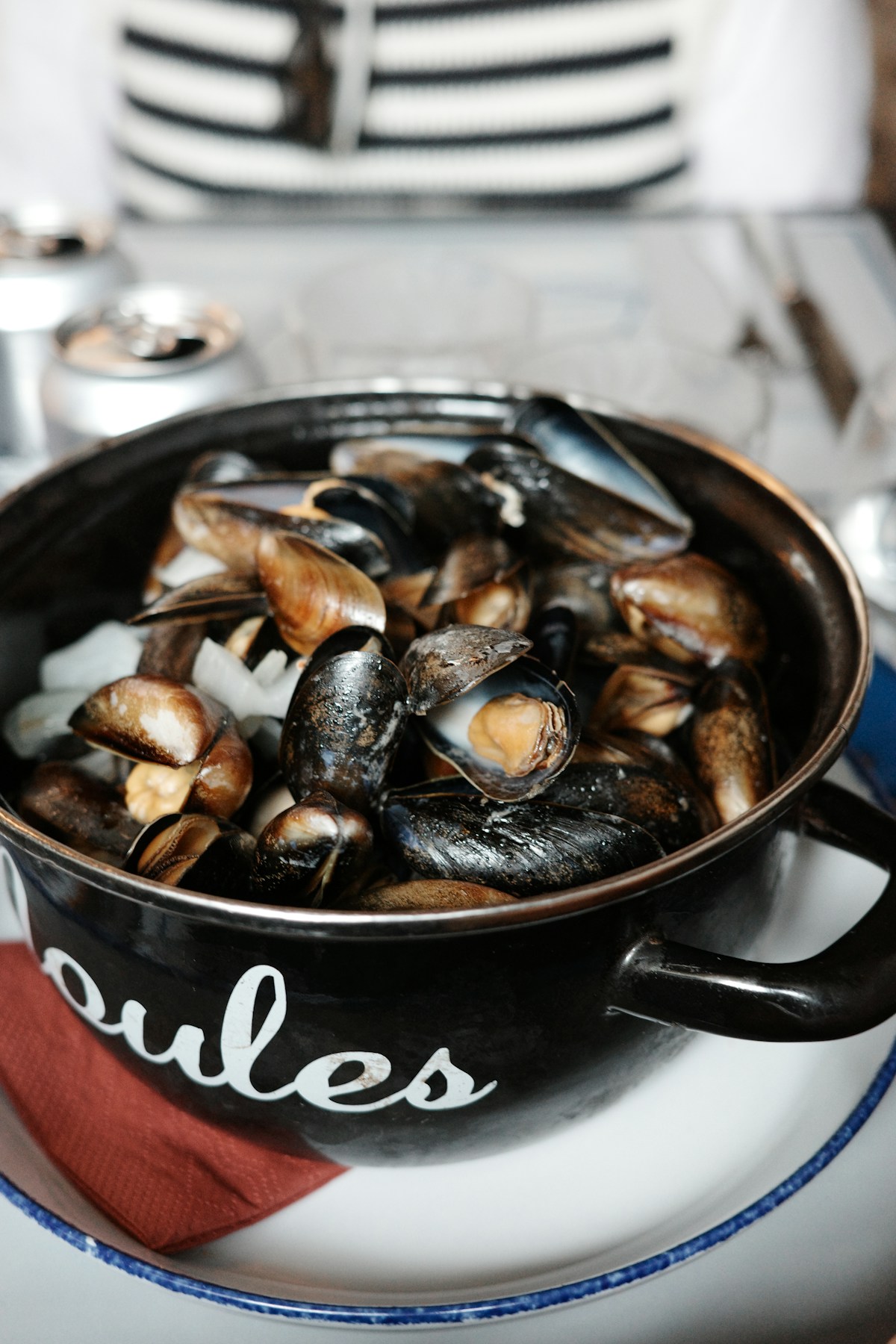
Portugal’s 850km Atlantic coastline produces some of Europe’s best seafood - the cold Canary Current running south past the Portuguese coast sustains rich fishing grounds that have fed the country for centuries. The seafood culture is specific and worth understanding before you order: prices are often per kilo, species have correct names that menus sometimes use in shorthand, and some dishes require ordering for two. For the broader context of Portuguese cuisine, see our Portuguese food guide.
Shellfish
Percebes (Goose Barnacles)
The most distinctive Portuguese shellfish, harvested from the barnacle-covered rocks of exposed Atlantic headlands - the Costa Vicentina in the Alentejo and the northern coasts near the Galician border produce the best. Harvesting is done by hand, in gaps between waves, on rock faces that receive direct Atlantic swell. The danger is real; harvesters die or are seriously injured every year.
At the table, percebes arrive in a bowl, typically hot. Hold the ribbed foot end, grip the softer top end, twist and pull. A cylinder of soft orange-pink flesh comes free. It tastes of the sea at full concentration - iodine, salt, cold water. They are expensive (€35–80/kg depending on location and season) and worth ordering once if the price is not a problem.
The best percebes come from the most exposed coastlines - the farther the barnacle has grown from calm water, the more marine flavour it develops. Costa Vicentina percebes are more prized than those from calmer stretches of coast.
Amêijoas (Clams)
The most commonly ordered shellfish in Portugal. Several species are used:
Amêijoas à Bulhão Pato - the classic preparation. Clams steamed open in white wine, olive oil, garlic, and a generous amount of fresh coriander. Named after a 19th-century Portuguese poet. The sauce is the point - eat it with bread. Order this everywhere you see it.
Amêijoas na cataplana - clams cooked in the sealed copper cataplana with tomato, onion, chouriço, and pepper. More elaborate than Bulhão Pato, typically served as a main course for two.
Amêijoas à marinheira - clams in white wine and parsley, simpler than Bulhão Pato but clean and good.
Lingueirão (Razor Clam)
Long razor-shaped clams found in sandy coastal sediment, harvested along the Alentejo coast and in the Ría de Aveiro. At its best in arroz de lingueirão - creamy rice cooked with razor clams, white wine, onion, and parsley, served slightly soupy (arroz malandrinho). Order for two; the minimum portion in most restaurants is 500g of clams.
Lingueirão na grelha (grilled razor clams) is the alternative - the clams are split and grilled with garlic butter or olive oil. Simpler, cleaner flavour than the rice.
Sapateira (Spider Crab)
The large Atlantic spider crab, the size of a dinner plate. Typically served cold, already cracked, with the shell cleaned and the brown meat (miolo) mixed back inside with mayonnaise, mustard, and lemon. A messy and labour-intensive starter; the claws contain sweet white meat.
Order a sapateira when it’s on the board at a marisqueira. It’s priced by weight (€15–30 for a medium crab) and serves as a starter for two with bread.
Lagosta (Lobster) and Lavagante (European Clawed Lobster)
Lagosta is the spiny lobster (Palinurus elephas), without claws; lavagante is the clawed Atlantic lobster. Both are expensive (€60–120/kg) and typically served grilled or thermidor. Ordered in advance at most marisqueiras. Quality depends on whether the lobster is live tank or thawed; ask.
Camarão and Gambas (Prawns)
Camarão are smaller prawns - the Mozambique camarão (large, sweet) found on Lisbon menus is one of the best. Gambas are larger prawns. The most prized variety on Portuguese menus is the carabineiro - a deep-sea scarlet prawn caught at 500–800m depth, the full flavour of a langoustine. Sold by weight (€50–100/kg at good restaurants). Worth the price once.
Gambas na grelha (grilled prawns) and gambas à guilho (sautéed with olive oil, garlic, and chilli) are the standard preparations. The guild approach with Mozambique camarão at a Lisbon cervejaria is one of the better eating experiences in the city.
Fish
Polvo (Octopus)
Octopus appears on almost every Portuguese menu. The most common preparations:
Polvo à lagareiro - octopus roasted in the oven until the tentacles crisp and char slightly, served with crushed roast potatoes (batatas a murro) and good olive oil. The olive oil (in which the potatoes and octopus have been cooked) is the point - pour it over everything.
Polvo à algarvia - sautéed octopus with onion, garlic, olive oil, and coriander. The Algarve preparation, lighter than lagareiro.
Arroz de polvo - octopus rice, cooked in the octopus braising liquid. Rich, dark, and deeply flavoured. Similar to arroz de lingueirão but with more body.
Caldeirada de Peixe (Fish Stew)
The Portuguese equivalent of bouillabaisse - multiple fish varieties (typically including conger eel, dogfish, grouper, and whatever the market provided that day) cooked with potato, tomato, onion, olive oil, and white wine in a layered pot. The dish is not stirred during cooking; each layer retains its integrity. Served in the pot, at the table. Caldeirada varies by region - Algarve versions include shellfish; northern versions use river fish.
Bacalhau (Salt Cod)
Salt cod is not fresh seafood in the conventional sense but it is Portugal’s defining fish dish. See our Portuguese food guide for the full bacalhau section. In a marisqueira, the one bacalhau preparation you’ll see is bacalhau grelhado - a thick slab of soaked and drained salt cod grilled over charcoal, served with boiled potato and olive oil. Simple and excellent.
The Marisqueira
A marisqueira is a shellfish restaurant - distinguishable from a general fish restaurant (peixaria or marisqueira-peixaria) by its focus. The format is consistent:
- A tank of live shellfish near the entrance, or a chilled counter display
- Chalk board showing the day’s prices by weight
- Minimal cooking - shellfish is steamed, boiled, or grilled, not sauced
- Bread is charged separately (typically €2–4 for a basket)
How to order at a marisqueira: decide your budget first. Point at the display or ask what’s fresh. Shellfish is priced per kilo; ask the waiter to estimate weight before they prepare your order. A typical meal at a marisqueira in Lisbon or Porto runs €40–70pp for shellfish, bread, and house white wine.
The best marisqueiras in Portugal are in Matosinhos (near Porto), Sesimbra (south of Lisbon), and along the Alentejo coast at Sines, Comporta, and Vila Nova de Milfontes. The coastal settlements of Setúbal and Tavira are also strong options - Setúbal for fried cuttlefish (choco frito) and clams from the Sado Estuary, Tavira for tuna and lagoon bivalves from the Ria Formosa.
How to Order Portuguese Seafood
Priced by weight: fish and shellfish are almost always sold by weight (à posta or ao quilo). The waiter should tell you the weight and price before cooking - if they don’t, ask (“quanto pesa?”). A 600g grilled sea bass (robalo) at a coastal restaurant typically costs €16–24.
Olive oil: Portuguese seafood is served with generous quantities of good olive oil. It is not a condiment to be added sparingly. The batatas a murro (crushed potatoes fried in olive oil) served alongside grilled fish are meant to absorb the oil from the fish and the plate.
Wine: Vinho verde (white, lightly sparkling, high acidity) is the standard pairing with Atlantic shellfish. Alentejo whites work well with richer fish dishes. A carafe of house vinho verde at a marisqueira costs €6–10 and is usually excellent for the price.
Season: percebes and fresh shellfish quality peaks in autumn (October–December) and spring (March–May). Summer brings tourist demand and slightly lower quality on some species. Polvo is available year-round.
tours in Lisbon include food-focused walking tours that visit local tasca restaurants, markets, and artisan food producers across Lisbon’s neighbourhoods.
Take a Guided Seafood Tour of Portugal
A guided seafood tour in Lisbon or Porto offers more than just restaurant picks — it gives context for reading a menu at a marisqueira, understanding how percebes are harvested and why they cost what they cost, and knowing which preparation to order for arroz de lingueirão versus a simple amêijoas à Bulhão Pato. In Porto, tours that include the Matosinhos fish market give you a direct view of what the boats brought in that morning before it reaches the grill. In Lisbon, food tours typically include a stop at Cervejaria Ramiro or an equivalent cervejaria to demonstrate the Atlantic shellfish culture.
Browse seafood food tours in Portugal on GetYourGuide.
Where to Eat Seafood by City
For city-specific restaurant picks using the dishes covered in this guide:
- Lisbon restaurants guide - amêijoas à bulhão pato, grilled fish, and detailed picks including Cervejaria Ramiro
- Porto restaurants guide - Matosinhos grilled fish, francesinha, and the Ribeira
- Faro food guide - cataplana and eastern Algarve lagoon seafood
- Tavira food guide - tuna and ria formosa clams
- Lagos food guide - western Algarve grilled fish
For a guided seafood tasting experience in Lisbon, see our Lisbon food tours guide. Tours in Porto include visits to the Matosinhos fish market and seafood tastings along the waterfront.
Plan Your Trip
Where to stay: Find hotels in Portugal — search accommodation across all budgets.