3 Days in Lisbon — The Complete Day-by-Day Itinerary
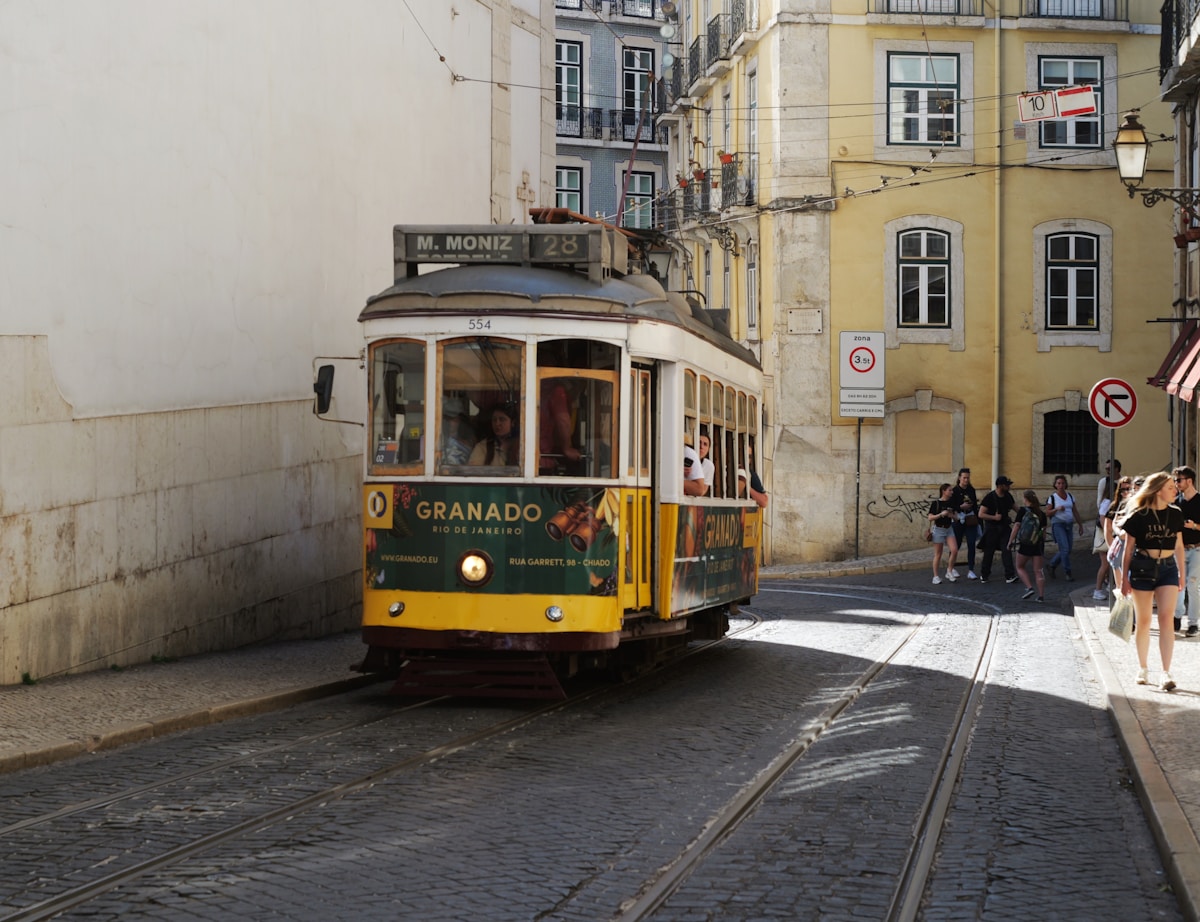
Three days in Lisbon is enough to understand the city’s essential geography, eat well, and walk the hills without feeling rushed. This itinerary is designed for people staying in the centre — Baixa, Chiado, or Alfama — who want to see the main sites without spending half the day queuing. See our Lisbon city guide for neighbourhood context, and our things to do in Lisbon page for entry prices and booking advice.
Day 1 — Alfama, the Castle, and the River
Morning: Start early in the Alfama before the tourist traffic arrives. The neighbourhood climbs from the Tagus to the São Jorge Castle and is best on foot — the streets are steep and narrow and the only way to understand them is to get lost in them. From Praça do Comércio (the main riverside square), walk northeast up through the Mouraria toward the castle.
The Castelo de São Jorge (€15, open 9am) gives the best elevated view of Lisbon from the city walls. Inside, peacocks roam the grounds and the archaeological site shows layers of occupation from the Iron Age through Moorish and medieval periods. Allow 1.5 hours.
Coming down from the castle, walk through the Alfama proper — past the Sé cathedral (Romanesque, 12th century, free exterior), the fado tile panels in the stairways, and the Portas do Sol terrace with its river views.
Lunch: The fish restaurants along Rua dos Bacalhoeiros serve lunch for €10–15 per person. Grilled sardines if it’s summer; bacalhau com natas if not.
Afternoon: Walk down to the Tejo riverfront — Praça do Comércio and the Ribeira das Naus garden. Take the 25 April Bridge silhouette from the Cais do Sodré end. Tram 28 runs past here — board at Martim Moniz or Graça and ride it down through the Alfama for the experience (15–20 minutes).
Evening: Cais do Sodré and the Mercado da Ribeira (Time Out Market) for dinner — choose a stall rather than a table and spend €15–25 on food and a glass of wine. Or walk to Chiado and eat at one of the restaurants on Rua do Alecrim — more expensive but better quality.
A fado performance in Alfama is worth one evening — expect to pay €25–40 including a drink, and book in advance for summer. Clube de Fado on Rua São João da Praça is long-established and reliable.
Day 2 — Belém and Chiado
Morning: Take the tram 15E or bus from Cais do Sodré to Belém (25 minutes). Start at the Pastéis de Belém bakery (Rua de Belém 84) for a pastel de nata at source — the original, made here since 1837, costs €1.25. The queue moves fast regardless of its length.
Jerónimos Monastery is 2 minutes from the bakery — book online (€10) to enter without queuing. The late Manueline cloister is one of Portugal’s finest architectural spaces, with carved stonework that incorporates ropes, armillary spheres, and maritime motifs into the Gothic structure. Allow 1.5 hours.
The Torre de Belém (€6, on the river edge, 10 minutes walk west) is smaller and more claustrophobic than it looks in photographs, but the exterior — a fantasy of Manueline stone carving projecting into the Tagus — is extraordinary. Queue moves in 20–30 minutes even in summer.
Lunch: LX Factory, the repurposed industrial complex in Alcântara (10 minutes east on the tram), has a Sunday market and good restaurants throughout the week. Or return to Chiado and eat at A Cevicheria or any of the restaurants near Largo do Chiado — budget €25–35 per person.
Afternoon: Explore Chiado and Bairro Alto — Livraria Bertrand (the world’s oldest operating bookshop, founded 1732) on Rua Garrett is worth five minutes. The Museu Nacional de Arte Antiga (National Ancient Art Museum) on Rua das Janelas Verdes houses Portuguese azulejos, silverware, and the Temptations of Saint Anthony triptych attributed to Bosch. €6 entry, closed Mondays.
Evening: Sunset from the Miradouro de Santa Catarina (Adamastor) — a terrace facing the Tagus, popular with locals who bring their own beer. Free and atmospheric. Dinner afterwards in Bairro Alto; the neighbourhood has some of Lisbon’s better small restaurants.
Day 3 — Baixa, Príncipe Real, and a Miradouro
Morning: Walk the Baixa grid — the formal city centre rebuilt after the 1755 earthquake on a Pombaline grid of uniform facades. The Elevador de Santa Justa (€5.30) is an iron lift that connects Baixa to the Carmo ruins at the top — worth the money for the view but skip the queue if it’s long and walk up instead via the Rua Garret side streets.
The Convento do Carmo (€5) — ruined by the earthquake, left roofless, and now housing an archaeological museum under the sky — is one of Lisbon’s most unusual spaces. The Gothic arches frame nothing but sky; the collection includes a pair of Egyptian mummies and Peruvian mummies under the nave.
Lunch: Príncipe Real is 10 minutes’ walk from Chiado — the Saturday organic market in the Jardim do Príncipe Real has good produce and food stalls. Otherwise, several good natural wine bars and restaurants have opened here in the past five years. Tasca do Chico in the Bairro Alto is excellent for petiscos (€12–18 per person for shared plates).
Afternoon: The Museu Nacional do Azulejo (National Tile Museum) is 20 minutes east of the centre by Uber or bus 794 — the best tile collection in Portugal, housed in a convent, with a 36-metre panoramic azulejo panel of Lisbon’s pre-earthquake waterfront. €5 entry, closed Mondays. Allow 1.5–2 hours.
Optional late afternoon: Bus 737 or tram to Graça for the Miradouro da Graça — a local square with benches and the widest view of the city before sunset. Less crowded than the more famous viewpoints.
Optional Day 4 — Sintra
Sintra is 40 minutes by train from Rossio station (€2.25 each way, trains every 20 minutes). The town and its palaces sit on a granite ridge above Lisbon and were the summer residence of Portuguese royalty for centuries.
The key sites require booking in advance in summer:
- Palácio da Pena (€14) — a 19th-century Romantic palace painted in yellow and terracotta, with a fantastical combination of Gothic, Manueline, and Moorish architecture. The queue for tickets at the gate in July can exceed 1 hour.
- Quinta da Regaleira (€12) — a private estate with an initiation well (a spiral staircase descending 27m into the earth, lit by natural light from the surface) and Masonic symbolism throughout. Slightly more unusual than Pena and less crowded.
- Palácio Nacional de Sintra (€10) — the old royal palace in the town centre, with twin conical kitchen chimneys and the best interior among Sintra’s sites.
For Pena Palace, buy tickets online at sintra.pt at least 2–3 days in advance. The walk from the train station to Pena is 40 minutes uphill; buses run from the station square for €3.
From Sintra, consider continuing 12 km to Cabo da Roca (the westernmost point of continental Europe) before returning to Lisbon — Scotturb bus 403 runs the route.
Practical Notes
- Lisbon’s hills are real. Wear flat-soled shoes with grip; cobbles are polished and steep.
- Metro card (Viva Viagem): top up with Zapping credit, every journey deducts the fare. A single metro journey costs €1.61 with a card (vs €2 cash).
- Rideshares (Uber, Bolt) are cheap and abundant — usually €5–8 across the city centre.
- Restaurants open for dinner late — most don’t fill until 8pm, and many don’t take reservations until 7:30pm. Book popular places for 8:30 or 9pm.
Book an experience
Itinerary in the area
Instant confirmation · Free cancellation on most bookings
Frequently Asked Questions
- Is 3 days enough for Lisbon?
- Three days covers Lisbon's essential areas at a comfortable pace — Alfama and the castle, Belém, the Baixa and Chiado, and at least two miradouros (viewpoints). A fourth day is well used for a Sintra or Cascais day trip.
- Is tram 28 worth it in Lisbon?
- The route is genuinely useful — it connects Martim Moniz to Estrela via Alfama and the castle area — but it is extremely crowded in summer and a target for pickpockets. Ride it for the experience but keep your bag in front of you. Bus 737 covers a similar route with less congestion.
- What is the best miradouro in Lisbon?
- For a 360-degree view, Miradouro da Graça (early morning, before crowds) is best. Miradouro da Senhora do Monte has the widest panorama including the castle. Miradouro de Santa Catarina (Adamastor) faces the river and Tagus and is popular at sunset. Each gives a different perspective.
- Do I need to book attractions in advance in Lisbon?
- Yes for Jerónimos Monastery in Belém (€10 — book online to avoid the queue). The Mosteiro dos Jerónimos queue in summer can be 45 minutes without a booking. The Torre de Belém (€6) is smaller and queues move faster. Most other sites are walk-in.