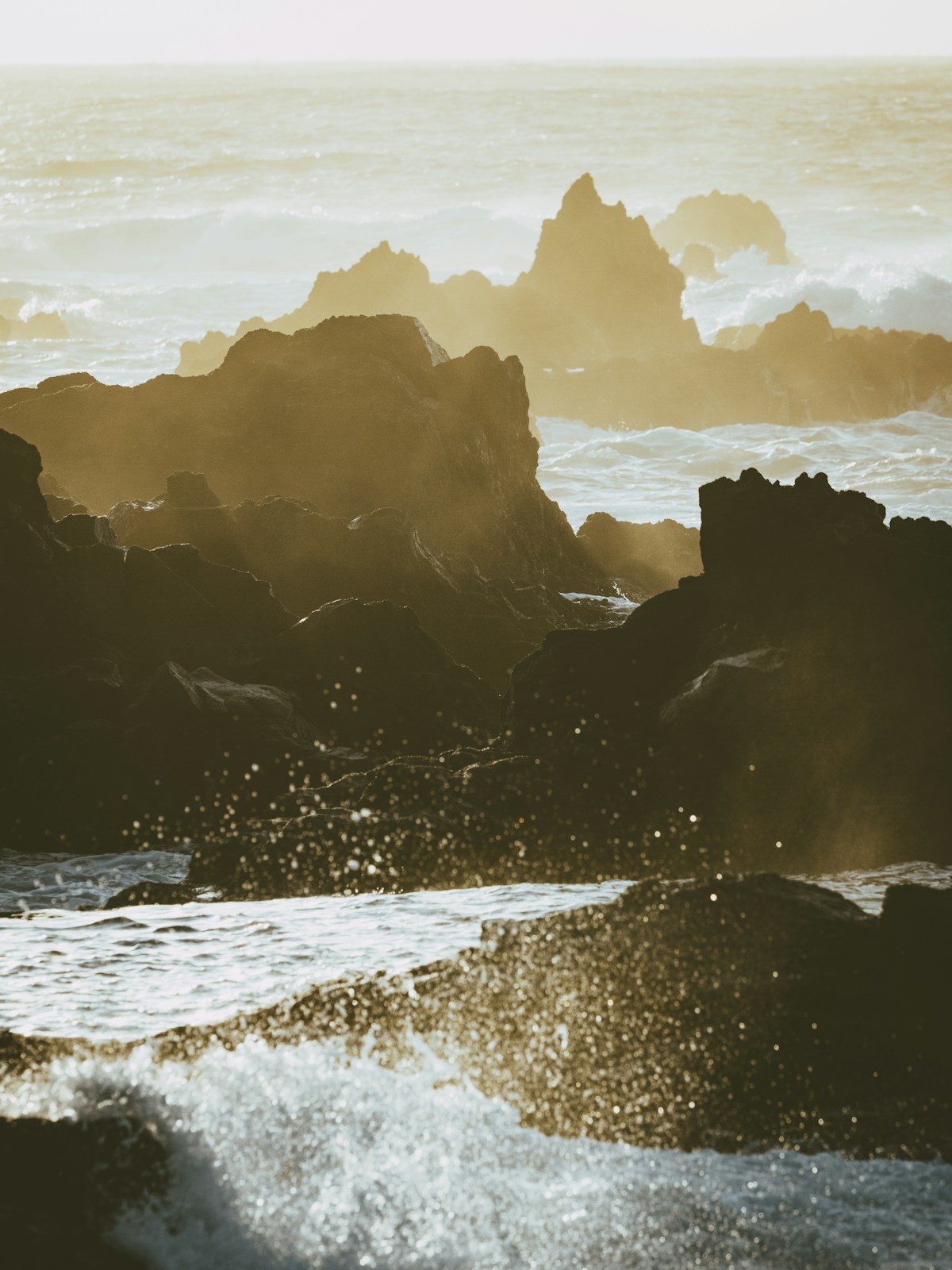
São Miguel’s beaches are shaped by its volcanic geology. Black sand, dark basalt rocks, and geothermal vents define the coastline in ways you won’t find on mainland Portugal. The water stays around 18–20°C from June through September — swimmable but not warm. Most beaches face the open Atlantic and have some swell; sheltered sea pools provide calmer swimming for families and weaker swimmers.
Praia do Populo
São Miguel’s most accessible beach and the closest to Ponta Delgada — around 5km east of the city centre, about 10 minutes by car. The beach is a mix of dark sand and fine gravel with a protective breakwater that calms the worst of the Atlantic swell. The result is one of the more reliable swimming beaches on the island: clean, lifeguarded in summer, with toilets and a café nearby.
Praia do Populo gets busy on summer weekends with Ponta Delgada locals. Arrive before 11am to get a spot close to the water. Parking is free in the adjacent car park.
Praia de Santa Barbara
On the north coast near Ribeira Grande, approximately 25km from Ponta Delgada (30 minutes). The longest beach on the island — a broad expanse of black volcanic sand backed by low cliffs. The waves here are consistent and powerful, making it São Miguel’s main surf beach. Several surf schools and rental shops operate from the beach, with lessons from approximately €35 per person as of 2026.
Santa Barbara is not a calm swimming beach — the waves break close to shore and the rip currents can be strong. Non-swimmers and families are better at Praia do Populo or the sea pools. For surfers, the beach works from beginner level to intermediate depending on conditions; board and wetsuit rental costs around €20 per session.
Praia do Mosteiros
Northwestern coast near the village of Mosteiros, around 40km from Ponta Delgada (45 minutes). The setting is the most dramatic on the island: two volcanic islets rise directly from the sea just offshore, framing a dark basalt beach that catches the full western Atlantic. Sunsets here are spectacular.
The beach itself is coarse black sand and rock — swimming is possible but the swell can be rough and there are no lifeguards. The view is the main draw. A small café operates in the village above the beach. Combine with a visit to Sete Cidades (15km south) on the same day.
Praia da Viola (Natural Pool)
Near Rabo de Peixe on the north coast, around 30km from Ponta Delgada. A natural lava rock pool sheltered from the open sea, with clear calm water ideal for snorkelling. Visibility is generally good — the volcanic rock bottom supports sea urchins, small fish, and occasional octopus. Entry is free and there is a changing area. Best at mid-tide; at high tide waves can break over the outer rocks.
Ponta da Ferraria Thermal Sea Pool
Southwest tip of São Miguel, near the Ferraria headland, about 22km from Ponta Delgada (25 minutes). A natural sea pool where geothermal springs vent directly into the Atlantic — the water close to the vent is noticeably warm, while the outer edges of the pool are cooled by incoming seawater. Entry costs approximately €5 as of 2026 and includes access to basic facilities.
Timing matters: visit 1–2 hours either side of low tide. At high tide, Atlantic waves break directly into the pool and make it unusable and potentially dangerous. Check the tide table before going — the regional government tide chart covers São Miguel. Water temperature at the thermal vent is approximately 30–35°C; the pool averages around 25°C on a good day.
Caldeira Velha Warm Pools
Not a beach, but worth combining with a beach day on the north coast. A forested waterfall and warm thermal pool around 35km from Ponta Delgada — entry €4 as of 2026. Water temperature approximately 28–30°C. See the day trips from São Miguel guide for details.
Practical Notes
Water temperature: 18–20°C June–September, dropping to 15–17°C outside that window. A shorty wetsuit extends the season for those sensitive to cold.
Black sand: volcanic beaches in the Azores are predominantly dark basalt sand or coarse gravel, not pale Atlantic sand. Beach shoes or sandals are useful on the rougher stretches.
Lifeguards: Praia do Populo and Praia de Santa Barbara have lifeguard coverage in July and August. Other beaches do not.
Access: all beaches listed are reachable by car. There is no reliable bus network connecting the beaches. Rental cars start around €40–60 per day as of 2026 — see the São Miguel day trips guide for getting around tips.
For more on the island see the São Miguel island guide and things to do in São Miguel.
Search hotels in São Miguel Azores on Booking.com to compare rates and availability.