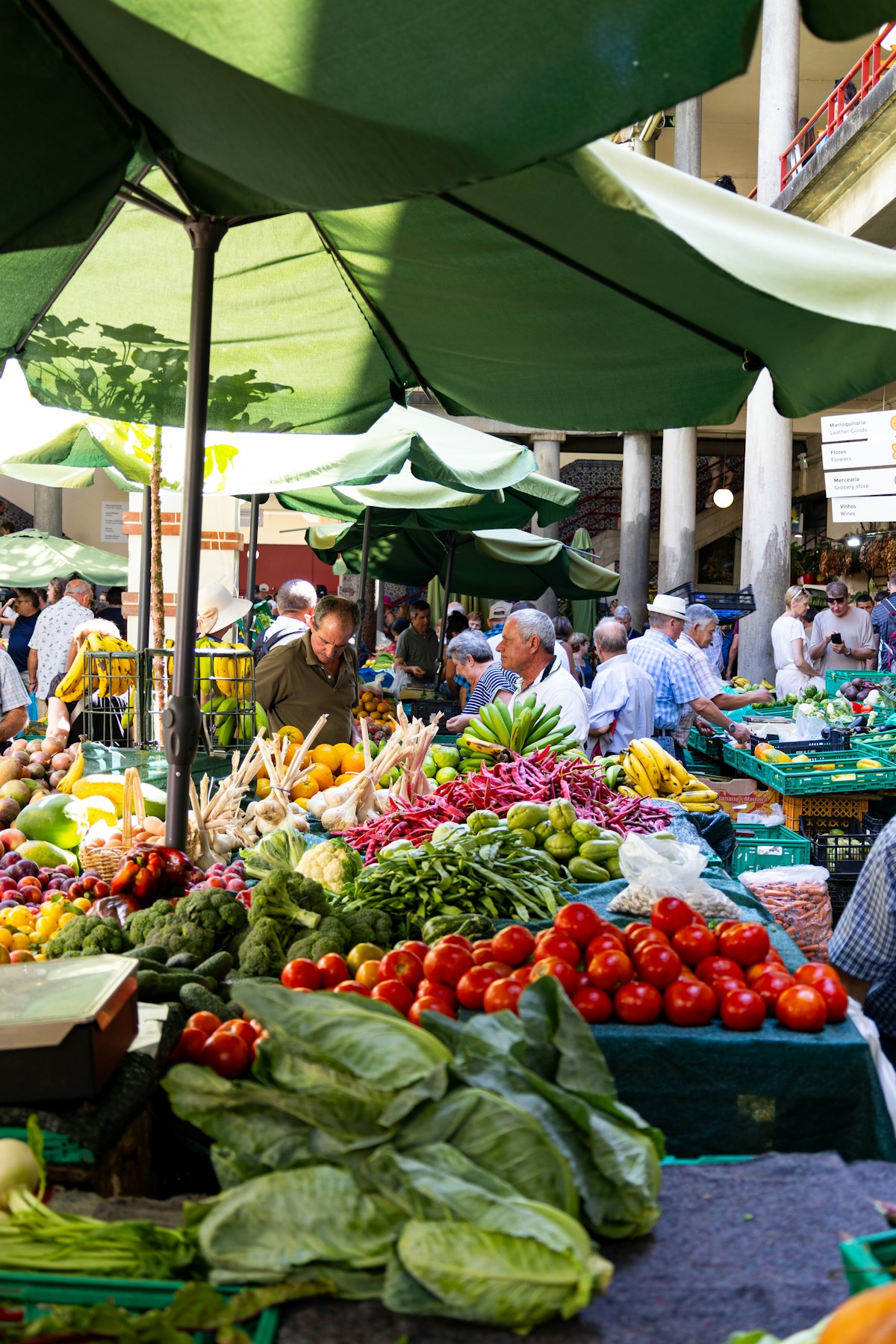
Madeira’s food is shaped by its geography: a volcanic island with limited flat land, a deep Atlantic coast, and subtropical growing conditions that produce fruit found nowhere else in Portugal. The cooking is direct - grilled fish, slow-cooked meat, and ingredients that don’t need much intervention. Funchal has a solid restaurant scene ranging from traditional tasca to upscale dining, but some of the best eating is outside the capital, in village restaurants where espetada is cooked over wood fires.
Espada (Black Scabbardfish)
Espada is the fish of Madeira. The black scabbardfish is caught in the deep, cold Atlantic waters off the island’s coast - it lives at 800–1,600 metres depth and can only be fished at night with long handlines. The fish has a distinctive appearance: silver-black, eel-shaped, and largely absent from mainland Portuguese menus. On Madeira, it’s everywhere.
The standard preparation pairs espada with banana and passion fruit sauce. The combination sounds unusual; it works. The fish is mild and flaky, the sauce adds sweetness and acidity. Alternative preparations include a butter and caper sauce (if you find the banana combination too sweet).
Restaurante Zarco (Rua Santa Maria, Funchal) is one of the reliable traditional addresses for espada. The room is simple, the fish is fresh, and mains run €14–20. Avoid the tourist restaurants around the Marina - the price is the same, the quality is lower.
Espetada
Espetada is beef skewered on a fresh bay laurel branch and cooked slowly over charcoal. The laurel branch is the critical element - it flavours the meat during cooking and the aroma is part of the experience. Traditionally cooked at village festivals in the mountain interior, especially in Câmara de Lobos and Ribeira Brava.
Restaurante O Celeiro (near Câmara de Lobos) serves espetada in the traditional setting - hanging skewers over a central fire pit. A full espetada serving runs €16–22 and easily serves two people alongside milho frito (see below). Weekend lunches are the traditional time to eat it.
In Funchal itself, several restaurants serve espetada, but the experience is better at a village restaurant with a real charcoal setup than in a city kitchen.
Lapas (Grilled Limpets)
Lapas are limpets - shellfish that cling to the volcanic rocks along Madeira’s coastline. They are collected, placed shell-side down on a hot grill, and served with garlic, butter, and a squeeze of lemon. They arrive still sizzling in the shell.
Lapas are eaten throughout the Azores and Canary Islands, but the Madeiran version - slightly larger, more intensely flavoured - is the Atlantic benchmark. Expect to pay €8–14 for a starter portion of six to eight limpets.
Any seafood restaurant or traditional tasca near the waterfront will serve lapas. Tasquinha da Sé (near the Sé cathedral in Funchal’s old town) does a reliable version and is priced fairly - €9 for a starter portion.
Bolo do Caco
Madeira’s bread is not a baguette or a roll - it is bolo do caco, a flat, circular loaf made from wheat flour and sweet potato dough, cooked on a basalt stone (caco means stone). The texture is dense and slightly chewy; the crust blisters slightly from the stone.
It is almost always served with garlic butter, melted directly into the warm bread. As a meal accompaniment it costs almost nothing. As a standalone snack from a market stall - €0.50–1 - it is one of the best cheap eats on the island.
Mercado dos Lavradores (the farmers’ market in central Funchal) has stalls selling bolo do caco fresh from the stone. The market runs Monday to Saturday; mornings are busiest.
Milho Frito
Milho frito - fried polenta cubes - is the standard side dish on Madeira, used in place of the chips or potatoes you’d find elsewhere in Portugal. Cornmeal is cooked with kale or other greens, set, cut into cubes, and fried until crisp outside and soft inside. The flavour is mild; the texture is the point.
It is served automatically alongside espetada and with most grilled fish. You will not need to order it separately.
Mercado dos Lavradores
The Mercado dos Lavradores (Workers’ Market) in central Funchal is the best food destination on the island. Two floors of fresh produce, exotic fruit, dried spices, flowers, and the ground-floor fish market where espada arrives early each morning.
The exotic fruit section is worth exploring: pitanga (Surinam cherry), anona (custard apple), tamarillo, babaco, and the small Madeiran banana - sweeter and richer than the commercial variety. Expect to pay €3–8 for a bag of local fruit.
The market runs Monday to Saturday 7am–7pm (shorter hours on Saturday). Arrive before 10am for the best fish and to avoid peak crowds. To extend the experience beyond self-guided exploring, tours in Madeira include guided market visits that cover the history of the vendors and what each fruit species actually tastes like.
Madeira Wine and Poncha
Madeira wine - the fortified, heat-aged wine that appears as an ingredient in classical European recipes - is not typically drunk as a table wine. It is more useful as an aperitif (the drier Sercial and Verdelho styles) or a dessert wine (the sweeter Bual and Malmsey). The Madeira Wine Company’s shop near the Funchal waterfront does free tastings and explains the four grape varieties and production methods. Worth 45 minutes.
For everyday drinking, local table wine (particularly from the northern coast’s terraced vineyards) is drinkable and affordable. Most restaurants have a house wine from the island at €3–5 a glass.
Poncha - sugarcane brandy mixed with honey and citrus - is the local drink at bars and festivals. Câmara de Lobos has been the traditional village associated with poncha-making; several small bars along the old fishing harbour serve it from the barrel for around €2–3 a glass.
For where to sleep nearby, see best hotels in Madeira, and for activities on the island, see things to do in Madeira.