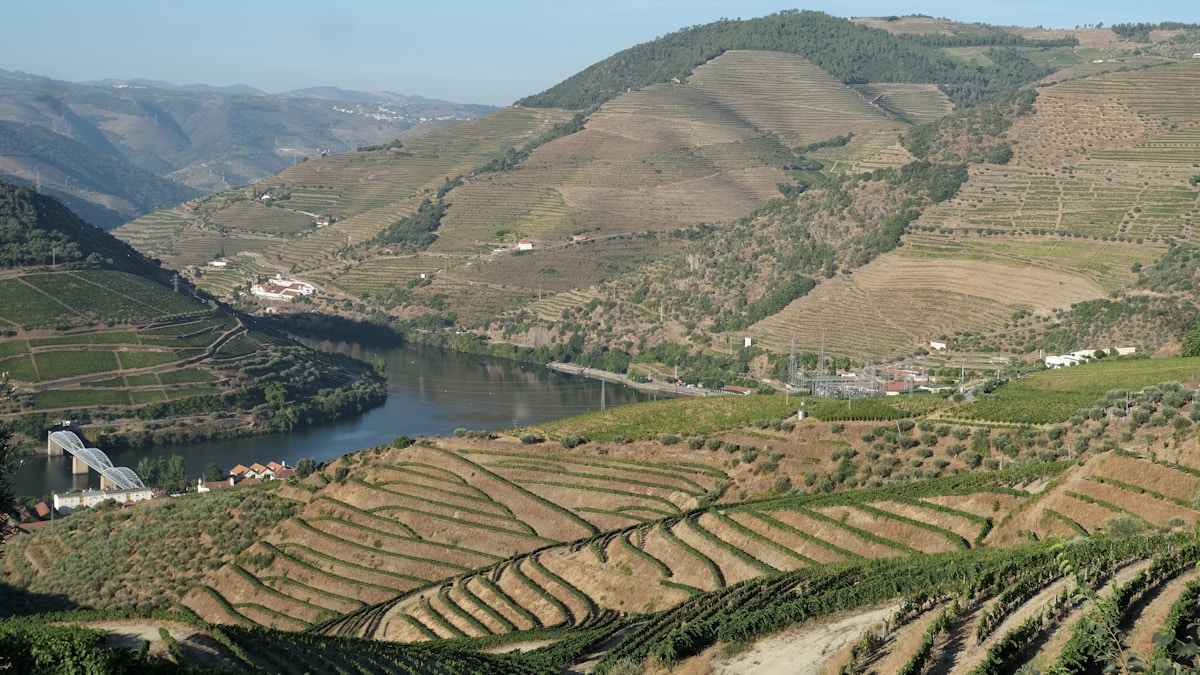
Portugal produces more distinct wine styles per square kilometre than almost any European country. The variety comes from a combination of factors: mainland Portugal’s geographic range from cool Atlantic north to hot interior south, the Azores and Madeira adding island terroir, a strong tradition of indigenous grape varieties found nowhere else, and the unique fortification technique that produced Port and Madeira wines. This guide covers the main regions and styles worth knowing.
Port Wine
Port is a fortified wine produced exclusively in the Douro Valley, northeast of Porto. The demarcation dates to 1756 - the Marquis of Pombal, then prime minister, drew the first legally protected wine region in history to protect Douro producers from adulteration.
The fortification process involves stopping fermentation with the addition of grape spirit (aguardente). This kills the yeast, preserves residual sugar, and raises alcohol to around 19–22%. The wine then ages in wooden barrels (for Tawny) or in large tanks (for Ruby), or is bottled young.
Styles:
- Ruby - young, red-fruited, minimal oxidation. The entry-level Port. Serve at room temperature as a dessert wine or with dark chocolate. Retail price: €8–15.
- Tawny - aged in small oak barrels (225 litre pipes). Contact with oxygen over years or decades gives it a tawny colour and flavours of dried fruit, walnut, and caramel. Sold by age category: 10, 20, 30, or 40 years old. Serve chilled (14–16°C). A 20-year-old Tawny costs €30–60; a 40-year-old, €80–150+.
- LBV (Late Bottled Vintage) - wine from a single year, aged 4–6 years in barrel before bottling. More structure than Ruby, more affordable than Vintage. €12–25.
- Vintage Port - declared in exceptional years only (roughly 3–4 per decade, each house declares independently). Bottled after 2 years, expected to age in bottle for 10–40 years. This is the investment wine of the Port world. Entry Vintage: €40–80; premium (Graham’s, Taylor’s, Quinta do Noval Nacional): €150–300+.
Wine lodges in Vila Nova de Gaia: the historic Port lodges (armazéns) sit across the river from Porto’s old town. Taylor’s, Graham’s, Sandeman, Ramos Pinto, Cálem, and others offer tastings and tours. Cálem and Sandeman have organised tourist experiences; Taylor’s and Graham’s are more serious. For a full breakdown of each lodge including prices and what to expect from tastings, see our Porto wine tasting guide.
Vinho Verde
“Green wine” - not green in colour, but young (the name refers to youth). Produced in the Minho region, Portugal’s northwest corner, in a cool, wet Atlantic climate.
Characteristics: light body, high acidity, low alcohol (9–11%), and often a slight petillance (light effervescence from natural secondary fermentation in bottle). The classic white Vinho Verde pairs with grilled fish and shellfish; drink it cold and young.
Alvarinho - the premium sub-region. Monção e Melgaço, on the Minho River border with Spain, produces Alvarinho (Albariño in Galicia) with more body, aromatic complexity, and structure than standard Vinho Verde. These wines can age 3–5 years. Producers: Reguengo de Melgaço, Quinta do Ameal, Anselmo Mendes. Price: €10–25.
Red Vinho Verde exists and is unusual - purple-coloured, slightly tannic, served slightly chilled. Acquired taste but interesting.
Alentejo
The Alentejo is Portugal’s hot interior - flat cork oak plains, summer temperatures reaching 40°C, large estates. The reds are full-bodied, ripe, and often oaked. Aragonez (the local name for Tempranillo), Trincadeira, and Alicante Bouschet are the main red grapes.
Most Portuguese tascas (traditional restaurants) pour Alentejo house wine by the half-litre jug - it is the default table wine of the country. Quality at this level is reliable and cheap.
Producers worth knowing: Herdade do Esporão (large estate, consistent quality across multiple price points, good wine tourism programme near Reguengos de Monsaraz), Ervideira, Mouchão (old estate, traditional style, exceptional ageing potential). Prices: house wine €6–12 at restaurants; serious single-vineyard Alentejo reds €15–40.
Dão
A granite plateau in central Portugal, cooler than the Alentejo. The dominant red grape is Touriga Nacional, here producing wines with more elegance and acid structure than the same grape produces in the Douro. Good for 5–10 years of ageing.
Producers: Quinta dos Roques, Casa da Passarella (natural approach, very good), Sogrape’s Quinta dos Carvalhais (reliable, widely available). Prices: €10–30.
Bairrada
Coastal region south of Porto. Two distinct identities: the Baga red grape (one of Portugal’s most tannic, structured for long ageing - 10–20 years on the best examples), and sparkling wine (Espumante, made by traditional method from local grapes).
Luís Pato is the defining producer - his single-vineyard Bagas are among Portugal’s most age-worthy wines. Prices: €15–60.
Douro Table Wines
The Douro Valley is famous for Port but also produces serious unfortified red and white table wines from the same indigenous grapes (Touriga Nacional, Touriga Franca, Tinta Roriz, Tinta Barroca, Tinto Cão).
Producers: Niepoort (probably the most respected name, makes outstanding Douro reds and the benchmark skin-contact white Diálogo), Quinta do Crasto (concentrated reds, good value), Ramos Pinto (also makes table wines from their Douro estates). Prices: €10–60+.
Madeira Wine
Unique fortified wine produced on Madeira island using an oxidative ageing process that makes these wines virtually indestructible - open bottles can last years. Styles from sweetest to driest: Malmsey, Bual, Verdelho, Sercial. Aged minimum 3 years (Finest), 5 years (Reserve), 10 years (Special Reserve), 15 years (Extra Reserve). Vintage Madeira from the 19th century occasionally appears at auction and is drinkable.
Buy at Blandy’s Wine Lodge in Funchal (the most complete selection), or in wine shops in Lisbon. For more on the island’s wine culture and what else to do while you’re there, see our Madeira island guide.
Where to Drink in Lisbon
By The Wine (Rua das Flores 41, Chiado) - 250 Portuguese wines by the glass. The best introduction to the range of Portuguese wine in one sitting. Tapas available.
Taberna da Rua das Flores (nearby) - natural wines focus, excellent petiscos, often long waits.
Solar dos Presuntos (Rua das Portas de Santo Antão) - old-school Lisbon restaurant with an exceptional wine list, strong on Dão and Bairrada.
The Wine Bar do Castelo (near Castelo de São Jorge) - smaller selection, good by-the-glass options, tourist-convenient location.
Where to Drink in Porto
Vila Nova de Gaia lodges: walk across the Dom Luís I bridge and choose any lodge. Taylor’s has the best hilltop views and a terrace restaurant. Graham’s is widely considered the best cellar experience. Cálem is the most tourist-friendly with audio-guided tours.
For serious wine drinking rather than tourism: The Wine House Hotel bar in Porto’s centre, or any adega (wine shop/bar) in the Bonfim or Cedofeita neighbourhoods. For cellar tours and tasting logistics, see our Porto wine tasting guide.
tours in Lisbon include food-focused walking tours that visit local tasca restaurants, markets, and artisan food producers across Lisbon’s neighbourhoods.
Wine Tourism by Region
For visiting the wine regions directly:
- Douro Valley: our Douro Valley guide covers the train from Porto, quintas open to visitors, river cruises, and where to stay. The valley is 100km from Porto. Douro Valley wine tours run from Porto with winery visits, tastings, and river cruise options.
- Minho (Vinho Verde): our Minho region guide covers the Lima Valley quintas and the Ponte de Lima market.
- Alentejo: our Alentejo region guide covers the Herdade do Esporão estate near Monsaraz and the wine villages around Évora. See also the Évora city guide.
- Madeira: our Madeira island guide covers Blandy’s Wine Lodge in Funchal and the Madeira wine tradition.
For broader Portuguese food context, see our Portuguese food guide.