Fátima Travel Guide - Sanctuary, Pilgrimage & What to Expect
Fátima guide: Sanctuary of Our Lady of Fátima, Chapel of the Apparitions, Basilica of the Holy Trinity, pilgrimage dates, and where to stay.
Fátima is a small town in central Portugal, roughly 130km north of Lisbon in the Serra de Aire e Candeeiros region. On its own, it would be a quiet agricultural settlement of around 11,000 people. What makes Fátima one of the most visited places in the world - drawing over 6 million pilgrims and visitors annually - are the events of 1917, when three shepherd children reported a series of Marian apparitions in a hollow called the Cova da Iria. That site is now the Sanctuary of Our Lady of Fátima, one of the most important Catholic shrines in the world.
Fátima is not a typical tourist destination. The town exists almost entirely to serve the Sanctuary. The esplanade, twice the size of St Peter’s Square in Rome, is the centre of everything. For travellers who aren’t making a religious pilgrimage, Fátima still offers an extraordinary experience: the scale of the site, the architecture, and the intensity of devotion visible on major pilgrimage dates are unlike anything else in Portugal.
The 1917 Apparitions
Between May and October 1917, three children - Lúcia dos Santos (aged 10), and her cousins Francisco (aged 9) and Jacinta Marto (aged 7) - reported seeing an apparition of the Virgin Mary in a field at the Cova da Iria, on the outskirts of Fátima. The apparitions occurred on the 13th of each month. By the October apparition, tens of thousands of people had gathered at the site. Witnesses described seeing the sun appear to dance, rotate, and change colour - an event that became known as the Miracle of the Sun.
The Church officially recognised the apparitions in 1930 after an ecclesiastical investigation. Francisco and Jacinta Marto died during the 1918–1919 influenza pandemic, both under the age of 11; they were canonised by Pope Francis in 2017, the centenary of the apparitions. Lúcia Santos became a Carmelite nun and lived until 2005.
The three children conveyed three secrets reportedly given by the apparition. The first two, relating to visions of Hell and the devotion to the Immaculate Heart of Mary, were revealed in 1941. The third, describing a vision interpreted as the 1981 assassination attempt on Pope John Paul II, was released by the Vatican in 2000. Pope John Paul II visited Fátima three times, attributing his survival to the intercession of Our Lady of Fátima.
The Sanctuary of Our Lady of Fátima
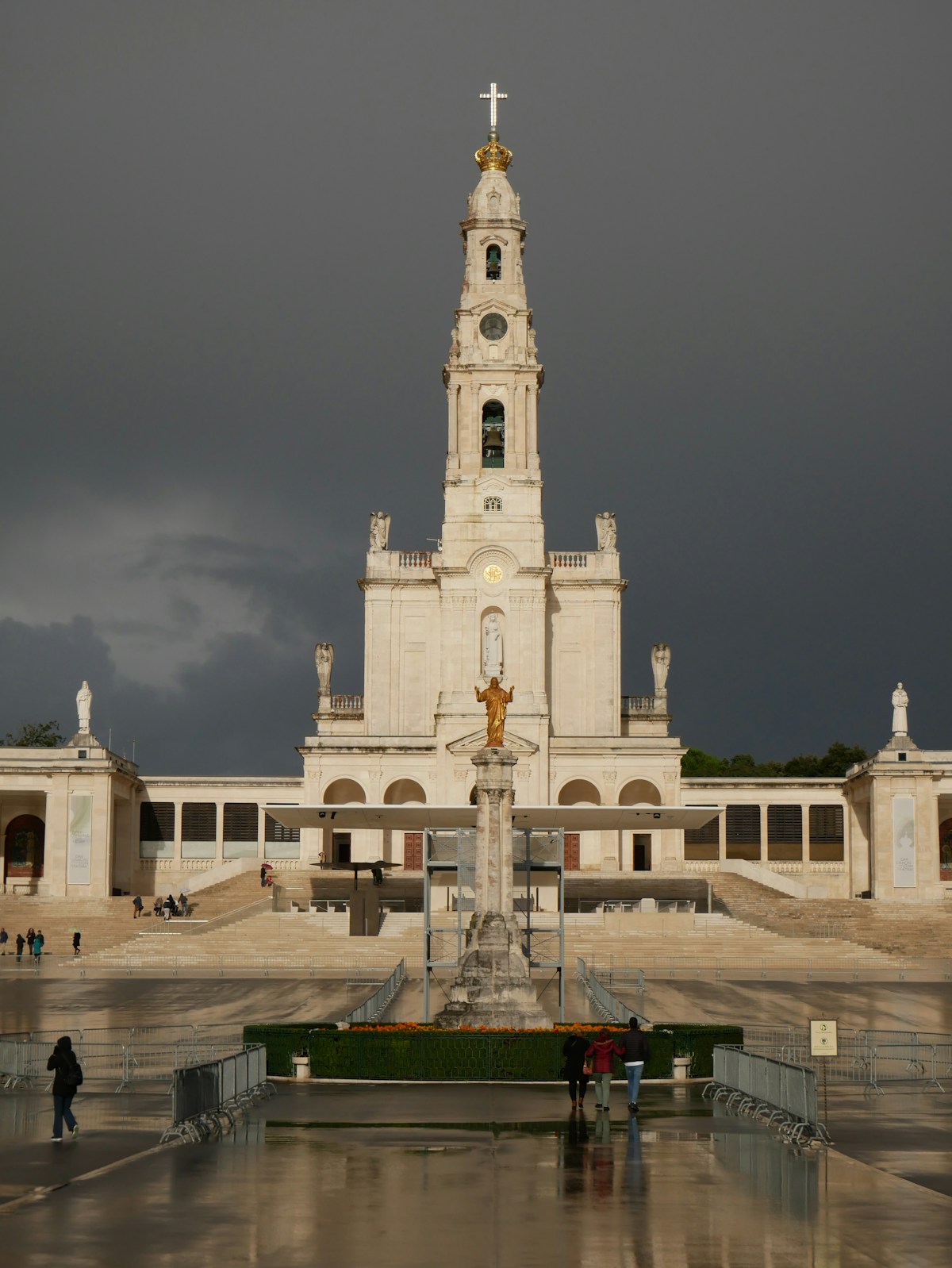
The Sanctuary encompasses multiple buildings and outdoor spaces spread across the Cova da Iria. The entire complex is free to enter. The central esplanade - a vast open plaza - connects the older Basilica of Our Lady of the Rosary at one end with the newer Basilica of the Holy Trinity at the other.
Chapel of the Apparitions (Capelinha das Aparições)
This small chapel marks the exact spot where the apparitions were reported. A white marble column with a small statue stands where the holm oak once grew - the tree beneath which the children said they saw the apparition. The oak was dismembered by devotees taking relics in the early years; the column now stands in its place.
The Chapel is open continuously and is the emotional heart of the Sanctuary. At night, candlelight vigils take place here that are particularly moving regardless of one’s personal beliefs. The chapel holds only a few hundred people, but the surrounding esplanade extends the space considerably.
Basilica of Our Lady of the Rosary
Built between 1928 and 1953, this neo-Baroque basilica stands at the top of the esplanade. Its 65-metre bell tower is the defining feature of the Fátima skyline. Inside, the tombs of Jacinta and Francisco Marto are on the right and left naves respectively, and that of Lúcia Santos is in the nave to the right of the altar. Daily Mass is celebrated here in multiple languages, including English, throughout the day.
Basilica of the Holy Trinity (Basílica da Santíssima Trindade)
Completed in 2007 and designed by Greek architect Alexandros Tombazis, the Basilica of the Holy Trinity is a striking piece of contemporary religious architecture. It seats approximately 9,000 people - one of the largest churches in the world by capacity - and was designed to hold the enormous congregations that descend on Fátima for the major pilgrimage days. The exterior is austere concrete and stone; the interior is warmer, with natural light from the central skylight and impressive bronze doors at the entrance bearing relief carvings.
Little Chapel of the First Apparitions and the Way of the Cross
The Sanctuary extends beyond the main esplanade. A path leads to Valinhos, where a fourth apparition occurred. The full Way of the Cross route winds through the gardens, with Stations of the Cross made in Hungarian limestone. Walking the full route takes around 45 minutes.
Pilgrimage Dates: May 13 and October 13
The two most significant dates in the Fátima calendar are May 13 and October 13 - the dates of the first and last apparitions in 1917.
May 13 is the International Pilgrimage. Hundreds of thousands of pilgrims arrive in the days before, many walking to Fátima on foot from Lisbon, Porto, or other parts of Portugal in multi-day journeys. The candlelight procession on the evening of May 12 fills the entire esplanade. On May 13 itself, Mass is celebrated outdoors in the presence of enormous crowds. If you plan to attend, book accommodation months in advance - the entire region is full. The same applies to October 13.
October 13 marks the anniversary of the Miracle of the Sun. The crowds are slightly smaller than May but still enormous - typically 300,000–500,000 pilgrims over the weekend.
Other significant dates include August 13 (when the children were arrested and unable to attend their scheduled apparition) and the 13th of each month between May and October, when smaller international pilgrimages occur.
Outside these dates, Fátima remains busy year-round but manageable. Weekday mornings are the quietest times to visit.
Getting to Fátima
By Bus from Lisbon (recommended)
Rede Expressos runs multiple daily services from Lisbon’s Sete Rios bus station directly to Fátima. Guided day tours to Fátima from Lisbon are also a practical option — most combine the Sanctuary with Batalha Monastery or Óbidos and include return transport. Journey time is approximately 1 hour 20 minutes. Tickets cost approximately €8–€10 each way (approximately €16–20 return) as of 2026. Buses drop passengers at the bus station on Avenida Dom José Alves Correia da Silva, a 10-minute walk from the Sanctuary. Book online at rede-expressos.pt, especially around pilgrimage dates.
By Car from Lisbon
Fátima is around 140km north of Lisbon via the A1 motorway, then the A23 towards Tomar and the N113 into Fátima. Drive time is approximately 1 hour 15 minutes to 1 hour 30 minutes depending on traffic. The A1 has tolls (approximately €6–8 from Lisbon as of 2026).
Parking at Fátima
Several large parking areas serve the Sanctuary. The main car parks are signposted on approach roads. Parking costs approximately €2 per hour or €8–€10 for a full day as of 2026. On major pilgrimage dates, arrive before 7am or expect long queues and parking up to 2km from the Sanctuary.
By Train
There is no train station in Fátima. The nearest station is Caxarias, served by regional trains from Entroncamento (which connects to the Lisbon–Porto main line). Caxarias is approximately 11km from the Sanctuary; a taxi or rideshare is needed for the final leg. Bus is more practical.
Fátima and the Surrounding Region
Fátima sits in the Serras de Aire e Candeeiros Natural Park, a landscape of limestone plateau, caves, and agricultural villages. The town itself has limited sights beyond the Sanctuary.
Grutas de Mira de Aire (30 minutes by car) is one of the largest cave systems in Portugal, with impressive stalactite formations and an underground lake. Entry is approximately €9 as of 2026.
Tomar is 25km to the northeast - an easy day trip or a natural add-on if driving. The UNESCO-listed Convento de Cristo is one of Portugal’s greatest medieval monuments, built by the Knights Templar in the 12th century and expanded during the Age of Discovery. It’s worth building a half-day there into any visit to the region.
Ourém (15 minutes by car) has a partially restored medieval castle and old town with good views over the valley. It’s a quiet stop but pleasant for those driving.
If you’re travelling from Lisbon, it’s straightforward to combine Fátima with a Lisbon city visit - the capital is the natural base for this region.
Mass Schedule and Opening Hours
Mass at the Basilica of Our Lady of the Rosary is celebrated multiple times daily. As of 2026:
- Monday to Friday: 7:30am, 9am, 11am, 3pm, 5pm, 6:30pm
- Saturday: 7:30am, 9am, 11am, 3pm, 5pm, 7:30pm
- Sunday: 7:30am, 9am, 11am, 3pm, 5pm, 6:30pm
Masses are celebrated in Portuguese, English, Spanish, French, Italian, German, and Polish depending on the day and season. The Sanctuary website (fatima.pt) publishes the current schedule. Mass times shift significantly around pilgrimage dates.
The Chapel of the Apparitions is open continuously, 24 hours a day. The Basilica of the Holy Trinity opens at 7:30am and closes at 6:30pm (later in summer). The Sanctuary grounds are always accessible.
Where to Eat in Fátima
The town is geared almost entirely towards pilgrims, and the restaurant offering reflects this - Portuguese staples at reliable, moderate prices. Expect bacalhau (salt cod), grilled chicken, and hearty soups. Fine dining does not exist here.
Tasca do Zé on Avenida Dom José Alves Correia da Silva serves dependable Portuguese home cooking. A full meal with wine runs approximately €12–€18 per person as of 2026. Busier at lunch than dinner.
Snack-Bar Mar Azul near the bus station is the practical option for quick meals - sandwiches, pastéis de nata, and coffee. Around €5–€8 per person.
Restaurants along Rua de Santo António offer a concentration of mid-range options with menus posted outside. Most serve a daily lunch special (prato do dia) for approximately €8–€10, which is typically the best-value option. Avoid restaurants immediately adjacent to the Sanctuary - these tend to price for tourist foot traffic rather than quality.
Where to Stay in Fátima
For our full accommodation guide covering pilgrim hostels, budget hotels, and four-star options near the Sanctuary, see Where to Stay in Fátima.
Search hotels in Fátima on Booking.com to compare rates and availability.
Practical Notes
- Dress code: Shoulders and knees must be covered inside all chapels and basilicas. This is enforced. Carry a scarf or light layer.
- Photography: Photography is permitted throughout the Sanctuary, including during regular Mass. On major pilgrimage dates, large media crews are present. Be respectful near the Chapel of the Apparitions, especially during prayer services.
- Accessibility: The main esplanade is flat and fully accessible for wheelchairs. The basilicas have accessible entrances. The outdoor Way of the Cross path has some uneven stone sections.
- Candlelight processions: The evening procession at 9:30pm, which takes place every evening throughout the year (not only on pilgrimage dates), is one of the most striking experiences at Fátima. Candles are provided free at the Chapel of the Apparitions.
- Luggage storage: The Sanctuary has luggage storage near the information desk on the esplanade. Useful for visitors arriving by bus and leaving the same day.
Fátima requires no more than a half-day to see the key sites at a comfortable pace, or a full day if attending Mass, walking the Way of the Cross, and visiting the museum. Most visitors from Lisbon treat it as a day trip; those combining it with Tomar or the Grutas de Mira de Aire will want to overnight.
How Fátima Compares
Fátima vs Tomar: Both are day trips from Lisbon in the same direction (2h north), but they serve completely different visitors. Fátima is a working pilgrimage site — the atmosphere is shaped by religious practice, and the town outside the Sanctuary has little independent appeal. Tomar is a sightseeing destination with the extraordinary Knights Templar Convent of Christ as its centrepiece; it suits secular travellers more naturally. Many visitors combine both in a single long day. Cost is comparable: accommodation and food are inexpensive by Portuguese standards at both.
Fátima vs Évora: Évora is Portugal’s other major day trip for cultural tourism from Lisbon, but the comparison is almost entirely one of type. Évora rewards walkers with a full day of Roman ruins, a cathedral, and the Chapel of Bones; it costs more and suits history and food tourism. Fátima suits those motivated by religious significance or curiosity about Marian pilgrimage. Families with young children can visit either comfortably; couples will generally prefer Évora. Best months at both: April, May, September, October — avoid July and August heat.
Frequently Asked Questions
- Is the Fátima Sanctuary free to enter?
- Yes. Entry to all areas of the Sanctuary of Our Lady of Fátima - including the Chapel of the Apparitions, the Basilica of Our Lady of the Rosary, and the Basilica of the Holy Trinity - is free. There is no entry fee at any time of year.
- When is the best time to visit Fátima?
- Any time outside the two major pilgrimage dates (May 13 and October 13) means smaller crowds and easier access. May and October are significant months historically, but even outside those dates the town receives steady visitors year-round. Arriving early morning (before 9am) gives the most peaceful experience of the esplanade.
- How do I get from Lisbon to Fátima by bus?
- Rede Expressos runs daily services from Lisbon's Sete Rios bus station to Fátima. Journey time is approximately 1 hour 20 minutes. Return tickets cost approximately €16–€20 as of 2026. Buses run multiple times daily and can be booked online in advance.
- How do I get from Porto to Fátima?
- The easiest route from Porto to Fátima is by bus. Rede Expressos operates services from Porto's Campo 24 de Agosto bus terminal to Fátima. Journey time is approximately 1 hour 45 minutes. Tickets cost approximately €12–€16 each way as of 2026. By car, the drive takes around 1 hour 30 minutes via the A1 motorway south. By train there is no direct service: the nearest station, Caxarias, is 11km from the Sanctuary and requires a taxi for the final leg, making the bus significantly more practical.
- Is there a dress code at the Fátima Sanctuary?
- Yes. Modest dress is required inside all chapels and basilicas - shoulders and knees must be covered. Sleeveless tops and short skirts are not permitted. Lightweight scarves and wraps are available near the entrance for visitors who need them. The rule is enforced.
Book an experience
Top experiences in Fátima
Explore the best tours and activities in Fátima, with instant confirmation and free cancellation on most bookings.
Where to stay in Fátima: Find hotels in Fátima →