Things to Do in Coimbra: Top Activities & Experiences
Book an experience
Book this activity
Lock in your preferred date. Prices shown are per person — free cancellation on most bookings.
Coimbra is Portugal’s university city — a place where the academic calendar still shapes the rhythms of daily life, where students in black capes mark exam results by ripping their ribbons, and where the oldest university library in the country hides a colony of bats that protect its 18th-century books from insects. It’s a city that rewards slow exploration: go beyond the university hill and you’ll find Roman ruins, a Baroque botanical garden, and one of Portugal’s most distinctive fado traditions. Here’s how to spend your time well.
Visit the Universidade de Coimbra
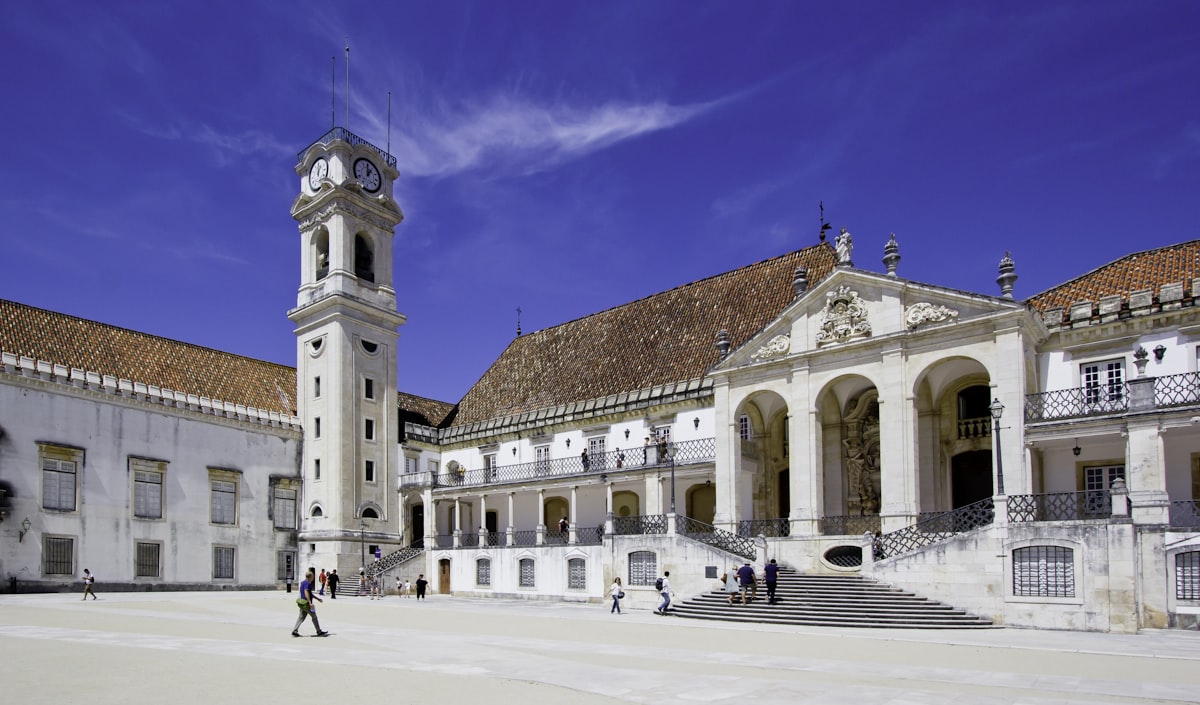
Founded in Lisbon in 1290 and permanently relocated to Coimbra in 1537, the Universidade de Coimbra occupies the upper town (Alta) on the hill above the Mondego River. The complex is a UNESCO World Heritage Site, and the most visited part of it is the Biblioteca Joanina — a three-room baroque library built between 1717 and 1728, its shelves holding around 70,000 volumes and its ceiling covered in trompe-l’oeil paintings.
Entry to the Biblioteca Joanina requires a timed ticket — demand far outstrips supply, so book online in advance at the university’s visitor centre website. Guided Coimbra tours on GetYourGuide often include pre-booked library access and are a reliable way to guarantee entry in peak season. In 2026, tickets cost approximately €12.50 for adults (combined library + university buildings access). The library limits each visit slot to around 10 minutes with a maximum of 60 visitors at a time to protect the books and microclimate.
Also within the university complex:
- Sala dos Capelos (Great Hall) — where royal feasts, examinations, and doctoral ceremonies have been held since the 17th century
- Torre da Universidade (clock tower) — climb for panoramic views over the Mondego; approximately €3 separately or included in the combined ticket
Opening hours vary by season; the university visitor site should be checked for current times and ticket availability before arrival.
Explore the Mosteiro de Santa Cruz
At the foot of the Alta hill, Santa Cruz Monastery sits on Praça 8 de Maio in the city centre. Founded in 1131, it holds the tombs of Portugal’s first two kings — Afonso Henriques (d. 1185) and Sancho I (d. 1211). The Manueline portal and pulpit are among the finest examples of that ornate Gothic-Moorish style outside of Lisbon.
Entry to the main church is free; the cloister and treasury require a ticket of approximately €2.50 (as of 2026). The monastery is open Monday–Saturday 09:00–17:00, Sunday 14:00–17:00.
Walk the Jardim Botânico da Universidade
One of the oldest botanical gardens in Portugal, laid out on the slopes below the university in the late 18th century, the Jardim Botânico covers 13 hectares and contains around 1,200 plant species. The formal terraced beds, greenhouses, and giant bamboo grove make for a quiet afternoon away from the more tourist-heavy Alta.
Entry is free. Open daily 09:00–20:00 in summer, 09:00–17:30 in winter. The greenhouse system has variable hours and may require a small supplement (around €1–€2) to enter.
Kayak or Stand-Up Paddleboard on the Mondego
The Mondego River running through Coimbra is gentle enough for beginners. Several operators on both riverbanks offer kayak and SUP rentals from the waterfront promenade (Parque Dr. Manuel Braga).
- Canoa Mondego — full-day and half-day canoe trips with transfer from Penacova downriver to Coimbra, from approximately €20–€35 per person (as of 2026); packages include the shuttle back
- Shorter river loops of 1–2 hours are available directly at the dock for approximately €10–€15 per person
The stretch from Penacova to Coimbra (about 25 km) is the most popular full run, passing through forested gorges and small villages. April through October is the ideal season; August and September see the river at its warmest.
Watch Coimbra Fado
Coimbra fado differs from the Lisbon variety in both performance convention and mood. It is traditionally sung only by men (usually university students or graduates), performed only at night, and restricted to the serenade — the singer stands still with the cape draped over the shoulders, while the guitar and viola baixo accompany. Applause is not given; instead the audience signals approval with a low hum.
The best places to hear authentic Coimbra fado:
- A Capella (Rua Corpo de Deus) — a former 14th-century chapel converted into a fado venue; shows most evenings from around 22:00, entry approximately €12–€15 including a drink (as of 2026)
- Fado ao Centro (Rua do Quebra Costas 7) — afternoon and early evening shows designed for visitors, with historical context; tickets from approximately €10 (as of 2026)
During May, the Queima das Fitas (burning of the ribbons) marks the end of the academic year with processions, concerts, and late-night serenades across the city — the most intense period for authentic fado performances.
Visit the Museu Nacional Machado de Castro
Occupying the former Bishop’s Palace above the ruins of the Roman forum (cryptoporticus), this national museum holds one of the finest collections of medieval sculpture in Portugal — including the largest collection of medieval polychrome sculpture. The Roman undercroft below is incorporated into the museum and free to walk through.
Admission approximately €6 for adults (as of 2026); free on the first Sunday of each month. Open Tuesday–Sunday 10:00–18:00. The views from the museum terrace over the Mondego River valley justify the visit on their own.
Day Trip: Conimbriga Roman Ruins
Portugal’s most important Roman archaeological site sits 16 km southwest of Coimbra. Conimbriga was a thriving town of 10,000 inhabitants until Visigoth raids in the 5th century reduced it to near-abandonment. Today the excavated ruins cover around 13 hectares and include extraordinary mosaic floors in the Casa de Cantaber, the public baths, and a well-preserved water distribution system.
The on-site museum holds glass, coins, sculpture, and everyday objects recovered from the dig.
- Combined site + museum ticket: approximately €4.50 for adults (as of 2026)
- Bus service from Coimbra’s Rodoviária terminal runs 3–4 times daily; journey time around 40 minutes
- By car: 20–25 minutes via the N1; parking is free at the site. Car hire from Coimbra typically starts from around €30–€40 per day and opens up the wider Beiras region
Conimbriga pairs well with a stop at Condeixa-a-Nova village on the return — small, quiet, with a market square worth a coffee stop.
Coimbra sits roughly midway between Lisbon (2 hours by train) and Porto (1 hour). Most visitors pass through on a day trip, but staying overnight means you can catch the evening fado performances that define the city’s character.
Tickets & Attractions
Book Experiences in Advance
Pre-book popular attractions, tours, and experiences via Tiqets — instant confirmation and mobile tickets. Skip the queue on busy days.
Browse on Tiqets →Best price guaranteed — same price as booking direct. We earn a small commission at no extra cost to you.
Ready to explore?
Browse hundreds of tours and activities. Book securely with free cancellation on most options.
Browse on GetYourGuide →Best price guaranteed — same price as booking direct. We earn a small commission at no extra cost to you.