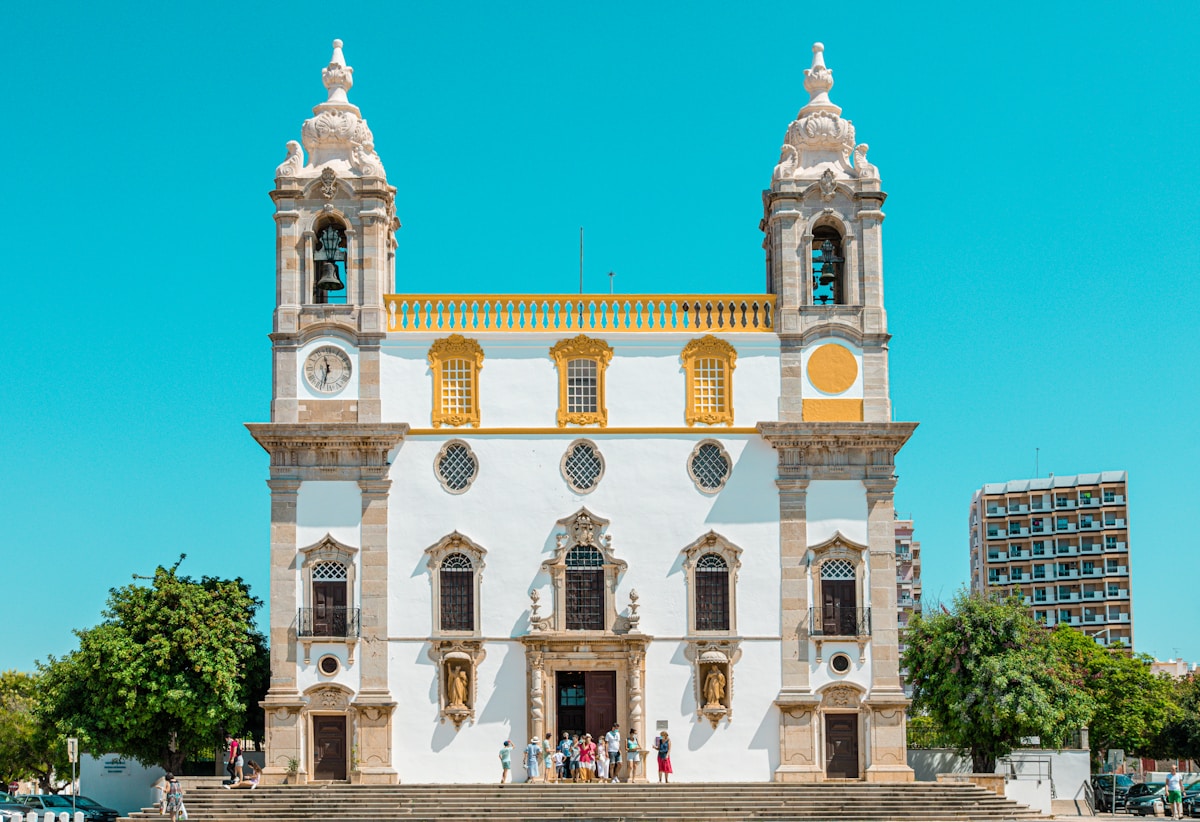
Tavira is the eastern Algarve’s most elegant town - a compact historic centre of whitewashed houses, terracotta rooftops, and Roman bridge over the Gilão River, with a barrier island beach (Ilha de Tavira) a short ferry ride away. It sees far fewer tourists than the western Algarve and has retained more of its original character. Population: 26,000.
Getting to Tavira
Train: from Faro 35 minutes (€3.40), from Lagos 1h30 (€7). The train station is 500m from the historic centre. By car: 30km east of Faro on the EN125 or the faster Via do Infante motorway. For buses, taxis, and car hire across the whole Algarve, see our Algarve getting-around guide.
Ilha de Tavira
A barrier island in the Ria Formosa lagoon, part of the same protected natural park as the islands near Faro. The beach on the ocean side stretches 11km with calm, warm Atlantic water (sheltered somewhat by the sandbar).
Getting there: ferry from Quatro Águas pier (2km from town centre by taxi or 25-minute walk along the river). Ferries run year-round but less frequently in winter. €1.50 each way. In summer (June–September) also water taxis from the town centre.
The island has no permanent residents - simple beach restaurants and bars operate in summer (May–September), nothing in winter. Bring everything you need outside summer months.
Old Town and Roman Bridge
The old town sits on both banks of the Gilão River, connected by the Roman bridge (7 arches, though the current structure is largely medieval - the original Roman crossing is beneath). Walk across for views and then up into the hillside streets above the castle.
Castelo de Tavira: Moorish castle ruins, free entry, good views from the walls. Small garden inside.
Igreja de Santa Maria do Castelo: 13th-century church built on the site of a mosque, with azulejo panels and the tomb of seven knights killed in the 1242 capture of Tavira from the Moors.
Igreja da Misericórdia: Renaissance doorway (1541), considered the finest in the Algarve. Worth the €1.50 entry to see the interior azulejos.
The town has 37 churches - most are small, and opening hours are unpredictable. The concentration of churches reflects Tavira’s importance as a tuna fishing hub in the 16th–17th centuries.
Ria Formosa Boat Trips
The Ria Formosa Natural Park extends along the eastern Algarve coast. Tavira is a good base for boat trips into the lagoon - flamingo spotting (year-round, best autumn–winter), clam harvesting demonstrations, and visits to smaller uninhabited islands.
Several operators run from the Tavira waterfront. Tours typically 2–3 hours, €30–45/adult.
Tuna Fishing Heritage
Tavira was once one of Portugal’s most important tuna fishing ports (Atlantic bluefin tuna). The industry collapsed in the mid-20th century but left visible traces - preserved tuna canneries, fishing quarter architecture. The Núcleo Museológico do Pescado (small fishing museum) covers this history.
tours in Tavira cover guided day trips, themed walks, and activity bookings so you can skip the logistics.
Practical tips
Eating in Tavira: Seafood is the focus. Quatro Águas area (near the ferry) has several marisqueiras. Recommended: Restaurante Bica (riverside, clams and fresh fish, €15–25/main), Patio (old town, reliable), O Barradas (local workers, cheaper). Cataplana de Atum (tuna cataplana) when in season.
Best time to visit: May–June and September–October. July–August is busy with Portuguese and Spanish families (more manageable than the western Algarve but still crowded at peak). Winter is quiet but mild (15–18°C), and the town feels genuinely local.
Combined with Olhão: 20 minutes west, Olhão has two covered markets (fish and produce), the best in the eastern Algarve for fresh seafood shopping. Market open Tuesday–Saturday mornings. Tavira is the eastern Algarve highlight on our 10-day Algarve itinerary. For food and hotels, see food in Tavira and best hotels in Tavira.
Search hotels in Tavira on Booking.com to compare rates and availability.