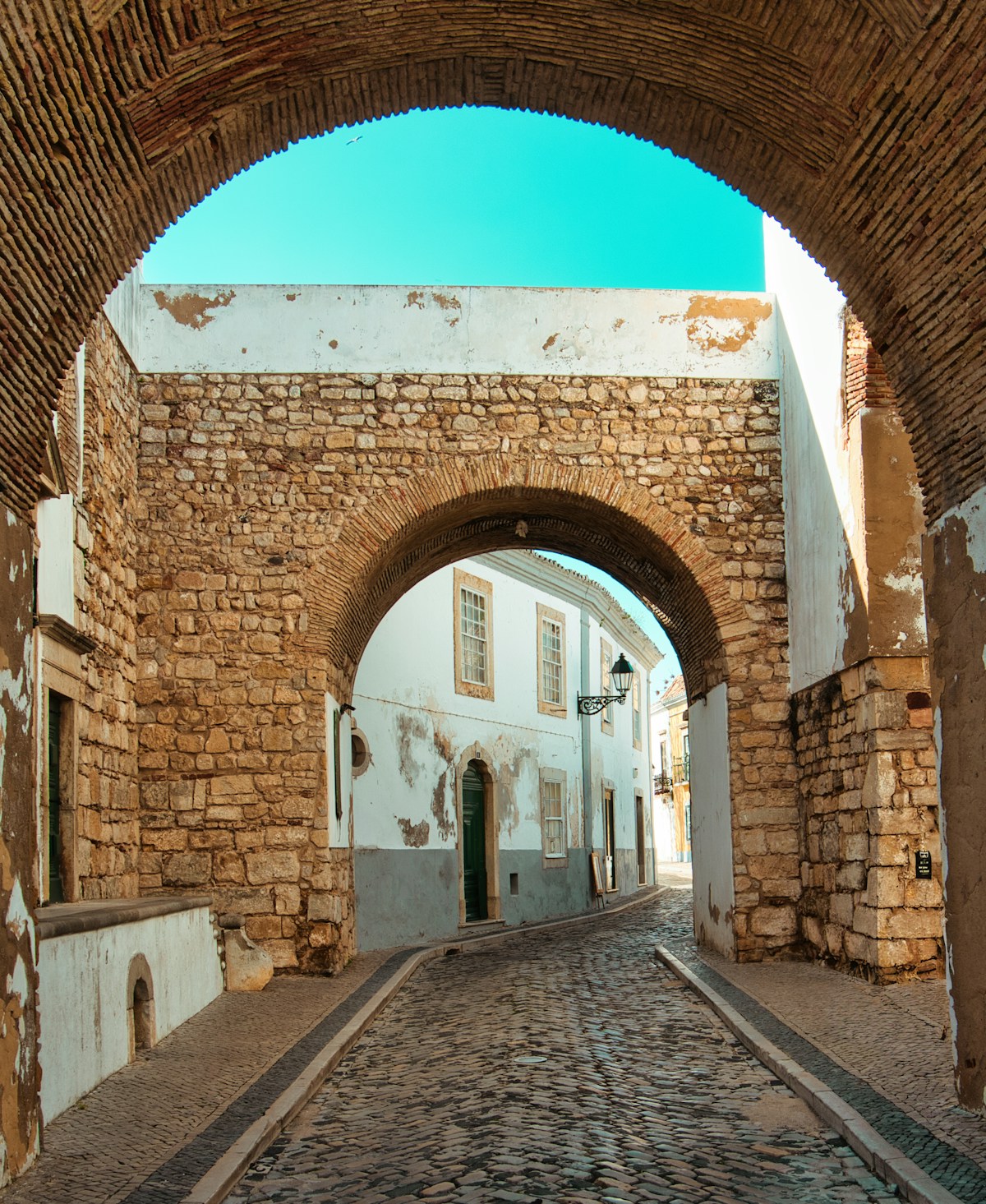
Faro’s location at the eastern end of the Algarve makes it a useful base for exploring both the calm eastern Algarve (Tavira, Olhão, Castro Marim) and the dramatic western coastline (Lagos, Benagil, Sagres). Most destinations are reachable by the Algarve train line or by bus. This guide covers the best day trips with specific transport details and what to prioritise when you arrive.
Browse day tours from Faro for guided options with transport included.
Quick Comparison
| Destination | Transport | Approx. Cost (return) | Journey Time | Best For |
|---|---|---|---|---|
| Tavira | Train | ~€6–9 as of 2026 | 30 min | Beautiful old town, beach |
| Olhão | Train | ~€4 as of 2026 | 15 min | Market, island ferries |
| Lagos + Ponta da Piedade | Train | ~€22–28 as of 2026 | 1h45 | Sea stacks, boat tours |
| Benagil Sea Cave | Train + bus/taxi | ~€30–40+ as of 2026 | 2+ hrs | Iconic sea cave |
| Ria Formosa (from Faro) | Boat from Faro harbour | ~€20–35 as of 2026 | from 30 min | Lagoon, flamingos |
| Castro Marim | Bus | ~€8 as of 2026 | 30 min | Castle, salt flats |
| Mértola | Bus | ~€18 as of 2026 | 2 hr | Islamic heritage |
| Sagres | Bus via Lagos | ~€24–30 as of 2026 | 2.5–3 hr | Fortress, coastline |
All costs approximate as of 2026.
Tavira (30 min by train)
Tavira is consistently described as the most beautiful town in the Algarve - a compact historic centre with a Roman bridge, a Moorish castle, dozens of baroque churches, and a fishing harbour, set along the banks of the Gilão River.
Getting there: Algarve line train from Faro, approximately €3–4.50 each way as of 2026. Multiple daily services; journey 30 minutes.
What to do: The Roman Bridge (Ponte Romana) over the Gilão - largely rebuilt in the 17th century but incorporating original Roman foundations - is the central landmark. The Moorish castle ruins are free to enter and offer good views over the town’s distinctive four-slope pyramid rooftops (peculiar to Tavira). The Santa Maria do Castelo church contains the tombs of the knights who led the Christian reconquest of the town in 1242.
Tavira Island (Ilha de Tavira): a barrier island beach with calm lagoon water on one side and open Atlantic on the other. Ferry from Quatro Águas dock (approximately €1.50 each way as of 2026, 5-minute crossing). In summer, a direct ferry also runs from the town centre. The beach is excellent - one of the best in the eastern Algarve and significantly less crowded than the western resorts.
Food: The riverside restaurants along the Rua Dr. Augusto Silva Carvalho are good for grilled fish and seafood - cataplana (the Algarve’s sealed copper pot stew) is the speciality. Prices are lower than Lagos or Albufeira.
Olhão (15 min by train)
Olhão is a working fishing town that makes for a good half-day trip - particularly useful for its covered market and ferries to the Ria Formosa islands.
Getting there: Train from Faro, approximately €2 each way as of 2026. 15 minutes. The town centre is a 5-minute walk from the station.
Mercado de Olhão: Two adjacent covered market buildings from 1912 - one for fish, one for fruit and vegetables. Saturday mornings bring additional outdoor stalls. The fish market is worth visiting for the spectacle and for understanding the still-active fishing economy of the eastern Algarve.
Island ferries: Ferries to Ilha Armona (15 minutes, approximately €3 return) and Ilha Culatra (25 minutes, approximately €3 return) depart from the dock near the market. Both islands have long beaches facing the open Atlantic. Ilha Culatra has a small fishing village at one end (Farol) with a lighthouse. Olhão makes a slightly better jumping-off point for the eastern Ria Formosa islands than Faro.
Town architecture: Olhão’s old quarter has distinctive North African-influenced flat-roofed cube houses with roof terraces (açoteias) - unusual in Portugal and the result of long trade links with Morocco.
Ria Formosa Natural Park (from Faro harbour)
The Ria Formosa is a 60km tidal lagoon accessible directly from Faro. You don’t need to travel east to Olhão or west to get good access - boat tours from Faro harbour cover the main lagoon highlights.
Boat tours from Faro harbour run several types of trip, approximately €20–35 per person as of 2026:
- Ilha Deserta (uninhabited island, 30-minute crossing): long wild Atlantic beach with one restaurant. Bring sun protection - no shade.
- Ilha da Culatra circuit: visits the fishing village and Farol lighthouse.
- Birdwatching tours: flamingos are visible from the channels near Faro year-round; the best concentrations are October–March.
- Sunset tours: some operators run evening trips through the lagoon channels.
Cycling: A cycle route runs from Faro along the Ria Formosa waterfront east towards Olhão. Bike hire in Faro from approximately €10–15/day as of 2026.
Benagil Sea Cave (2 hrs from Faro)
Benagil is one of the most photographed places in Portugal - a large sea cave with a domed ceiling open to the sky and a small beach inside. The cave is located near the village of Benagil on the central Algarve coast, about 1.5–2 hours west of Faro.
Getting there from Faro: The most practical route is train to Lagos (1h45, approximately €11–14 each way as of 2026), then taxi to Benagil (approximately €25–30 each way) or bus to Lagoa/Portimão and then taxi. Alternatively, rent a car from Faro airport.
Important: The cave is only accessible by boat, kayak, or paddleboard - you cannot walk in from Benagil beach. Boat tours from Benagil beach or nearby Portimão cost approximately €15–25 per person as of 2026. Kayak tours from Benagil beach approximately €25–40. In July and August, book tours ahead - operators often sell out by 10 am on busy days.
For a guided tour from Faro that includes transport to Benagil and a boat tour, see our Faro tours page.
Lagos (1h45 by train)
Lagos is the main town on the western Algarve and the best base for the region’s most dramatic coastal scenery.
Getting there: Train from Faro, approximately €11–14 each way as of 2026. Journey 1h45.
Ponta da Piedade: The highlight - a series of golden limestone sea stacks and sea caves 2km south of Lagos town. The most impressive approach is by boat tour (approximately €15–20 per person as of 2026 for a 45-minute tour); the clifftop footpath is also accessible on foot from the town. The colour and formation of the stacks is exceptional in the afternoon light.
Dona Ana Beach: A cove beach directly below the clifftops, 15 minutes on foot from the town centre. One of the most scenic beaches in the Algarve - gets crowded in summer by 11 am.
Lagos old town: Enclosed by 16th-century walls, with the 17th-century Igreja de Santo António (free entry) featuring the most extravagant baroque woodwork in the Algarve. The Slave Market Building (Mercado de Escravos) is the only surviving public slave auction house in Europe, now a museum - entry approximately €3 as of 2026.
Castro Marim (30 min by bus)
A small border town on the Guadiana River, across from Spain.
Getting there: Bus from Faro, approximately €4 each way as of 2026. 30 minutes. Alternatively, Vila Real de Santo António (on the Spanish border, 1hr by train from Faro, approximately €5 as of 2026) is the train terminus on the line - Castro Marim is nearby.
Castro Marim Castle (13th century): Good views over the salt flats, the river, and into Andalusia. Free entry.
Salt pans: The Castro Marim salt flats are among the cleanest in Portugal and still actively worked. The salt produced here is sold throughout the country. Flamingos, herons, and avocets feed in the shallow water year-round.
Alcoutim: A quiet riverside village 45km north of Castro Marim, facing the Spanish village of Sanlúcar de Guadiana across a narrow stretch of the Guadiana River. A zip-line crosses between the two countries (approximately €15–20 as of 2026). Reachable by car.
Mértola (2 hrs by bus)
Mértola is an isolated hilltop town in the Baixo Alentejo - genuinely remote-feeling, with some of the most significant Islamic heritage in Portugal.
Getting there: Bus from Faro, approximately €9 each way as of 2026. Journey 2 hours with a change. Feasible as a day trip but a long one - an overnight stay is more comfortable.
Search hotels in Faro on Booking.com to compare rates and availability. Mértola Castle and the Igreja Matriz (parish church) are the focal points. The church is one of Portugal’s few surviving examples of a mosque that was converted directly to a church after the Reconquista - the mihrab (prayer niche) is still visible inside. Entry approximately €2 as of 2026.
Islamic Museum: A small but excellent museum covering the Islamic occupation of the region from the 8th to 13th centuries. Entry approximately €2 as of 2026.
Guadiana River: The town sits on a cliff above the river - the viewpoint from the castle is one of the most dramatic in the Alentejo.
Sagres (2–3 hrs by bus)
Sagres is at the extreme southwestern tip of Portugal and continental Europe - the Ponta de Sagres headland has an end-of-the-world feel that’s not imagined. The coastline here was the point from which Portuguese explorers departed in the 15th century.
Getting there: Bus from Faro to Lagos (1h45), then bus from Lagos to Sagres (1 hour). Total journey approximately 2.5–3 hours and approximately €12–15 each way as of 2026. Alternatively, rent a car for greater flexibility.
Fortaleza de Sagres: A 15th-century fortress occupying the entire headland. Entry approximately €3 as of 2026. Inside: a large rosa dos ventos (compass rose) on the ground - 43 metres in diameter - and the small church where Vasco da Gama reportedly prayed before his India voyage. The views from the cliffs are outstanding.
Ponta de Sagres vs. Cabo de São Vicente: Cabo de São Vicente, 6km west, is the actual southwesternmost point of mainland Europe - a lighthouse and a dramatic cliff edge with Atlantic views. Many visitors combine both headlands in one day. Local buses run between them.
Whale watching: The waters off Sagres are one of the most reliable locations in Portugal for sighting cetaceans. Tours operate from the town approximately €40–60 per person as of 2026, booking recommended. Common bottlenose dolphins, common dolphins, and pilot whales are regularly sighted; orca have been seen less frequently.
Practical Notes
- Algarve rail pass: If you’re making multiple rail trips along the Algarve line, a day pass may work out cheaper than individual tickets - check cp.pt.
- Car rental from Faro airport: For destinations like Sagres or Benagil, a rental car gives flexibility that buses cannot match - hire a car at Faro airport from approximately €30–50/day as of 2026; booking before you fly is cheaper than the counter rate.
- Beaches in peak summer: Arrive before 10 am at any popular Algarve beach in July–August or you’ll be competing for space. Eastern Algarve beaches (Tavira, Culatra) are consistently less crowded than western.
For more on the Faro city itself, see the Faro city guide and the Faro hotel guide.