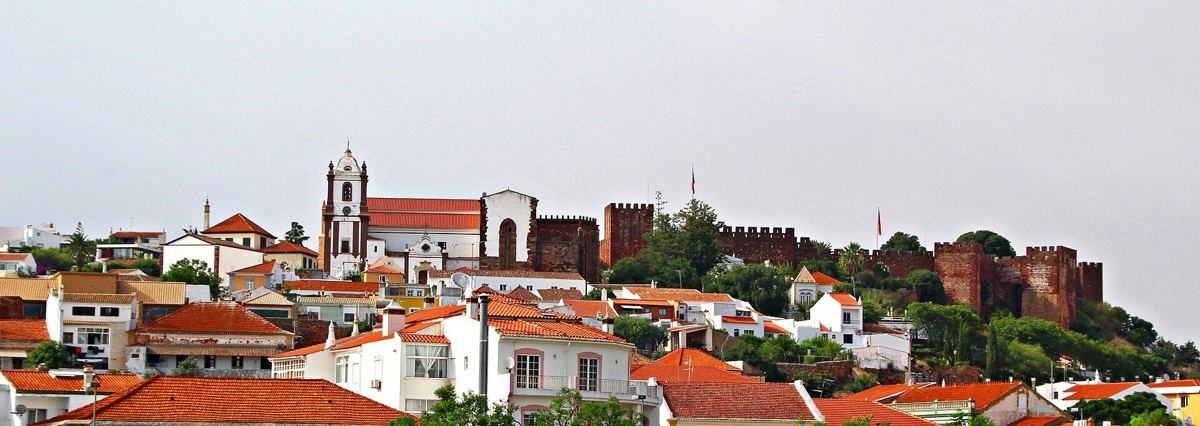
Silves: Moorish Castle and Cathedral Town in the Algarve
Silves travel guide: the red sandstone Moorish castle, Gothic cathedral, Arade river walks, how to get there and where to base yourself in the Algarve.
Silves is the Algarve’s best-preserved reminder that the region was once Al-Gharb, a Moorish territory with its own capital. Under the name Xelb, the town was the most important city of the western Algarve between the 10th and 13th centuries, and the red sandstone walls that still ring its hilltop were built to protect a place of poets, merchants and a sizeable port on the Arade river. Today it is a quiet inland town, 10km upriver from the sea, with a castle, a cathedral and a shaded riverside that most beach holidaymakers drive past on the way to Carvoeiro or Portimão.
That is its appeal. Silves works as a half-day or full-day trip from almost anywhere on the central Algarve coast, and it works as a base for travellers who prefer a town with a working centre to a resort strip.
Getting to Silves
By car: From Faro airport, Silves is roughly 70km west, about 50 minutes via the A22 and the EN124. From Portimão it is about 15 minutes, from Albufeira about 25. Parking is easiest at the riverside lots below the old town and at the market; the climb to the castle is on foot.
By train: Silves has its own station on the Algarve line between Lagos and Faro. The station is across the river, around 2km from the old town, so most visitors take a taxi or walk the main road. Trains are slow but run all year.
By bus: Regional buses connect Silves with Portimão, Lagoa and Albufeira, and stop closer to the centre than the train does. Check current timetables locally, as services thin out on weekends.
If you want to skip logistics entirely, a private airport transfer from Faro runs direct, and our Algarve getting around guide covers the wider network.
Silves Castle
The castle is the reason most people come. Its walls and towers are built from the local red sandstone, which glows orange in late afternoon, and you can walk almost the full circuit of the ramparts for views over the town, the Arade valley and, on a clear day, the Monchique hills to the north. Inside, the courtyard has a large Moorish water cistern and a small garden. Entry costs a few euros (as of 2026) and the castle is open daily, with longer hours in summer. Allow 45 to 60 minutes, and bring a hat, as there is little shade on the walls.
The Cathedral (Sé de Silves)
Next to the castle, the Sé is a Gothic cathedral built in the 13th century on the site of the old mosque, after the town was taken by Christian forces in 1249. It is plainer inside than the castle is outside, but its stone vaulting and the tombs of crusaders give a clear sense of the turnover in power the town went through. Visiting hours are short and vary seasonally, so check before you climb.
Archaeological Museum and the Moorish Cistern
The Museu Municipal de Arqueologia is built around a deep Moorish well-cistern that you walk down into, and it is the most interesting stop after the castle. Displays cover the Roman, Islamic and medieval layers of the town and include pottery, glazed tiles and stonework from local excavations. Allow around an hour.
The Cruz de Portugal and the Old Town Streets
At the eastern edge of the old town, the Cruz de Portugal is a 16th-century Manueline stone cross, carved on both sides and standing alone on a small rise. It is a 10-minute walk from the cathedral and worth the detour. Between the two, the lanes around Rua 25 de Abril are the local shopping street, where you will find cafés and pastry shops. The Monumento ao Corticeiro near the river recalls the era when cork processing was Silves’s main industry.
Along the River Arade
The river promenade and riverside park below the old town are pleasant for a short walk, and the Roman-era bridge crossing gives the best angle for photographing the castle. The covered municipal market near the river sells fruit, fish, cheese and local honey, and is busiest on weekday mornings.
Walks and Day Trips from Silves
The Via Algarviana, a long-distance footpath crossing the Algarve, passes through the municipality, and short stretches of it make good half-day hikes through cork oak and orange groves. To the north, the Serra de Monchique rises to about 900m and offers cooler air, spa towns and chestnut woods; Silves is the easiest starting point for a loop through the hills. Boat trips on the Arade estuary also run from nearby Portimão and Ferragudo. Browse Silves tours and Algarve day trips if you prefer a guided route, and see our Portimão guide and Ferragudo guide for the coast end of the river.
What to Eat
Silves is known regionally for its oranges, which grow in the surrounding valley and appear in cakes and liqueurs. Grilled fish, chicken piri-piri and traditional cataplana appear on most menus around the market square. For a quick lunch, the café-restaurants along the river offer set menus at lower prices than coastal resorts. Look for local sweets made with almonds, figs and carob, which tie back to the town’s Moorish past.
Festivals
Silves holds a medieval fair each August, when the old town fills with costumed performers, craft stalls and street food. If you plan to visit then, book accommodation well ahead and expect the lanes around the castle to be busy. Check the municipality’s own calendar at cm-silves.pt for the current dates.
Where to Stay
Silves has a small supply of guesthouses, converted townhouses and a few larger hotels along the river, plus plenty of rural villas and quintas in the surrounding countryside. It suits travellers who want a quieter base than a beach resort and do not mind driving 15 to 20 minutes for sand. Prices are generally lower than on the coast. For area advice, see our where to stay in Silves guide, or search Silves hotels on Booking.com for current availability.
Best Time to Visit
April to June: Warm, green and uncrowded. Best for castle walks and hiking the Via Algarviana.
July and August: Hot, often above 35C inland. Visit the castle early in the morning or in the last hour before closing.
September to November: Pleasant weather and quiet streets. Good for a base trip combined with the coast.
December to March: Mild but occasionally wet, and some restaurants close. The castle remains open.
See our best time to visit the Algarve guide for a coast-wide overview, and pick up an eSIM for Portugal before you land.
Silves Compared with Other Algarve Bases
Silves vs Lagos: Lagos has beaches, a bigger restaurant scene and a lively centre; Silves has history, quiet and lower prices, but no sand. Choose Lagos for a beach holiday and Silves for a culture-first stay or day trip. See Lagos.
Silves vs Portimão: Portimão is bigger, has a train link, a riverfront and access to Praia da Rocha. Silves is smaller and more atmospheric. Many visitors stay in Portimão and visit Silves for a half-day.
Photo: Silves skyline by Hovallef on Wikimedia Commons, licensed CC BY-SA 4.0.
Frequently Asked Questions
- Is Silves worth visiting?
- Yes, if you want history rather than a beach. Silves was the Moorish capital of the western Algarve, and its red sandstone castle, Gothic cathedral and archaeological museum make it the best half-day of culture in the region. Most visitors combine it with a beach stay on the coast, 15 to 20 minutes away by car.
- How do you get to Silves without a car?
- Trains on the Algarve line stop at Silves station, which sits on the south bank of the Arade roughly 2km from the old town, so plan on a taxi or a steep 25-minute walk. Buses link Silves with Portimão, Lagoa and Albufeira, and are usually the more convenient option for reaching the town centre.
- How long do you need in Silves?
- Three to four hours covers the castle, cathedral and a lunch stop. Add the archaeological museum with its Moorish cistern and a riverside walk and you can fill a full day. An overnight stay suits walkers on the Via Algarviana and anyone using Silves as a base for the Monchique hills.
- Can you swim near Silves?
- Silves is inland, on the Arade river about 10km from the sea, so there is no beach in town. The nearest sand is at Armação de Pêra, Carvoeiro and Portimão, all roughly 15 to 25 minutes by car.
Book an experience
Top experiences in Silves
Explore the best tours and activities in Silves, with instant confirmation and free cancellation on most bookings.
Where to stay in Silves: Find hotels in Silves →