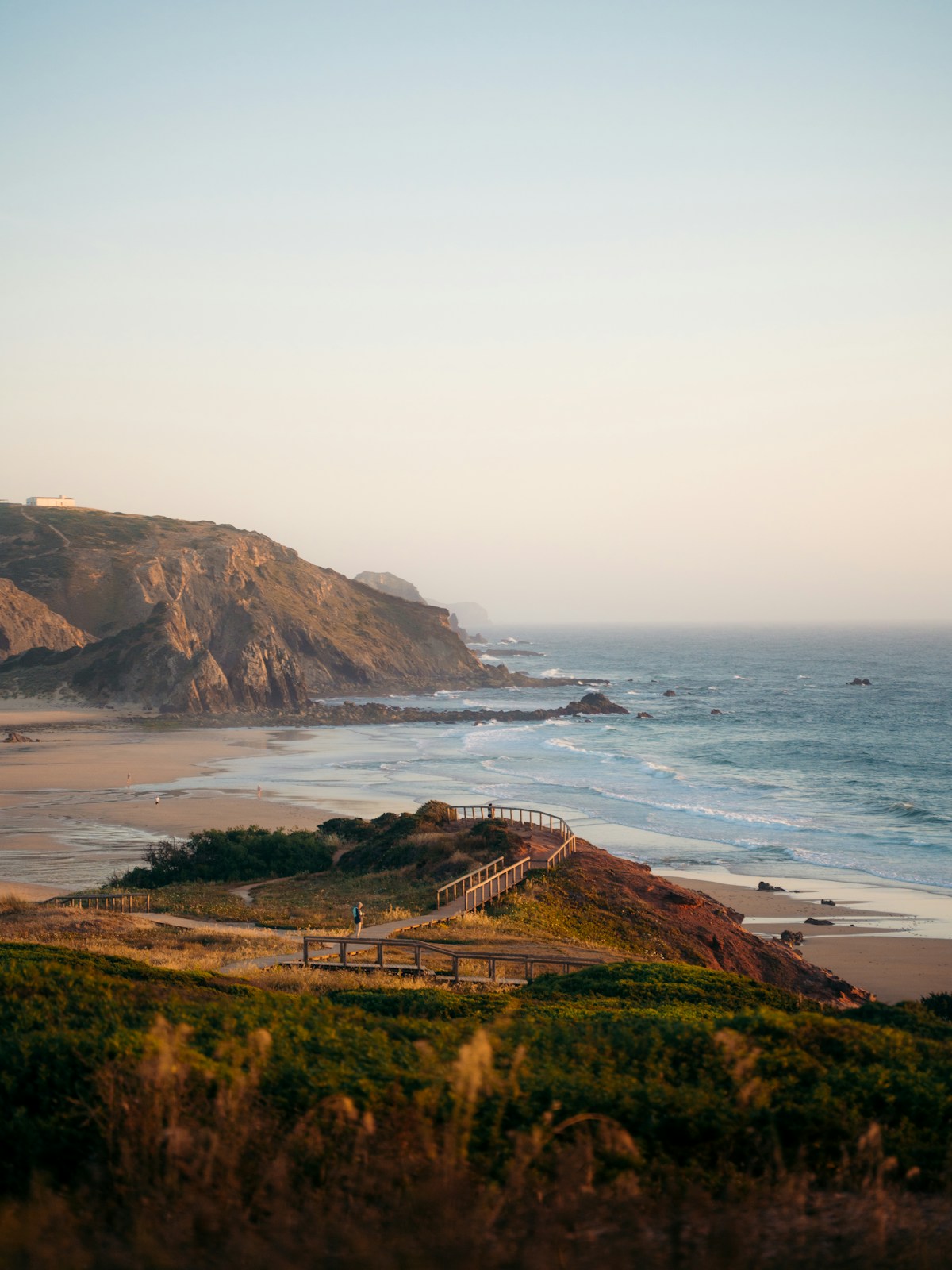
Setúbal is a working fishing city 50km south of Lisbon at the mouth of the Sado estuary. It lacks the visual polish of Cascais or Sesimbra - it’s a real city with industry and traffic - but what surrounds it is exceptional: the Arrábida Natural Park to the south with some of the most photogenic coastline in Portugal, a resident dolphin population in the estuary, and the Setúbal Peninsula’s distinctive moscatel wine. Most visitors to this part of Portugal base themselves in Lisbon and day-trip; the better approach is to spend a night or two in Setúbal itself.
Serra da Arrábida and the Coves
The Serra da Arrábida is a limestone mountain range running east-west along the southern coast of the Setúbal Peninsula. The south-facing slopes drop steeply to the sea, creating a series of coves (praias) with turquoise water of unusual clarity - the combination of limestone substrate, clean Atlantic water, and the south-facing aspect produces colours closer to the Adriatic than the typical Atlantic coast.
The best-known coves are Portinho da Arrábida and Praia de Galapinhos. Both require a car - there is no public transport to these specific beaches. Access to Arrábida is restricted in peak summer (July and August) to protect the ecology; parking is limited and a permit system operates on the coastal road. The practical solution is to arrive early (before 9am) or to access via boat tour from Setúbal.
The sea is clear enough for snorkelling - visibility of 10–15 metres is common - and the limestone seabed visible through the water gives the distinctive turquoise colour. Water temperature in summer averages 20–22°C.
Dolphin Watching in the Sado Estuary
The Sado Estuary is home to around 25–30 resident bottlenose dolphins - one of Portugal’s only resident Atlantic dolphin populations, meaning they stay year-round rather than passing through seasonally. Boat tours depart from Setúbal’s dock and combine the estuary dolphin watching with views of the Troia Peninsula and sometimes the Arrábida coastline. Tours typically run 2–3 hours and cost €35–55 per person. Sapacosta and Vertigem Azul are two established operators. Sightings are not guaranteed but encounter rates are high - the resident population is well-studied and the boat operators know the territory.
Search hotels in Setúbal on Booking.com to compare rates and availability.
Moscatel de Setúbal
The Setúbal Peninsula produces one of Portugal’s most distinctive fortified wines - moscatel de Setúbal, made from Muscat of Alexandria and Muscat Blanc grapes grown on the limestone soils of the peninsula. The wine is sweet, floral, and intensely aromatic, with flavours of orange blossom, dried apricot, and honey. It has DOP status.
José Maria da Fonseca in Azeitão (15km from Setúbal) is the most established producer and offers cellar visits and tastings (€8–12, book ahead). The visit includes the historic cellars and a tasting of several wines including the moscatel. Azeitão is a pleasant small town in itself and worth combining with a wine visit.
Setúbal Old Town
The city centre around Praça de Bocage and the pedestrian streets behind it has a genuine Portuguese provincial-city character - cafés, old buildings, a daily market, and the Igreja de Jesus (one of the earliest Manueline buildings in Portugal, dating to 1491). The church is free to enter and the stone carved doorway is unusually elaborate for a church in a non-capital city. The Museu de Setúbal in the adjacent convent has regional archaeology and azulejo collections.
The Mercado do Livramento on Avenida Luísa Todi is one of the more impressive covered markets in southern Portugal - a 19th-century iron-framed building with Art Nouveau tile panels inside. The fish section in the morning is the most interesting part.
tours in Setúbal cover guided day trips, themed walks, and activity bookings so you can skip the logistics.
Troia Peninsula
Across the estuary from Setúbal (reached by ferry, €2.60 one-way, 30 minutes), the Troia Peninsula is a long sand spit with Atlantic beaches on the west side and estuary beaches on the east. It has a spa resort and some holiday apartments, but the draw is the long sandy beaches - less developed than the Algarve and cooler in summer. The Roman ruins of Cetóbriga, a 1st–4th century fish-salting factory, are visible at the peninsula entrance. Setúbal sits on the one week in Portugal itinerary as a worthwhile stop south of Lisbon. See food in Setúbal and best hotels in Setúbal for the full picture.