Nazaré Travel Guide - Big Waves, the Canyon & Fishing
Nazaré guide - record-breaking big waves, the underwater canyon, Sítio clifftop views, and traditional fishing culture. 2 hours from Lisbon.
Guides for Nazaré
Nazaré is a fishing village on the Atlantic coast of central Portugal, 120km north of Lisbon. It has around 10,000 permanent residents. Until about 2011, it was known primarily as a traditional fishing town where women still wore the seven-petticoat traditional dress and fishing boats were pulled up on the beach by ox-cart. Since 2011, it has also become internationally known as one of the most extreme big wave surf locations on the planet.
The two realities coexist: elderly fisherwomen in traditional dress watching Atlantic swells that professional surfers travel from Hawaii and Brazil to ride. The town’s compactness - the beach strip (Praia), the clifftop village (Sítio), and the connecting funicular - makes it possible to understand both in a single day.
The Nazaré Canyon
The underwater geography responsible for the waves is a submarine canyon extending from near the shoreline to depths of 5,000 metres in the Atlantic. The canyon’s orientation funnels North Atlantic swell energy directly toward the shore and prevents the dissipation of wave energy that occurs when a wave crosses shallow continental shelf. The result is that swells which elsewhere would break at 4–6 metres arrive at Nazaré with sufficient energy to produce waves double or triple that height.
In November 2011, Garrett McNamara surfed a wave officially measured at 78 feet (approximately 23 metres) at Praia do Norte, setting a world record at the time. In 2020, Sebastian Steudtner surfed a wave of 26.21 metres (approximately 86 feet), subsequently certified as the largest wave ever surfed.
Tow-in surfing - using jet skis to tow surfers into waves moving too fast to paddle into - is the standard technique on the biggest days. The lighthouse at the point (Farol de Nazaré) provides the backdrop for most of the photographs.
Praia do Norte and the Lighthouse
Praia do Norte is the north beach, separated from the main town beach by the promontory on which the Sítio clifftop village sits. The beach is accessible by road from Sítio or by a rough coastal path. On non-surf days it’s a quiet and rather wild-feeling stretch of sand, backed by cliffs and the lighthouse. On big wave days, spectators line the clifftop at Sítio above.
The lighthouse (Forte de São Miguel Arcanjo) has been converted into a surf interpretation centre documenting the history of big wave surfing at Nazaré. Entry costs €2. The circular terrace provides the closest clifftop view to the break. If you want to try surfing yourself - whether here or at Ericeira and Peniche - our Portugal surf lessons guide covers schools, camps, and the best breaks for beginners.
Sítio (The Clifftop)
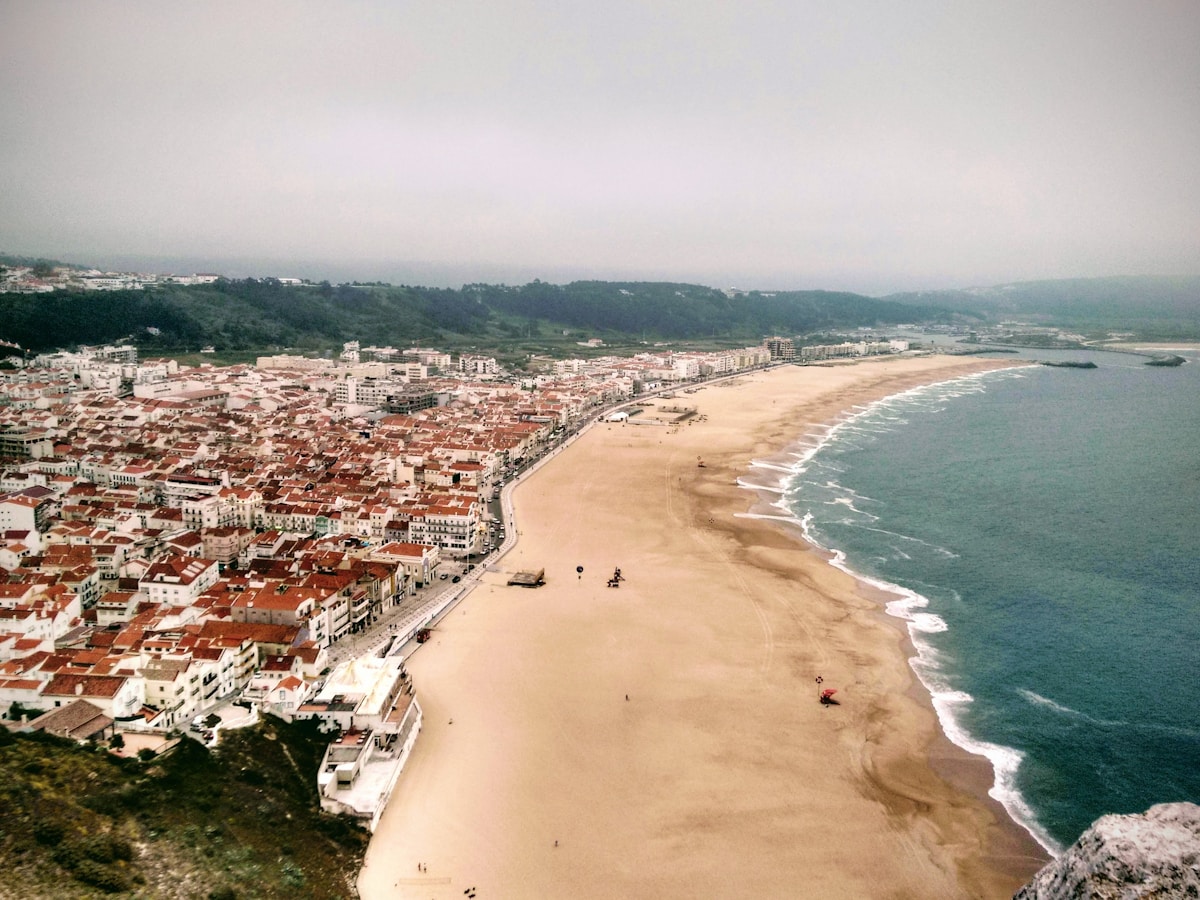
Sítio is the original village, perched 100 metres above the beach on a flat-topped headland. The funicular (ascensor da Nazaré, €1.50 each way) connects it to the beach town below. Sítio has a medieval character distinct from the busy beach strip: a central square with the Santuário de Nossa Senhora da Nazaré (a pilgrimage church dating from the 12th century), traditional restaurants less oriented to tourists, and the best views of the Praia de Nazaré and Praia do Norte below.
The square in Sítio is also where the main market days and local festivals happen. In October, the Festas da Nossa Senhora da Nazaré bring processions, folk dancing, and bullfights.
The Beach Town (Praia)
The main part of the town at beach level is built along the seafront - a wide promenade backed by restaurants, shops selling dried fish, and the traditional fisherwomen in their multiple petticoats (now fewer in number and partly performative for visitors, though some are genuine residents continuing the tradition). The beach is broad and sandy.
Outside the main summer months, the beach town has an authentically working character: fishing boats, the smell of drying bacalhau, older men playing cards outside cafés. The tourist infrastructure is laid over this rather than replacing it.
Getting There
No direct train service to Nazaré. Options:
- Bus: Rede Expressos from Lisbon’s Sete Rios terminal, 2 hours, approximately €12–14 each way. Two to three services daily. Arrive at the bus stop in Praia.
- Car: 120km from Lisbon via A8, 1h30 drive. Parking available near the beach.
- Combination: Alcobaça is 10km inland from Nazaré and has a local bus connection. The Alcobaça Monastery (UNESCO World Heritage) can be combined with a Nazaré day trip by those with a car.
What to Eat
Nazaré’s fishing heritage means the seafood is generally fresh and well-priced by Portuguese standards. Caldeirada (mixed fish stew with tomatoes and potatoes) and grilled fish are the staples. Dried salted polvo (octopus) is sold along the seafront - an acquired taste but genuinely local. The restaurants along the Avenida da República seafront are tourist-facing; the lanes behind the main promenade have simpler places at better prices.
Where to Stay
Nazaré has plenty of accommodation concentrated in the beach town. Summer (July–August) sees the town fill with Portuguese families and international surf tourists. Big wave events in winter bring a different crowd - photographers, media crews, and surf enthusiasts - often filling the limited hotel options. Book well ahead for both peak summer and major winter swell events. See our Nazaré hotel guide and our dedicated surf guide for Nazaré for more on the big wave season.
Search hotels in Nazaré on Booking.com to compare rates and availability.
Best Time to Visit
October through March for big waves (and cooler temperatures, 10–16°C). June through September for swimming and beach use (water 17–20°C). The period from October to November is the most dramatic - big swells, warm enough to be comfortable on the clifftop, and before the full winter set in.
How Nazaré Compares
Nazaré vs Ericeira: Both are surf towns on the Silver Coast, but they’re aimed at completely different visitors. Nazaré is a spectator destination — the big waves at Praia do Norte are for watching, not surfing, and the town has a strong traditional character: fishing nets, drying octopus, women in the traditional seven-skirt costume. Ericeira is an active surf town with a World Surfing Reserve, beginner schools, and a livelier international scene. If you’re there to surf, Ericeira. If you’re there to watch history-making waves and explore a genuinely traditional coastal community, Nazaré. See our Nazaré vs Ericeira comparison for the full breakdown.
Nazaré vs Peniche: Peniche (40km north) is a working fishing port with less tourism polish but strong surf. Peniche’s Supertubos beach hosts the WSL Championship Tour each autumn — elite shortboard surf rather than the tow-in big waves of Nazaré. Both sit on the Silver Coast and can be combined on a single trip. Nazaré wins for atmosphere and spectacle; Peniche wins for surf quality. Timing: Nazaré’s biggest swells typically run October–March; Peniche’s WSL event falls in October. Best months for both: October and November.
For guided experiences, browse tours in nazaré - covering walking tours, food tours, and day trips from the city.
Getting here by air? airport transfers take the stress out of the journey from the airport to your hotel. Pick up an eSIM for Portugal before you land to stay connected on arrival.
Nazaré in Context
Nazaré sits mid-way between Lisbon and Porto on the Silver Coast. Óbidos is 20km south - a medieval walled town easily combined with a Nazaré trip. Peniche (40km north) is the beginner-surf counterpart to Nazaré’s big-wave spectacle; the Ericeira World Surfing Reserve is 60km further south. Our surfing Portugal guide places Nazaré within the full surf geography of the country. For travel timing, Portugal in October and Portugal in November cover the Nazaré big wave season in detail. The Nazaré vs Ericeira comparison breaks down the very different characters of these two Silver Coast surf towns. For more to do in Nazaré, see our things to do in Nazaré and Nazaré food guide. The Portugal road trip itinerary passes through Nazaré on the coastal route between Lisbon and Porto.
Upcoming Events in Nazaré
- Nazaré Big Wave Challenge 2026/27: Dates, Schedule & Viewing
nazare
WSL big wave season Oct 2026–Mar 2027: no fixed date, 24–48hr notice when a swell fires. Free clifftop viewing from the lighthouse — what to expect.
Frequently Asked Questions
- When can I see big waves at Nazaré?
- October through March, with the biggest swells peaking November–February. For timing, what to expect, and where to watch, see our [Nazaré big wave season guide](/city/nazare/big-wave-season/).
- What is the Nazaré Canyon?
- The Nazaré Canyon is an underwater gorge extending about 170km from the shore into the Atlantic, reaching depths of 5,000 metres. It channels and concentrates ocean swell energy toward the shore, amplifying wave height significantly compared to other points on the Portuguese coast. This underwater geography is the reason for Nazaré's record-breaking waves.
- Can I swim at Nazaré beach?
- Yes, on most days outside of the big wave season. The Praia de Nazaré (south of the town) is the main swimming beach and is generally calmer than the north beach. During active surf events the water is not safe for swimming. Check beach flags - red means no swimming. Even in summer the water is cold (17–20°C).
- How do I get from Lisbon to Nazaré?
- There is no direct train to Nazaré. The most common route is by bus from Lisbon's Sete Rios terminal (Rede Expressos, about 2 hours, €12–14 each way) or via Alcobaça and Caldas da Rainha by regional bus. By car, take the A8 northbound, about 120km, 1h30 driving time.
Book an experience
Top experiences in Nazaré
Explore the best tours and activities in Nazaré, with instant confirmation and free cancellation on most bookings.
Where to stay in Nazaré: Find hotels in Nazaré →