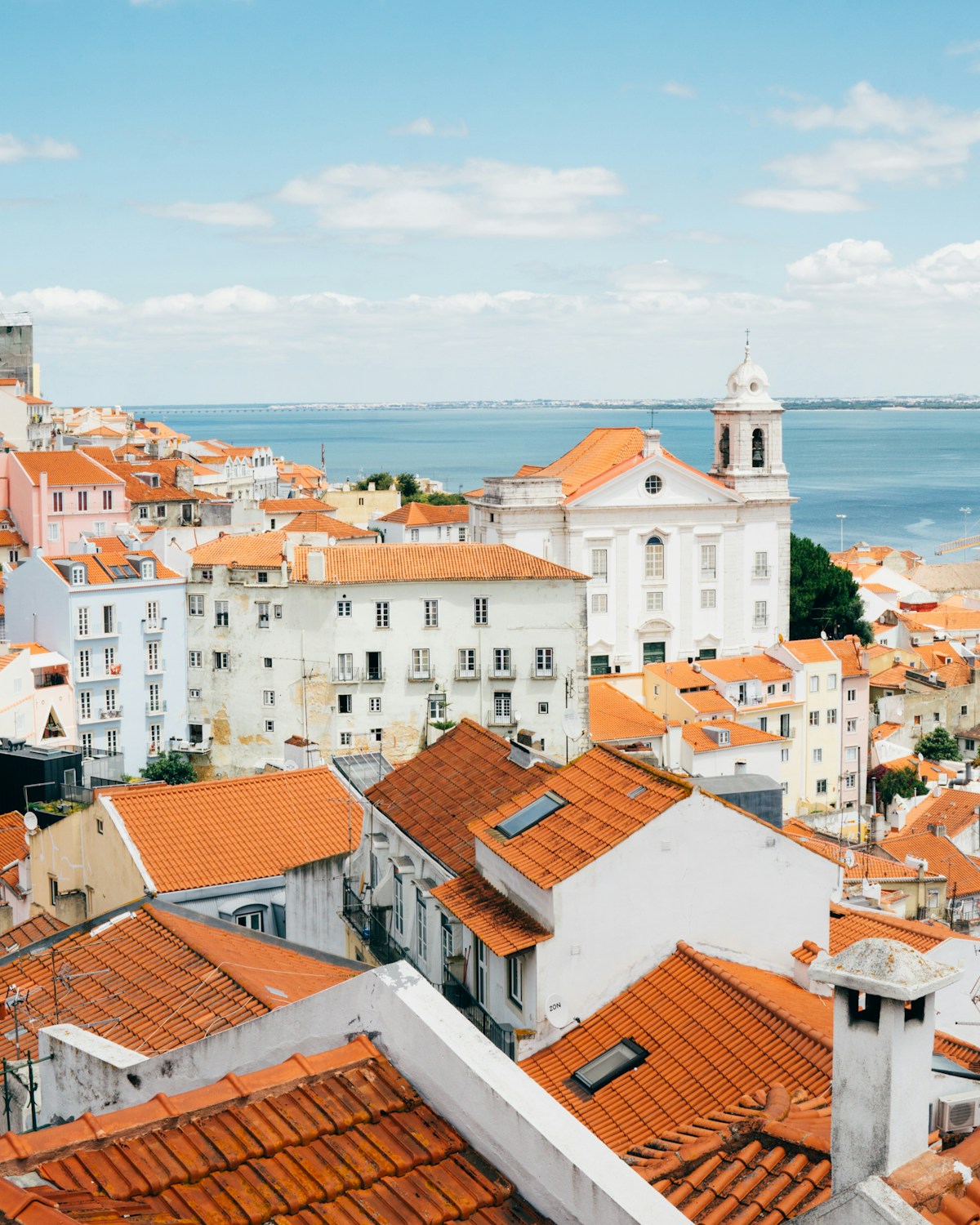
Where you stay in Lisbon shapes the visit considerably. The city is spread across hills and the distances between neighbourhoods - though not large on a map - involve real elevation changes. A few streets separate a lively fado bar from a quiet cobbled lane. Picking a base close to what you care about most saves time and energy.
Search Lisbon hotels on Booking.com to compare rates and availability.
Alfama & Mouraria
Alfama is Lisbon’s oldest district, a tangle of whitewashed houses, steep alleys, and miradouros (viewpoints) above the Tagus. It’s a dense medieval quarter of narrow streets climbing toward São Jorge Castle. Atmospheric and photogenic, but genuinely hilly - expect steep stairs and uneven cobblestones. Fado music originated here and still plays nightly in the restaurants. Mouraria borders it to the north and is slightly less touristy.
Memmo Alfama Design Hotel is the most polished hotel in the neighbourhood - boutique in scale, with an infinity pool carved into the hillside, overlooking the rooftops and Tagus. Rates run €150–250 depending on season.
Santiago de Alfama Boutique Hotel - a converted 15th-century palace with 19 rooms, an inner courtyard, and a quiet atmosphere unusual for the neighbourhood. From approximately €140–220 per night as of 2026.
Solar dos Mouros is a 13-room boutique guesthouse on the Moorish wall with artworks by Portuguese sculptor Lagoa Henriques and good views. From approximately €120–180 per night.
Alfama Patio Hostel - one of the better-reviewed hostels in the neighbourhood, with private and dorm rooms and a relaxed courtyard. From approximately €25–65 per night.
Stay Inn Alfama is a well-regarded hostel for those watching costs. Dorm beds from approximately €25–45 per night. Private rooms available.
Pros: Authentic neighbourhood feel, fado restaurants, some of Lisbon’s best viewpoints (Portas do Sol, Santa Luzia), close to the São Jorge Castle.
Cons: Steep and cobbled - difficult with luggage or mobility issues. Tram 28 runs through and attracts pickpockets. Restaurants near the miradouros are expensive and often mediocre. Nights can be noisy near bars on Rua de São Miguel.
Best for: Atmosphere-seekers, solo travellers, repeat visitors who want to go deeper than the postcard version.
Baixa-Chiado
Baixa (Lower Town) is Lisbon’s grid-planned commercial centre, rebuilt after the 1755 earthquake. Chiado adjoins it uphill and has the city’s best independent cafés and bookshops (including Livraria Bertrand, Europe’s oldest operating bookshop). Together they form the most convenient base in the city. Chiado is the most central base for most visitors - flat enough relative to Alfama, well connected by Metro and tram, and with the highest concentration of good restaurants and bars within walking distance.
Bairro Alto Hotel is Lisbon’s most celebrated five-star, straddling the Chiado and Bairro Alto border. A serious restaurant and rooftop views over the city. From approximately €200–350 per night (note: rates approach €280–450 at peak).
Hotel do Chiado is a well-positioned four-star with a rooftop terrace and views across the Tagus. From approximately €130–220 per night.
Hotel Metropole - classic Art Nouveau building on Rossio Square, beautifully renovated with high ceilings and period details. One of Baixa’s most atmospheric hotels. From approximately €110–160 per night as of 2026.
Internacional Design Hotel is a design-led three-star with themed rooms on Rossio square. From approximately €90–150 per night.
Pensão Ninho das Águias - legendary budget guesthouse at the edge of the Castelo de São Jorge, with extraordinary 360-degree views from its terrace. Rooms are basic and some bathrooms are shared, but the view is among the best in the city. From approximately €50–80 per night.
Mundial Hotel is reliable and central, with a rooftop bar and above-average views. Rates run €90–160. Good value for the location, especially outside peak season.
Pros: Flat streets (unusual for Lisbon), easy Metro access (Baixa-Chiado station), walking distance from Alfama, Bairro Alto, and the waterfront, excellent shopping and café scene.
Cons: Very touristy in summer - Rua Augusta can feel like a theme park. Accommodation prices are higher than outer neighbourhoods.
Best for: First-time visitors, travellers who want everything on foot, those with luggage they’d rather not haul up a hill.
Bairro Alto
The Upper Town immediately west of Chiado. By day it’s quiet; by night it fills with bars along narrow streets that stay loud until 2–3am at weekends. The fado restaurant scene here runs parallel to Alfama’s - with slightly more upscale restaurants and fewer tourists.
Bairro Alto Hotel is the benchmark property, worth the price for the location and service. From approximately €200–350 per night.
LX Boutique Hotel is smaller and design-focused, on Rua do Alecrim. From approximately €100–160 per night.
Hotel Camões - a modest but clean guesthouse in the heart of Chiado, popular with mid-range travellers who want location at a reasonable price. From approximately €75–115 per night as of 2026.
Pros: Central, walkable, great restaurant and bar scene, easy access to Chiado.
Cons: Weekend nights are genuinely loud - ear plugs or noise-cancelling headphones recommended. Limited Metro access (you’ll walk from Baixa-Chiado or Rato stations).
Best for: Travellers who want to be in the nightlife without taking a taxi home, food-focused visitors.
Santos & Cais do Sodré
Santos borders the Tagus waterfront west of Baixa. Cais do Sodré is the transport hub (trains to Cascais and Sintra depart here) and home to the revitalised Time Out Market Lisboa, one of Europe’s best food halls. The LX Factory creative complex is a 10-minute walk into the Alcântara area.
Memmo Príncipe Real - technically just above Santos - has an excellent position and pool. From approximately €150–250 per night.
Independente Hostel & Suites is a stylish hostel in a 19th-century mansion on Rua de São Pedro de Alcântara. Dorm beds from approximately €18–35 per night; private suites also available.
Pros: Waterfront access, Time Out Market, train connections to day-trip destinations, creative and trendy area.
Cons: Less traditional feel than Alfama. Some streets near the old Pink Street bar strip can be rough on weekend nights.
Best for: Travellers who want day trips to Cascais or Sintra, those who appreciate the city’s contemporary side over its historic face.
Belém
Belém sits 6km west of central Lisbon on the Tagus. It’s where Vasco da Gama’s fleet departed in 1497, and the neighbourhood reflects that history - the Jerónimos Monastery, Torre de Belém, and Monument to the Discoveries are all within a short walk. The original Pastéis de Belém café (founded 1837) is here.
Staying in Belém means proximity to the monastery, the tower, and the waterfront, but you’re 6km from central Lisbon - fine if Belém is your focus, less ideal if you want easy evening access to restaurants and bars in Chiado or Alfama.
Altis Belém Hotel & Spa is the area’s leading five-star, with Tagus views and a pool. From approximately €200–320 per night.
Jerónimos 8 is a design hotel next to the monastery in a sensitively converted building - well-run, quiet, and comfortable. From approximately €130–230 per night. Good value for what you get.
Palácio do Governador - housed in the former Governor’s Palace near the Torre de Belém, elegant heritage property with a pool and formal gardens. From approximately €180–260 per night as of 2026.
Pros: Monument-heavy, quieter than the centre, excellent cycling along the riverside Tagus path.
Cons: Restaurants close early and are sparse outside the main tourist strip. Getting back to the centre after dinner requires an Uber (€8–12) or the 15E tram (25 minutes).
Best for: Families with children, visitors spending only a day or two in Lisbon focused on the historic sights.
Príncipe Real
Príncipe Real sits above Bairro Alto and is the most upscale residential neighbourhood in Lisbon. It has the city’s best independent restaurants, the Jardim do Príncipe Real park, an antiques market on Saturdays, and the MUDE fashion and design museum nearby. It suits visitors who want character over convenience.
Torel Palace is a 19th-century palace hotel with gardens and cityscape views. From approximately €200–350 per night.
The Lumiares is a converted 18th-century palace with apartments and suites and excellent service. From approximately €180–280 per night.
Casa Balthazar is smaller and more design-led, popular with a younger crowd. From approximately €180–280 per night.
1908 Lisboa Hotel - design hotel in a converted late 19th-century building, with large rooms and a sophisticated Arts and Crafts-inspired interior. From approximately €150–230 per night as of 2026.
Pros: Upscale, quieter than Chiado or Bairro Alto, some of Lisbon’s best restaurants (Belcanto, Alma), antiques and design shops, easy walk to Chiado.
Cons: Expensive. Hilly approach from Chiado. Limited direct Metro access. Getting down to Baixa or Belém adds time.
Best for: Those who want quality and calm without going to Belém, repeat visitors upgrading from previous Baixa-Chiado stays.
Parque das Nações
The modern district built on the eastern waterfront for Expo 98 - organised and walkable, with a casino, the Oceanarium, and some of Lisbon’s newest hotel stock. Good for families and business travellers; quieter but lacking the historic character of the centre.
Myriad by SANA Hotels - a striking 186-room five-star on the Tagus waterfront with a rooftop pool and views of Ponte Vasco da Gama. From approximately €130–210 per night as of 2026.
Hotel da Expo - comfortable four-star a short walk from Oriente railway station, practical for arrivals from Faro or Porto. From approximately €80–120 per night.
Budget
Home Lisbon Hostel near Rossio is consistently well rated. Private rooms start around €60 in shoulder season; dorms from €25. Clean, well-managed, and in a good central location.
Avoid the Mouraria strip directly adjacent to Baixa if you’re a light sleeper - the area has good restaurants but some of the cheapest hotels there are noisy and poorly maintained.
Getting Between Areas
Lisbon’s neighbourhoods are compact enough to walk between most of them in 20–30 minutes - though the hills make some routes harder than they look on a map. Key connections:
- Tram 28: runs Martim Moniz → Alfama → Estrela. Scenic but slow and extremely crowded in summer. Keep bags in front.
- Tram 15E: runs Praça da Figueira → Belém → Algés. Faster and less pickpocket-prone than Tram 28.
- Metro (Blue/Green lines): covers Baixa-Chiado, Rossio, Rato, Marquês de Pombal, Cais do Sodré. Single tickets approximately €1.50 as of 2026; day pass approximately €6.45.
- Uber: typically €4–8 between most central neighbourhoods. From Belém to Chiado, budget €10–12.
Once you’ve shortlisted your neighbourhood, consider airport transfers from the airport to your hotel - fixed pricing and no taxi queue stress. Travel insurance is worth comparing before you book - policies that cover trip cancellation give more flexibility if plans change. An eSIM for Portugal keeps you connected for navigation and last-minute bookings on arrival.
For a first-day orientation covering Alfama, Belém, and Chiado, Lisbon city tours cover the highlights in 2–3 hours with a local guide — tuk-tuk and walking tour formats both run year-round.
Neighbourhood Summary
| Area | Best For | Price Range |
|---|---|---|
| First visit, easy navigation | Baixa-Chiado | €90–450 |
| Atmosphere and authenticity | Alfama | €120–250 |
| Nightlife and dining | Bairro Alto | €100–350 |
| Upscale and quieter | Príncipe Real | €180–350 |
| Historic monuments | Belém | €130–320 |
| Day trips to Cascais/Sintra | Cais do Sodré | €18–250 |
| Budget travel | Mouraria or Intendente | €40–70 |
Most visits of 3–4 nights work well from a Baixa-Chiado base with day excursions to Alfama and Belém. Príncipe Real rewards those who’ve already done the main sights and want to eat well and walk slowly.
For the full Lisbon sightseeing picture, see the Lisbon city guide. Planning a 3-day trip? Our 3 days in Lisbon itinerary builds a day-by-day plan including a Sintra day trip. For food choices beyond the hotel area, see our Lisbon restaurants guide and the Lisbon food tours guide. For daily cost context, the Portugal travel costs guide includes current Lisbon accommodation benchmarks.