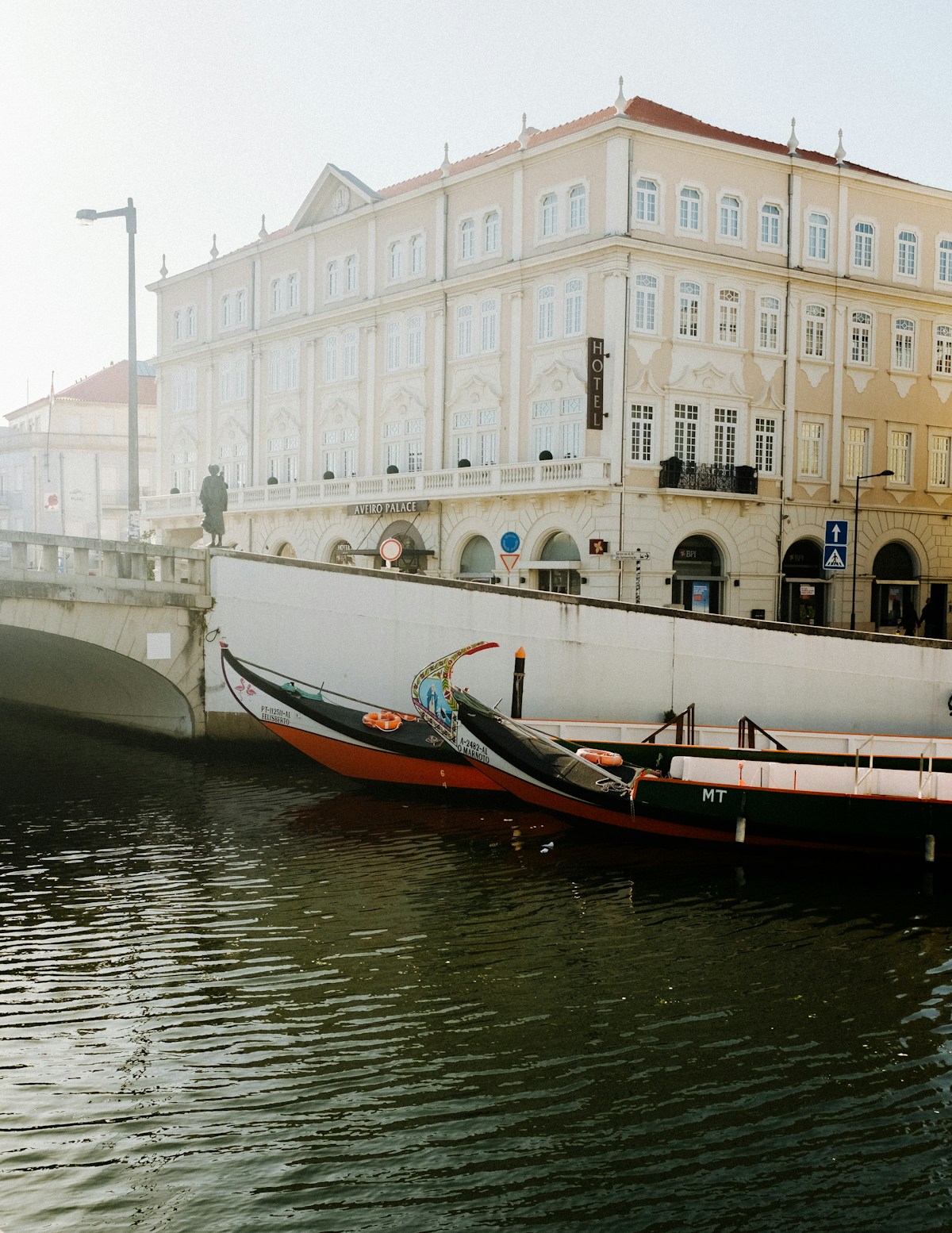
Aveiro Travel Guide - Canals, Moliceiros & Costa Nova
Aveiro guide - canal tours on painted moliceiro boats, ovos moles sweet pastries, striped Costa Nova beach houses, and 1 hour from Porto by train.
Guides for Aveiro
Aveiro is a city of around 78,000 in central Portugal, 75km south of Porto on the edge of a large coastal lagoon (the Ria de Aveiro). The city’s centre is divided by a network of canals branching off the main lagoon channel, which is why it’s often described as the “Venice of Portugal” - a comparison that’s physically accurate (canals, painted boats, low-rise buildings) if somewhat exaggerated in terms of scale and grandeur.
Aveiro is a comfortable, prosperous university city (University of Aveiro, founded 1973) with a compact historic centre, good pastry shops, and easy access to the coast. It works well as either a half-day trip from Porto or an overnight stay combining the city with Costa Nova beach.
Getting There
By train from Porto: approximately 1 hour from Campanhã or São Bento station, with trains running frequently. Cost: €3–5. The Aveiro station is an attractive Art Nouveau building close to the canal centre.
By car from Porto: 75km south on the A1, about 45–50 minutes. From Coimbra: 45km north on the A1, about 30–35 minutes. Aveiro sits directly on the main Lisbon–Porto corridor, making it an easy stop between the two cities.
The Canals and Moliceiro Boats
Aveiro’s central canal (Canal Central) runs through the heart of the city, and several branches extend into the urban fabric. The canal is the visual centrepiece - a 20-minute walk along its banks covers most of the photogenic angles. The Central Market building on the main canal, an Art Nouveau structure completed in 1910, is one of the better examples of that style in Portugal.
Moliceiro canal tours depart from the main canal near the fish market. The boats are painted with folk-art imagery - often humorous, occasionally bawdy - on their curved prows, and the paintings are unique to each vessel. Tours run approximately 45 minutes and cost €12–15 per person. Multiple operators compete along the canal and prices are similar across them.
The lagoon itself (Ria de Aveiro) is much larger than the city canals - a 45km long tidal system with salt marshes, oyster beds, and traditional seaweed-farming areas. Longer lagoon excursions in motor launches can be arranged for birdwatching, particularly in winter when wading birds and wildfowl are present in large numbers.
Art Nouveau Architecture
Aveiro has one of the best concentrations of Art Nouveau architecture in Portugal, built primarily between 1890 and 1920 during a period of prosperity from salt trade and sea trade. The Museu Art Nouveau (Casa de Major Pessoa) on Rua Dr. Barbosa de Magalhães has a particularly complete facade with ceramic tile work and plant motifs. Several other examples are visible around Rua João Mendonça and near the central canal.
The tourist office produces a map of Art Nouveau buildings for a self-guided walk that covers about 20 addresses.
Ovos Moles
Aveiro’s signature confection is sold in dedicated shops throughout the city. The best known producer is the Confeitaria Peixinho (Rua Direita 83) and several other pastelarias in the centre. Ovos moles come in themed shapes - barrels (the most traditional), shells, fish, and other maritime forms. They’re made fresh and deteriorate within a few days; buy them as near to eating time as practical.
Costa Nova
Costa Nova do Prado is a beach village 10km west of Aveiro on the outer sand spit of the Ria de Aveiro. The village is known for its palheiros - traditional wooden fishermen’s houses painted in bold vertical stripes of red, blue, green, and white. The striped pattern evolved in the 19th century for practical identification of ownership and has become the village’s visual identity.
The Atlantic beach at Costa Nova faces open ocean and has good surf conditions for those with some experience. Conditions can be rough, with significant wave action and cold water (15–18°C). The beach is long, backed by dunes, and significantly less crowded than Algarve beaches.
Bus 8 from central Aveiro runs to Costa Nova in approximately 30–40 minutes. By car it’s 10 minutes.
Praia da Barra and the Lighthouse
Adjacent to Costa Nova is Praia da Barra, notable for the Farol de Aveiro - the tallest lighthouse in Portugal at 62m, built 1885 and still operational. The lighthouse can be visited for a small fee on certain days, and the surrounding beach area is backed by dunes. The inlet mouth where the Ria de Aveiro meets the Atlantic, spanned by two piers, is visible from both Barra and Costa Nova and is worth walking out on for the view of the lagoon from the open sea.
What to Eat
Beyond ovos moles, Aveiro is known for bacalhau à brás (shredded salt cod with eggs, potato sticks, and olives), enguias fritas (fried eels from the lagoon, increasingly rare), and caldeirada de enguias (eel stew). The Restaurante Salpoente near the central canal is consistently good for regional fish. The market building has a small café serving local pastries and coffee at lower prices than the canal-side restaurants.
Where to Stay
Aveiro has a range of mid-range hotels in the city centre, mostly within walking distance of the canals. For a night’s stay combining the city with Costa Nova, several beach apartments and pousadas at Praia da Barra offer more space at similar prices. Browse our Aveiro hotel guide for specific listings.
Search hotels in Aveiro on Booking.com to compare rates and availability.
Best Time to Visit
April through October for beach and canal use. The city is pleasant year-round given its compact character. Summer brings more canal tour activity and the Costa Nova beaches are busiest July–August. November to February are quieter and occasionally misty - good for the salt marshes and lagoon birdwatching but less ideal for open-air exploration.
For guided experiences, browse tours in aveiro - covering walking tours, food tours, and day trips from the city.
Getting here by air? airport transfers take the stress out of the journey from the airport to your hotel. Pick up an eSIM for Portugal before you land to stay connected on arrival.
How Aveiro Compares
Aveiro vs Porto: Porto warrants 2–3 days; Aveiro warrants one. The comparison most visitors face is whether to use Aveiro as a day trip from Porto or as a standalone overnight. As a day trip it works well — the 1h Alfa Pendular connection is frequent and inexpensive. If you’re choosing between them as a base, Porto offers far more: more restaurants, museums, nightlife, and cultural weight. Aveiro’s canal aesthetic is unique and genuinely pleasant, but it exhausts its highlights in half a day. Prices in Aveiro run 20–30% lower than Porto.
Aveiro vs Coimbra: Coimbra (60km south) is a fuller destination — a university city with a cathedral, a functioning academic tradition, and better food options. Aveiro suits travellers who want a pretty day stop on the Porto–Lisbon rail line rather than a city to settle into. Coimbra rewards an overnight stay; Aveiro generally doesn’t need one. Best months for Aveiro: May–October for the canals. Costa Nova has autumn and winter surf worth knowing if you’re combining with the surf itinerary at Peniche or Ericeira.
Aveiro in Context
Aveiro sits between Porto (70km north) and Coimbra (60km south) - it works as a day trip from either city or as an overnight base when travelling between them on the Alfa Pendular train. Our 2-weeks Portugal itinerary routes through Coimbra with Aveiro as an optional add-on. For Aveiro’s ovos moles and bacalhau in the context of Portuguese regional food, see our Portuguese food guide and bacalhau guide. The ovos moles tradition fits into Portugal’s extraordinary pastry heritage - our Portuguese pastry guide covers Aveiro’s sweets alongside Sintra’s queijadas and the national pastel de nata. The surf at Costa Nova beach is best in autumn and winter - for comparison with other central Portugal surf spots, see our Peniche surf guide (40km north) and the Ericeira surf guide (90km south). For a detailed breakdown of things to do and where to eat in the city, see our Aveiro things to do and food in Aveiro guides.
Frequently Asked Questions
- How do I get from Porto to Aveiro?
- By train from Porto's Campanhã or São Bento station, the journey takes about 1 hour and costs €3–5. Regional trains run frequently throughout the day. The Aveiro station is a short walk from the canal centre.
- What is a moliceiro boat?
- Moliceiros are painted flat-bottomed boats traditionally used to harvest moliço (seaweed) from the lagoon for use as agricultural fertiliser. The practice declined in the late 20th century and the boats now operate primarily as tourist transport on the central canal. They're typically painted with bright folk-art scenes and covered with a decorated prow. Canal tours run about 45 minutes and cost €12–15 per person.
- What are ovos moles?
- Ovos moles are Aveiro's signature sweet - a filling of egg yolk and sugar (the same base as pastéis de nata but denser) encased in thin rice-paper wafers shaped like shells, fish, barrels, or other maritime forms. They've been produced by the Convento de Jesus since the 17th century and are sold in most pastry shops in the city. They're best eaten fresh.
- How far is Costa Nova from Aveiro?
- Costa Nova is 10km west of Aveiro, on a narrow sand spit between the lagoon and the Atlantic. Bus 8 from central Aveiro runs there in about 30–40 minutes. The striped palheiros (painted wooden fishermen's houses) that gave Costa Nova its visual identity are concentrated along the main coastal strip.
Book an experience
Top experiences in Aveiro
Explore the best tours and activities in Aveiro, with instant confirmation and free cancellation on most bookings.
Where to stay in Aveiro: Find hotels in Aveiro →