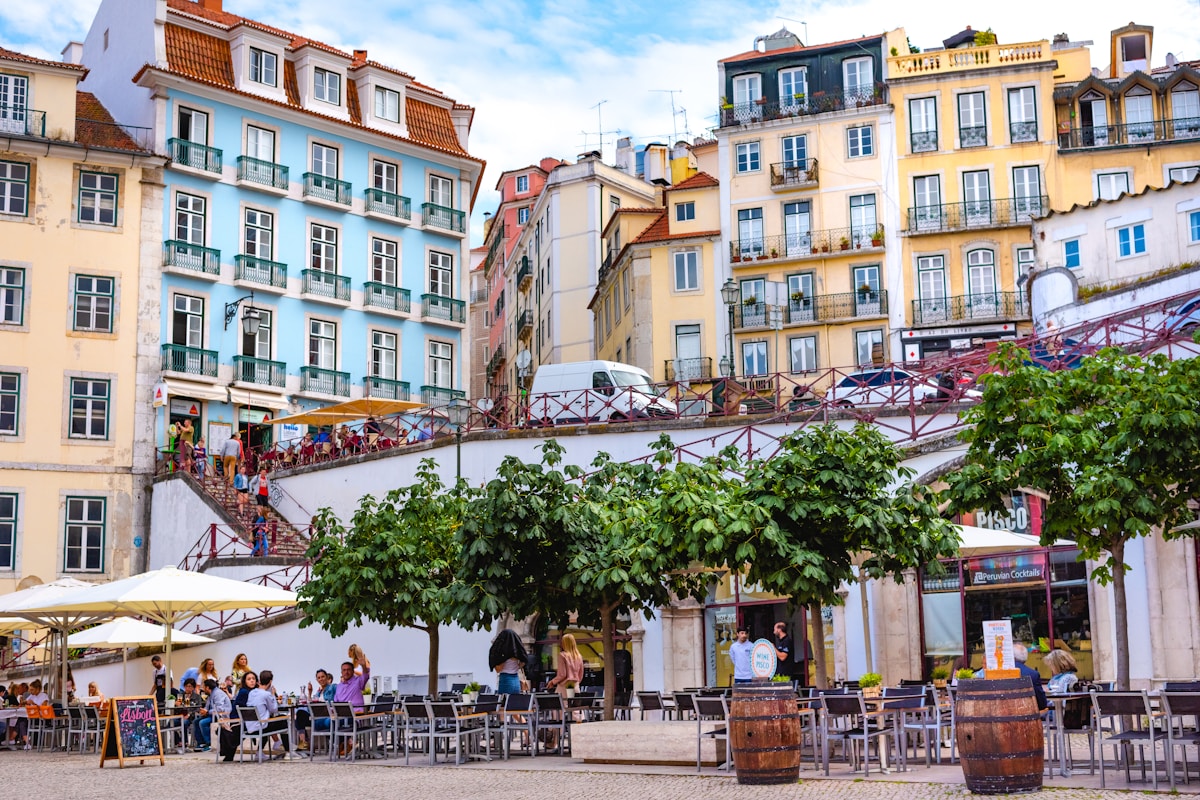
Portugal’s safety record is strong. It ranks in the top tier of European countries by most security indices, and the street atmosphere in Portuguese cities - even in Lisbon at night - is notably relaxed by international standards. That said, specific risks do exist, and tourists are targeted disproportionately for petty theft.
Petty Theft
Pickpocketing is the most common safety issue for travellers in Portugal and is concentrated in Lisbon’s tourist areas.
High-Risk Situations
Tram 28: this historic tram through Alfama is the most notorious pickpocketing location in Lisbon. The tram is old, narrow, and packed - ideal conditions for professional thieves working in pairs or groups. Keep your bag in front of you, zipped, and avoid having your phone in a back pocket or hip bag. If you are just sightseeing, consider walking the Tram 28 route instead - it covers Alfama, Baixa, Chiado, and Estrela, all walkable.
Alfama viewpoints (miradouros): the Miradouro da Graça and Miradouro das Portas do Sol are particular hotspots. Groups of young men operating in concert are the most common threat - one distracts, another takes. Be alert when approached by strangers in tourist viewpoints.
Belém: the area around Jerónimos Monastery and the Torre de Belém has a consistent petty theft problem in peak season. Bags left on walls or the ground while photographs are taken are the main vector.
Beaches: bags and valuables left on beaches while swimming are regularly stolen. Leave your phone and wallet at your accommodation or use a waterproof bag you can take into the water.
What to Do
- Keep valuables in a money belt, front pocket, or a bag that crosses your body and remains in front
- Use your hotel safe for passports, extra cash, and spare cards
- Keep a photocopy (or phone photo) of your passport separately
- Report theft immediately at the nearest PSP station - Portuguese police issue a crime report (participação) needed for travel insurance claims
- Tourist police (Polícia de Turismo) operate in Lisbon and Porto and speak English
Violent Crime
Violent crime against tourists in Portugal is rare and has remained consistently low. Portugal is not among the high-risk European destinations for mugging or assault. Night-time safety in Lisbon’s entertainment districts (Bairro Alto, Cais do Sodré, Intendente) is generally good, though normal urban caution applies: don’t flash expensive items, avoid poorly-lit side streets alone late at night.
Atlantic Beach Safety
Portugal’s Atlantic coast is one of the most hazardous swimming environments in Europe. The risks are real and regularly claim lives, including experienced swimmers.
Rogue Waves
The Atlantic generates powerful, long-period swell that produces waves capable of knocking people off rocks and exposed shorelines. This is a particular risk at:
- Rocky cliff edges and promontories (common in the Algarve and Alentejo coast)
- Beaches with rocks at the water’s edge
- Praia do Norte, Nazaré (extremely dangerous in winter - do not approach the water’s edge)
Standing on rocks near the Atlantic sea edge is hazardous at any time of year. Waves that appear calm can surge without warning. Several tourists die at Portuguese coastal clifftops each year from wave strikes.
Rip Currents
Rip currents (correntes de maré or ressacas) are powerful channels of water moving seaward through the surf zone. They are the leading cause of beach drownings in Portugal.
How to identify a rip: look for a channel of churned, discoloured water moving away from the beach, with calmer-appearing water on either side. If caught in a rip, do not fight it - swim parallel to the beach until clear of the current, then swim diagonally back to shore.
Flag System
Portuguese beaches use a standardised flag system:
- Green flag: swimming permitted, lifeguard on duty
- Yellow flag: caution - waves or currents; inexperienced swimmers should stay in shallow water
- Red flag: swimming prohibited. Do not enter the water.
- Chequered black and white flag: no lifeguard on duty
- Blue flag: EU water quality standard met
At unstaffed beaches, there are no flags - exercise your own judgment. The west coast beaches north of Lisbon (Ericeira, Peniche, Nazaré) are more hazardous than the sheltered south-coast Algarve beaches.
The Algarve’s south coast beaches between Lagos and Tavira are generally calmer and less prone to rip currents than Atlantic-facing beaches. The west Algarve coast (Sagres, Praia de Odeceixe) is exposed and should be treated with caution.
Wildfires
Portugal’s summer wildfire problem is concentrated in the forested interior from July through September. The 2017 Pedrógão Grande fire was one of Europe’s deadliest in modern history. Our Portugal in July and Portugal in August guides include practical steps for checking fire alerts before travelling during those months.
High-risk areas in summer:
- The pine and eucalyptus forests of the central region (Leiria, Coimbra, Castelo Branco)
- The Alentejo interior
- The Algarve hinterland (Serra do Caldeirão, Monchique)
Practical precautions:
- Check proteçãocivil.pt for active fires and road closures before driving through forested areas in summer
- Never light fires, barbecues, or camp fires outside designated areas in summer
- If you see a fire, call 117 (forest firefighters/ICNF) or 112
- On maximum fire risk days (widely reported in Portuguese media), avoid forested interior areas
- Park vehicles on solid surfaces, never on dry grass - hot catalytic converters have ignited fires
The coast and Algarve clifftop areas are not meaningfully exposed to wildfire risk.
Health and Medical Care
Tap water: safe to drink throughout Portugal, Madeira, and the Azores.
Healthcare access:
- EU citizens with EHIC/SEUK card: entitled to treatment at Portuguese state hospitals and health centres (centros de saúde) at the same cost as Portuguese residents - usually free for emergencies
- Non-EU citizens: require travel insurance. Portuguese public hospitals (Hospital de Santa Maria in Lisbon, Hospital de São João in Porto) are required to treat emergencies regardless of insurance, but costs are billed afterward
- Private hospitals: CUF and Luz hospital networks are faster and more comfortable, with English-speaking staff. Require proof of insurance or a deposit
Pharmacies (farmácias): widely available, including in smaller towns. Pharmacists can recommend OTC treatments for minor issues. At least one pharmacy in each area operates 24 hours by rotation - look for the Cruz Verde (green cross) sign and the after-hours (serviço de turno) notice posted in the window.
tours across Portugal covers guided experiences across Portugal - from cultural walking tours to day trips from major cities.
an eSIM for Portugal is a straightforward way to stay connected throughout the country. travel insurance is worth comparing before departure.
Scams
Portugal has fewer tourist scams than many European destinations, but a few are worth knowing:
- Card skimming: use ATMs attached to bank branches rather than standalone machines in tourist areas. Cover the keypad when entering PINs.
- Fake petitions: people asking you to sign a petition who then demand payment. Decline and walk away.
- Overcharging at restaurants: menus with unlisted prices, or charges appearing for bread and olives placed at the table without being asked for. In Portugal, you are entitled to refuse and not pay for items brought to the table that you did not order. Ask the price of the couvert (bread cover charge) before accepting.
Travelling solo? Our Portugal solo travel guide covers safety for women, solo-friendly surf towns, and the digital nomad hubs where independent travellers are well catered for.
Plan Your Trip
🏨 Search hotels in Portugal on Booking.com
✈️ Book your flights to Portugal 🛡️ Get travel insurance 📱 Stay connected with an eSIM 🚗 Rent a car