Faial is the third largest island in the Azores and the main inter-island transit hub for the central group - the fast ferries connect Faial with Pico (30 minutes) and São Jorge (1 hour 30 minutes). The island has three things that distinguish it in the archipelago: a genuine maritime tradition centred on Horta’s yacht harbour, a volcanic crater (the Caldeira) that is one of the most dramatic in the Azores, and the Capelinhos volcano - still largely buried in the grey ash from its 1957 eruption.
Horta and the Marina
Horta is the principal town on Faial, built on a hillside above the harbour on the south coast. The waterfront is more animated than any other Azorean town outside Ponta Delgada - the marina hosts hundreds of transatlantic yachts each year, passing between the Caribbean and Europe.
Boat paintings - the tradition of painting boat logos and names on the marina walls began in the 1930s. The walls now stretch hundreds of metres and are almost entirely covered. Sailors believe painting your boat’s name on the wall brings fair winds for the next passage; failing to do so brings bad luck. The older paintings, some from the 1940s and 1950s, are particularly striking. Walking the full length of the wall takes an hour.
Peter Café Sport - the social centre of the marina on Rua José Azevedo. Open since 1918, the bar has served as a VHF relay station, a postal address for sailors at sea, and a gin-and-tonic institution. The walls are covered with plaques, pennants, and photographs from Atlantic crossings. The bar is busiest in June and July when the transatlantic season peaks.
Horta town - the Museu da Horta (€3 entry) covers the island’s history including the whaling industry (Faial was a major sperm whale hunting base until 1981) and the HF radio cable station at Horta that connected Europe and North America for most of the 20th century. The covered market near the harbour sells local cheeses and chouriço da ilha (island sausage with a milder spice than mainland varieties).
Caldeira
A 2km-wide, 400m-deep volcanic crater at the centre of the island - the most accessible and visually impressive crater in the central Azores. The rim walk (8km loop, 2 hours) runs along the edge with views into the caldera floor where a small lake sits in a forest of tree ferns, Azorean heather, and hydrangeas.
Entry to the crater park costs €3. The crater floor can be descended by permit (arranged through the park authority) but most visitors walk the rim, which provides sufficient scale to appreciate the eruption that formed it.
Conditions: the crater rim is frequently in cloud. Start by 9am - mornings are clearest. Even in cloud, the walk is worthwhile. Wind is strong on the exposed sections; a windproof layer is practical.
Capelinhos Volcano
In September 1957, a volcanic eruption began offshore of the western tip of Faial, eventually building up enough material to connect with the island and add 2.4km² of new land. The eruption lasted 13 months. When it ended, the Capelinhos lighthouse - which had stood on the western headland - was buried to its upper windows in grey volcanic ash.
The ash landscape is now a protected geological monument. The old lighthouse (its tower protruding from the ash) is accessible, and the Capelinhos Interpretation Centre (Museu do Capelinhos) is built partially underground into the ash itself. The museum (€5 entry) explains the 1957 eruption and its consequences - around 2,000 Faialists emigrated to the United States in its aftermath, triggering changes to US immigration law (the Azores Refugee Act of 1958). The moonscape of grey ash extending to the sea is extraordinary - unlike anything else in the Azores.
Blue Hydrangea Roads
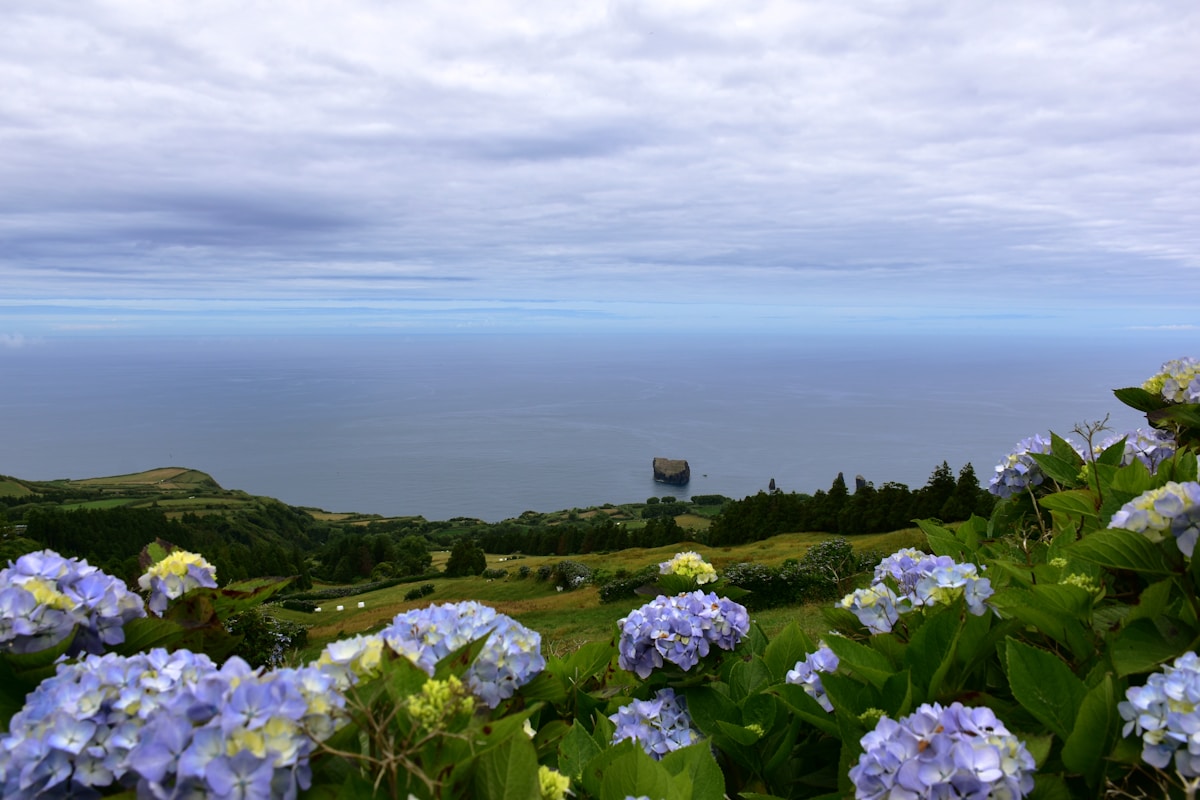
In July, the island’s roadsides are lined with intense blue Hydrangea macrophylla - the same species found in gardens across the world but growing here in 2m-high hedgerows along every rural road. The colour is intensified by the island’s acidic volcanic soil. The effect is most dramatic on the roads between the Caldeira and the north coast; the road from Horta to the Caldeira takes you through the densest sections.
The hydrangea is on Faial’s flag. They are everywhere from late June through July; by late August the colour has largely faded.
Day Trip to Pico
The view of Pico Mountain from the Horta waterfront on a clear day is one of the most memorable images in the Azores - the island appears to rise almost vertically from the sea, with the summit occasionally above cloud level. The 30-minute ferry crossing makes a day trip to Pico straightforward. See our Pico guide for what to do on the other side.
Tours in Faial cover guided hiking, whale watching boat trips, and scuba diving packages - whale watching from Horta and caldera treks are the top picks.
Pick up an eSIM for Portugal for reliable navigation across the islands.
Getting Around Faial
The island is small (173km²) and a hire car covers it entirely in a day. The drive from Horta to Capelinhos on the western tip is 30km. Rent from the airport or from Horta’s town centre; budget €35–50/day. Taxis from Horta are available for visitors who want to reach the Caldeira or Capelinhos without driving. Faial is the hub for the central Azores group covered in our Azores island hopping itinerary. For accommodation, see best hotels in Faial and the Faial island guide.
Search hotels in Faial Azores on Booking.com to compare rates and availability.